
Integrating Label Inspection System Without Modifying Equipment
For many manufacturers, adding a label inspection system is not a technical challenge—it’s an integration risk. The packaging line is already running. Machines are validated. Any mechanical or PLC change raises concerns about downtime, responsibility, and long-term stability.
Because of this, a common requirement comes up early in the discussion: integrate label inspection without modifying existing equipment.
This is not only possible in most cases, but it is also often the better approach—if the system is designed for it from the start.
Table of Contents
Why This Requirement Is So Common in Existing Packaging Lines?
Factories have many lines that are not being constructed from scratch. They operate in a brownfield environment with equipment from different product generations. The drawings of these mechanical systems could be outdated. Programs for PLCs could be protected or have unclear documentation.
In addition to this, even a small variation can produce significant results. Downtime is costly. In regulated environments, variations in machinery may result in revalidation requirements. From a business perspective, production departments may oppose any variation that has any impact on a machine “which is currently working.”
This means that a number of projects fail even before their implementation since the integration of labels might not be properly thought out.
What “Without Modifying Equipment” Really Implies?
In the practical world of projects, this commonly means three things.
- Firstly, there will be no alteration to the labeling machine or conveyor setup. No drilling, welding, or cutting.
- Secondly, there will be no alteration to the existing PLC programs within the labeler or packaging machine.
- Thirdly, there will be no effect on the timing, motion profiles, or control logic of the machine.
This does not imply that the inspection system operates independently. It still requires power, signals, and a clear product view. The only difference is that these connections are done outside, through a standalone inspection setup.
Using a Standalone Physical Setup Instead of the Labeler
It may seem easy to mount cameras directly on the labeling machine, but that arrangement creates a lot of issues. Labelers produce vibrations. There is a lack of space. Once production begins, adjustments become very difficult.
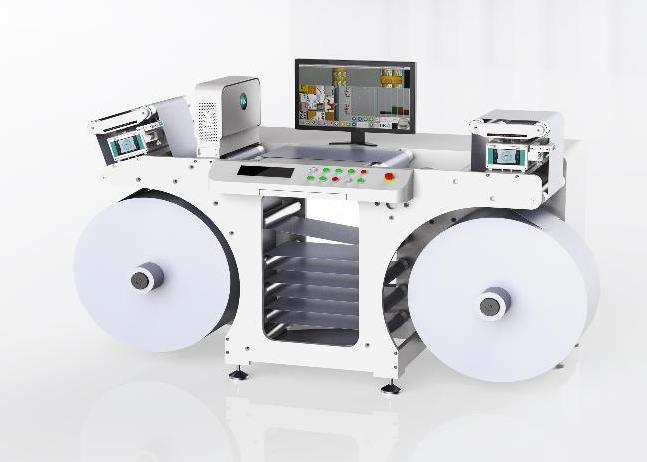
A stronger method is to implement a standalone label inspection system set on the conveyor downstream of the label application vestige. At this location, labels are already positioned accurately, products are not difficult to follow, and the area is quite accessible.
Standalone frames can be fastened to the conveyor rails or secured to the floor. This means no mechanical changes are needed, while at the same time, a stable imaging position is created, which can be adjusted during the commissioning stage.
Triggering, Rejecting, and Speed Tracking Without Machine Changeovers
The inspection process does not have to depend on machine PLC outputs. Typically, an independent photoelectric sensor is all that is needed as input for an image capture, and all inspection logics remain external.
Handling rejects can follow the same approach. If a reject device is already available, no more than a pass or fail signal needs to be transmitted by the inspection system. Otherwise, a separate reject handling module can be integrated into the conveyor mechanism, which can manage its own timing.
Variation in line speeds may be controlled without entering machine control systems. Using encoders or sensors on the mounted conveyor allows appropriate inspection timing based on slowdowns and stops in production.
Why Standalone Integration Works Better on Existing Lines?
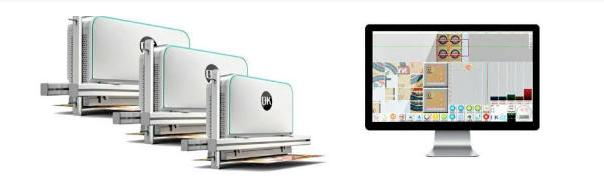
Standalone integration lowers the danger in brownfield situations. The process of installation is quicker, commissioning is easy, and the lines of responsibility are made clearer. If there is an issue, the inspection system can be modifiable without disruption to the labeling machine or its control logic.
| Aspect | Direct Machine Integration | Standalone Integration |
| Mechanical changes | Often required | Not required |
| PLC modifications | Common | Avoidable |
| Installation risk | Higher | Lower |
| Downtime | Longer | Shorter |
This method, above all, is in line with the actual production lines working. Speed variations, small halts, cleaning cycles, and operator interruptions are all more readily accepted when inspection is not closely linked with the machine.
Integrating a label inspection system without modifying existing equipment is less about advanced vision algorithms and more about respecting the production line as it is.
By using a standalone approach—external mounting, independent triggering, and self-contained reject logic—you can improve labeling quality without increasing risk. The result is faster installation, better acceptance by production teams, and reliable inspection performance, all without opening machines that nobody wants to touch.