
The Role of 100% Data Verification in Print Inspection Systems
In the rapidly changing world of printing, accuracy and excellence are fundamental things. In this striving for excellence, it then becomes imperative that every piece that gets printed truly meets the defined standards. Inspection, the traditional way, however, whereby some printed materials alone are checked for quality, is fraught with limitations. In contrast, the concept of 100% data verification has emerged as a transformative solution in print inspection systems, ensuring print quality across all print runs at a high level of accuracy and efficiency.
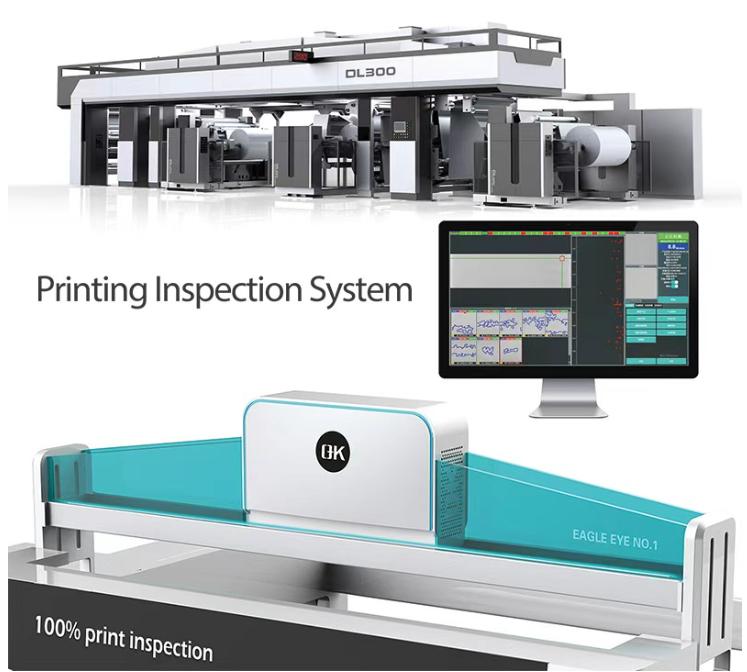
Table of Contents
The Importance of 100% Data Verification in Print Inspection Systems
In conventional print inspection, only a sample of printed copies is examined for accuracy; however, with 100% data verification, every print product is thoroughly reviewed to ensure accuracy during the production process. This makes it a quintessential method for ensuring print correctness among industries where undesirable results could emanate from the tiniest inaccuracies, such as pharmaceuticals, packaging, and high-volume commercial printing. The problems could be in codes, serial numbers, labels, and other graphic materials. The 100% data verification procedure ensures that such prints are conferring their needed integrity in accordance with good quality standards.
But the new method has the edge over old sampling strategies where a defect get missed due to dissent in prevalence amongst only a small percentage of the prints. With 100% data verification, all recurring patches are kaput so that, no matter how much or how little the defect, all are accurately spotted and rectified before the print exits onto the production line.
Technologies Enabling 100% Data Verification in Print Inspection System
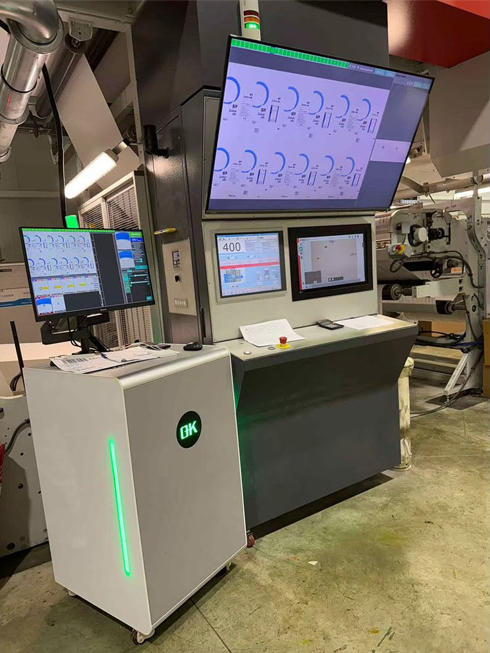
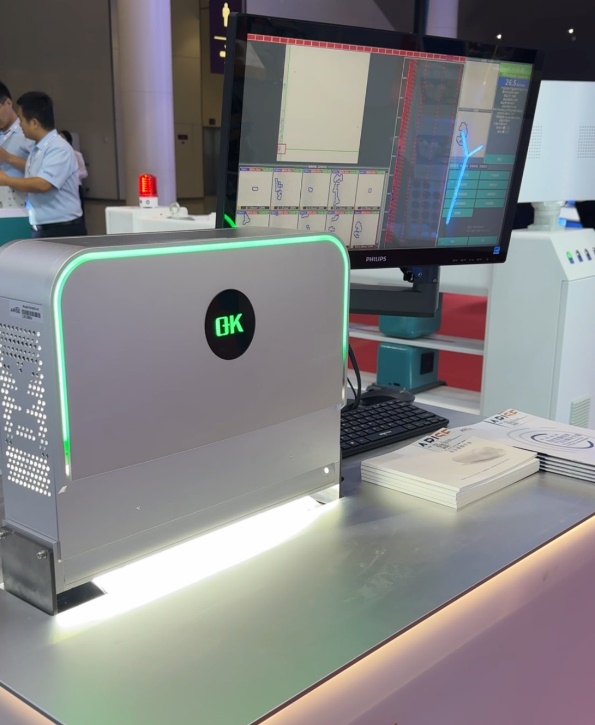
By using cutting-edge technologies, the 100% data verification printing inspection systems allow for the inspection of every single print in real-time, ensuring that no defects are overlooked.
Inline Vision Systems
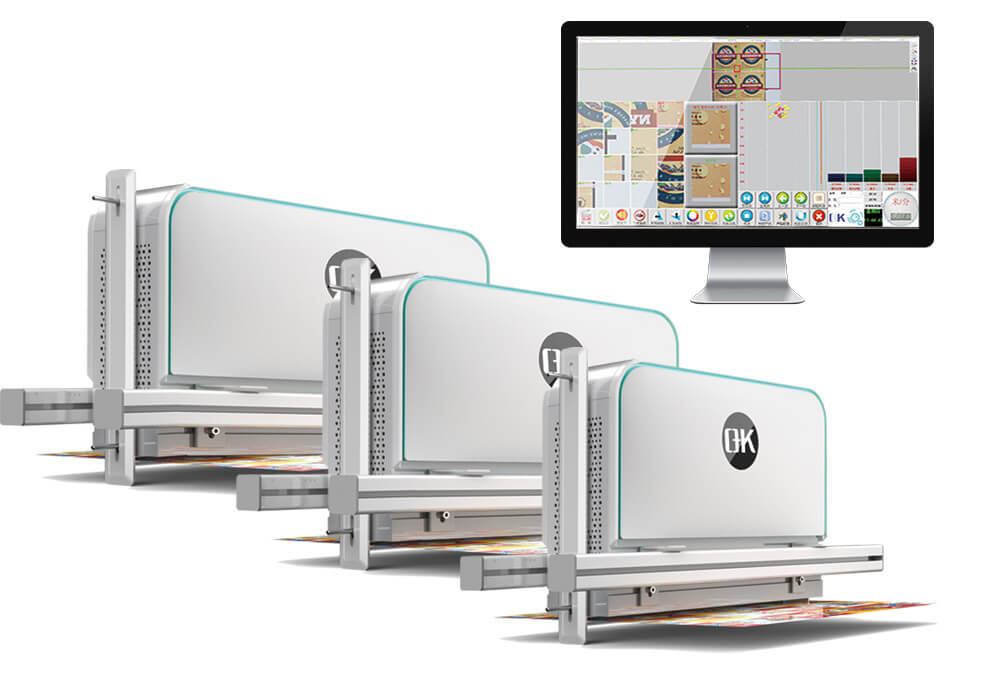
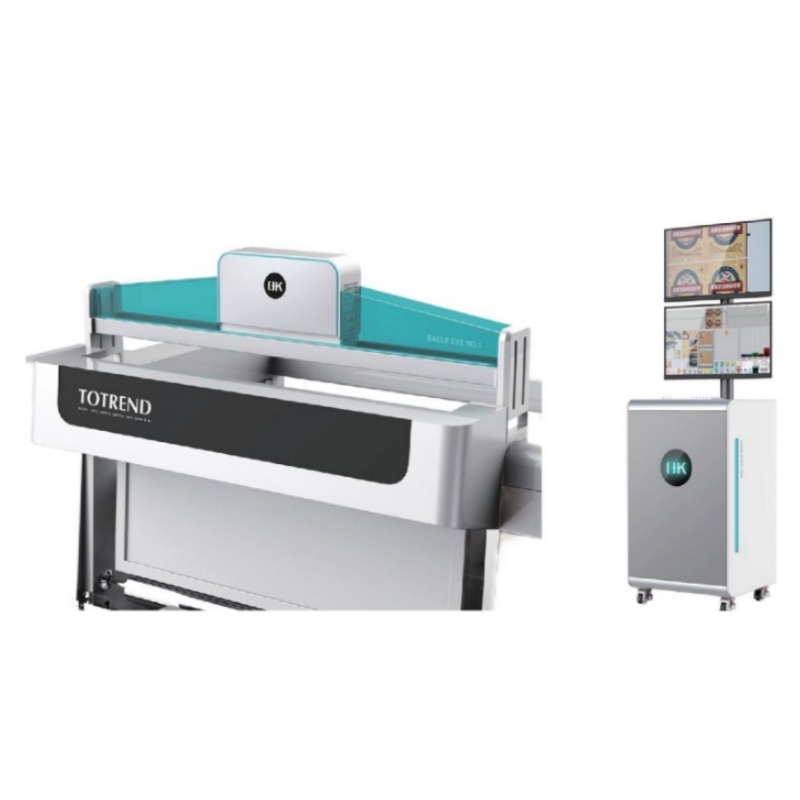
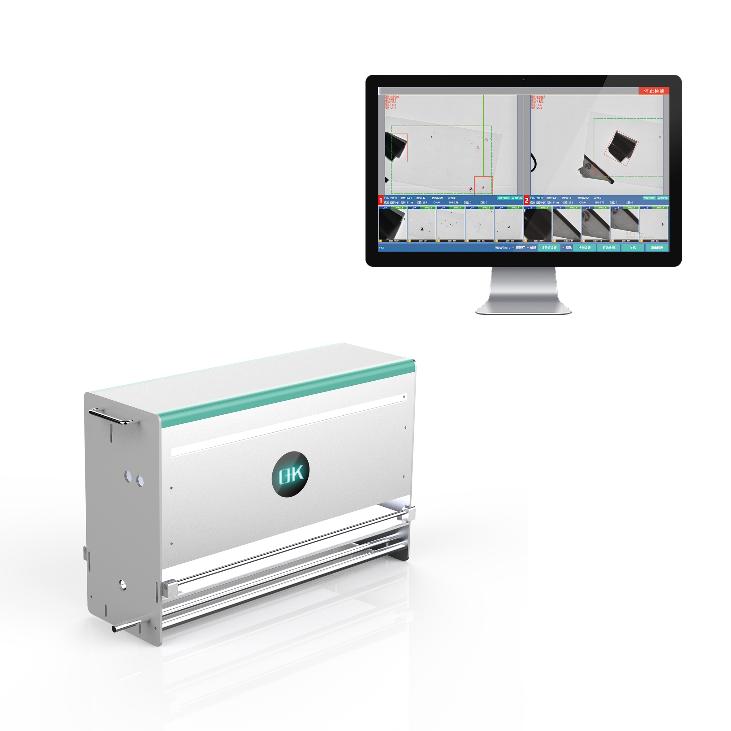
A central technology allowing for the verification of a 100% data i sinline vision systems designed to gather high-resolution images of any web-materials on print passing through any press. High-resolution cameras on the production line scan each print material in intricate details with the muscle of displaying the output in sharp precision.
After the image is captured, the software, like a vision system, matches every image to a set of predefined templates. This system ignores minute defects as they become a part of the trail while becoming one with misprints, color variations, or missing texts. Web inspection vision systems are designed to work in real time, making defect identification and correction in real time possible. This high degree of automation decrees on-time testing of every single print; this is what might justify increased accuracy and consistency.
Optical Character Recognition (OCR) and Optical Character Verification (OCV)
Number two in support of this is striking proof of 100% data verification with the help of Optical Character Recognition (OCR) and Optical Character Verification (OCV). OCR allows the inspection system to “read” printed print to make sure the proper characters and relevant information are found in these prints. Basically, it is useful to packages that have a lot of text, such as labels, barcodes, and product information. While OCR initially scans and decodes characters on the print, these characters are compared against the database or template in order to authenticate current correspondence with the expected output.
While OCR takes the lead in the reading of printed characters, with the Optical Character Verification (OCV) system stepping in to further verify not only the content but the placement and formatting of text in order to ensure that text is correctly aligned and formatted according to the design specifications. This indeed makes sure that all the details, from the font size to the line spacing, are precise and which is an essential factor, especially for pharmaceuticals and food packaging, where misaligned and improperly formatted text can easily lead to confusion or regulatory issues.
Barcode and QR Code Verification
Barcode verification is important for any print inspection system, as 100% data verification is usually required in cases such as these. Barcodes and QR codes are presently recognized on packaging and labels to download essential information onto the product, e.g. the batch number and expiry date, or tracking code.
Barcode verification technology can guarantee that each code is printed correctly, is readable, and can be recognized by a scanner. It helps the reading of the codes and ensures the code complies with industry standards. It also verifies that the printed data is within the expected range, so that no incorrect or unreadable codes actually reach the supply chain. The level of verification becomes even more paramount for QR codes-many of which contain URLs to online content or directions-in making certain there are no discrepancies in usability or digital interactions.
Color Management Systems
Color consistency is crucial for many industries that are critically dependent on accurate color reproduction, including packaging, branding, and textiles. Miscoloring can lead to rejected prints and misbranding the product, which may result in dissatisfied customers and legal hassles.
Color management technology integrated with print control systems provides a cornerstone in the color consistency for the entire printing job. It monitors the ink hue in real-time and contrast with the graphic color matching. If ever the color fails to be in the prescribed standard, the systems are programmed to notify the operator or automatically correct the print so alignment may be obtained anew.
Thanks to more sophisticated color calibration techniques and better software packages showing a high level of knowledge equivalent to color science, it has become common that the final color or product itself is coherent against any given print. Color management carries with it much added significance in industries that delegate branding to certain colors, for example in consumer goods or advertisements.
Machine Learning and Artificial Intelligence (AI)
The extreme reach of 100% data verification is projected in print inspection apparatus for Machine Learning (ML) and Artificial Intelligence (AI). These two technologies help the print inspection apparatuses to identify the defects and, more importantly, improve the dimension and speed of the verification process vis-a-vis the previous inspections.
The AI-enabled printing inspection systems facilitate the recognition of patterns in defects in printing and trends that may not be evident to traditional print systems. Over time, the system becomes exposed to past data, identifies problems that occur over and over, and predicts possible effects before they wreak havoc. The predictive feature enables manufacturers to potentially address them before they disrupt production, thus eradicating downtime and boosting performance.
Advantages of 100% Data Verification for Print Inspection Systems
1. Elimination of Human Error
One of the most important advantages of 100% data verification is the elimination of human error. The old ways of print inspection do often tend to rely on manual checking methods where the human factor gets somewhat subjective and susceptible to error, tiredness, and mistakes. With the inspection process automated, a 100% data verification system will check everything in print just as accurately but minus the human fallibility. This reduces the risk that errors such as misprints or formatting go undetected during manual inspection.
2. Improved Quality Control
The accuracy and improved quality are the by-products of 100% data verification. High printing standards are the dream of a machine inspection verifying accuracy, consistency, and compliance with standards. In this case, every print that is approved intrudes blunders, waste, reprocessing times, and less likelihood of establishment of loss. During on-line inspection, actual color-matching, redefining text, and appropriate product information are made available for close-field scrutiny. This therefore ensures the level of assurance that final item will be met or totally amazed with the expectations of the customer.
Additionally, 100% data verification enables manufacturers to act on quality problems when they show up-occurring must be resolved quickly whenever any defects are found in the production phase. This ensures that some flawed item never reaches the last phase of production.
3. Increased Efficiency and Speed
Further salient aspect of 100% print inspection is about growing efficiency of entire production flow. Automated systems move at the same speed as the press, allowing on-the-go inspection without slowing the line down. Thus, inspections do not become bottlenecks, and those presses roll on at top speed.
Also, immediate correction can be made upon verification, thus maintaining continuous and consistent operation without the machines having to stop unnecessarily to correct any errors. This ideal process leads to quicker turnaround times and more efficient overall operation, which, in turn, translate into cost savings and increased production.
4. Reduction in Waste and Rework
Traditional sampling could mean that defects in a print could be overlooked until quite some time after producing a significant number of products, which may lead to reworking or significant loss if such defects are discovered later on during the process. By this way, 100% verification of data detection went a long way in minimizing the detection of defective output.
Reduction in waste is bound to result from the real-time detection of defects and their correction long before the print approaches final production stages. This saves raw materials and reduces rework, hence improving the cost-effectiveness of the whole idea. Hence, manufacturers are capable of producing more finished products with plenty fewer defects, hence eventually increasing the yield and reducing production costs.
5. Improved Compliance and Traceability
Companies in industries where compliance with strict regulations are a must, such as the pharmaceutical industry, food packaging, and the electronics sector, must ensure 100% data verification for compliance purposes. This system establishes that all printed materials are within the regulations and confirms, for example, that a correct label is being used, barcodes are readable, and the required certifications are in place.
Moreover, the traceability that the 100% print inspection system provides means that every print will be recorded and monitored for any defects or non-compliance. It provides an audit trail that may be referred to in the future for compliance or regulatory inspections. Where some industries bear potential heavy fines or legal complications for non-compliance, tracing plays a tremendous role in quality assurance and risk mitigation.
6. Consistent Product Branding
Correct product branding retains the brand’s credibility, trust, and loyalty in the market since branding and visual identity play a crucial role in the majority of industries. Each print verifies the 100% encoded data according to the validated values, including color, text placement, and logo orientation. In order to ensure a product truly maintains the visual standards of a brand, there should not be any deviation with regard to visual identity.
Emissions that are left and right of a product claim, on packaging, and on marketing sayings should be with accurate color, correct text orientation, and accurate logo orientation. The automated system will remove the odds for discrepancies, thus guaranteeing that the brand’s visual appeal carries through consistently across all product ranges.
7. Real-Time Monitoring and Reporting
The advanced hardware for 100% data validation includes, in fact, integrated capabilities for the provision of real-time monitoring and reporting. With these units, operators can access instantaneous data about inspection procedures, including defect rates, quality measures, and performance within production.
Enforcement from one value to another through real-time data optimizes customer insight. Thus, manufacturers will be able to react rapidly and fine-tune their products wherever needed, spotting trends and recurring problems beforehand, thus streamlining workflows. Managers will be remotely monitoring different production lines of business, ensuring fault-proof quality control at all times and instantaneous decision making.
8. Reduced Downtime and Faster Troubleshooting
Whenever provisions of 100% data verification systems are present, defects are quickly identified, and exact rectification also follows within no time. Long periods of downtime are typically caused by a phenomena where an issue is identified before any significant damages happen-whereas in recurring positions, it is preferable to fix a problem before further havoc emerges. Rather than operators stopping lines to manually inspect or take action against errors, automation allows for quick, accurate fixes while allowing for continued production.
In case of any defects or deviations, the system provides a detailed report, which pinpoints exactly where trouble arises. This way, operators can quickly step into identifying the root of trouble and remedy it, shortening time spent on troubleshooting and increasing project productivity.
Challenges and Future Solutions of Implementing 100% Data Verification in Print Inspection System
This chart provides a detailed overview of the challenges that come with implementing 100% data verification systems in print inspection and the promising solutions that are expected to address these issues in the near future.
| Challenge | Description | Future Solution |
| High Initial Investment | The cost of implementing 100% data verification systems can be prohibitive for small and medium enterprises (SMEs) due to expensive hardware and software. | As technology advances, the cost of inline vision systems, OCR, and other inspection tools will continue to decrease, making them more affordable for SMEs. |
| Integration with Existing Systems | Existing printing inspection systems and workflows might not be compatible with new data verification technologies, requiring costly and time-consuming upgrades. | Future systems will be more modular and adaptable, allowing seamless integration with existing printing technologies, and offering cloud-based solutions for easier connection. |
| Complexity of Variable Data | Handling complex data such as dynamic barcodes, QR codes, and personalized content can be challenging for traditional verification systems. | Machine learning (ML) and AI technologies will improve the ability to handle and verify complex and variable data in real time, learning from past inspections to improve accuracy. |
| Scalability and Flexibility Issues | As production volumes increase or product types diversify, existing data verification systems might struggle to keep up with growing demands. | Future systems will be highly scalable and modular, allowing manufacturers to easily adjust the inspection capabilities to match increasing production speeds or different product requirements. |
| High Maintenance Costs | Regular maintenance and servicing of print inspection systems can be costly and require specialized personnel. | Predictive maintenance powered by AI will reduce maintenance costs by anticipating system issues before they arise, ensuring minimal downtime and reducing repair costs. |
| Speed of Inspection | High-speed printing presses may produce prints faster than the inspection systems can analyze them, causing bottlenecks. | Advances in processing power, faster algorithms, and more efficient camera technology will increase the speed of inspection, allowing 100% print inspection systems for label detection to keep up with the fastest printing presses. |
| Data Security Concerns | Print inspection systems often handle sensitive production and product data, raising concerns about unauthorized access and data breaches. | Enhanced cybersecurity protocols, including encryption, secure cloud storage, and multi-factor authentication, will ensure better protection of sensitive data. |
| Handling Complex Defects | Identifying subtle defects, such as small color inconsistencies, intricate patterns, or textures, can be difficult for traditional systems. | AI and machine learning algorithms will improve the ability to detect complex and minute defects, even those related to color gradients, texture variations, and intricate patterns. |
| Limited Operator Knowledge | Many operators may lack the necessary training or knowledge to effectively use and troubleshoot advanced data verification systems. | User-friendly interfaces and comprehensive training programs will be developed to make systems more intuitive, enabling operators to easily understand the data and make real-time adjustments. |
| Regulatory Compliance and Traceability | Printing inspection systems must comply with industry-specific regulations and provide traceability for audits, but tracking and reporting can be challenging. | Future systems will feature built-in regulatory compliance tools and seamless integration with auditing processes, improving traceability and simplifying regulatory reporting. |
Final Thoughts
Through 100% data verification, verifying every print for accuracy and quality can help manufacturers to reduce errors, waste materials, and costs and, at the same time, enhance customer satisfaction. Despite the tremendous amount of initial capital that may be needed for this process, the long-term benefits in terms of quality control, adherence to compliance, and greater efficiency make it well worth its while. Furthermore, technological advancement will continue to expand the capabilities of print inspection systems to even greater extents, also promising still more opportunities for better printing quality and production processes.