
Why Flexible Packaging Printers are Switching to 100% Real-time Inspection in 2026?
In 2026, the flexible packaging sector has moved past the era where quality was managed by periodic visual sampling. With production lines now regularly exceeding 500 meters per minute (m/min), the margin for error has vanished. At these speeds, a single minute of undetected malfunction results in wasted substrate, ink, and energy.
Global brands now demand documented 100% inspection logs for every roll delivered. Visual inspection—relying on a human operator to spot defects on a high-speed web—is no longer a viable risk management strategy. Transitioning to 100% real-time automated inspection system is the only way to meet current market demands for precision and transparency.
Table of Contents
Addressing the Core Operational Risks in Modern Printing
Typically, flaws in high-speed rotogravure and flexo printing are not static. Real-time systems are intended to identify specific technical failures and address them before they become large-scale rejection issues.
Defect Categories:
- Ink or Coatings Failures: Flaws such as “doctor blade lines,” ink splatters, and streaks usually arise from minor errors. These variations can be detected by real-time systems immediately as they vary from the master digital file.
- Color Consistency: Changes in ink viscosity and humidity lead to variations in Delta E values. Color density needs to be checked in real-time to meet brand standards.
- Data Integrity: As the use of smart packaging increases, there is no room for error in the quality of QR codes and Optical Character Recognition (OCR). Real-time inspection ensures every serialized code is verified in situ.
Drivers for 100% Print Inspection Integration in 2026
This year’s shift throughout the industry can be attributed to three distinct factors pushing from outside that render manual sampling unnecessary.
1. Regulatory Compliance and Safety
There have been recent requirements in both the EU and North America that “Product Birth Certificates” must be provided for primary medical packaging. This means converters must provide a digital log proving that every square inch of the material has been scanned and verified.
2. ESG and Material Sustainability
By 2026, ESG goals of companies will be directly associated with production efficiency. Each kilogram of plastic film wasted due to a mistake in printing is detrimental to a company’s sustainable development. Early detection of issues through inspection at meter 10 compared to detection at meter 2000 significantly lowers one’s carbon footprint.
3. The Evolving Labor Market
The “Expert Gap” exists. Skilled operators capable of smelling any tensions or ink problems on press have retired. 100% inspection technology acts as a virtual net for novice operators running high-speed machines with the confidence of an experienced operator of 30 years.
Technical Advantages of Real-time Print Inspection Systems
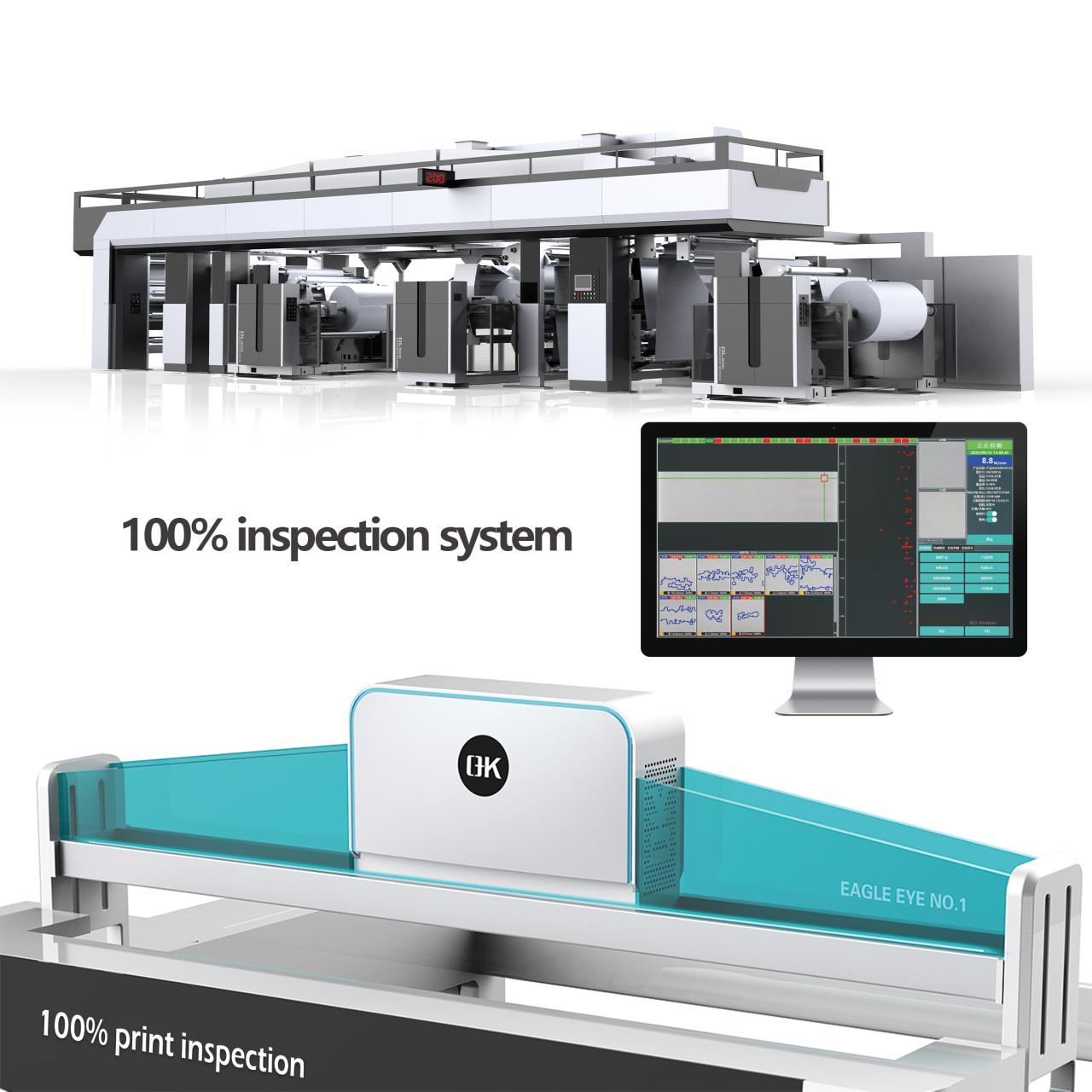
Modern inspection systems, like those built by Arise Web Guiding, have particular hardware systems that are highly superior to any post-processing rewind inspection.
High-speed Line-Scan Imaging and Area Scan
While consumer-level cameras take periodic “snapshots” (Area Scan), a Line-Scan imaging device works by capturing each row of pixels individually. This results in an endless flow of high-definition data of the whole roll. This is very important since many printing problems may be present only for a split second.
Advanced Optics for Complex Substrates
Flexible packaging faces unique optical challenges, and the advanced technologies of the year 2026 have finally been able to solve these problems:
- Reflective material: For aluminum foil or metal laminated materials, the system uses a multi-angle LED array to “smooth” the reflection, enabling the camera to capture the ink rather than the glare.
- Transparency and transparent coatings: The dedicated backlighting and contrast enhancement algorithms can detect pinholes or coating voids that are invisible under standard headlights.
The Instant Feedback Loop
The main value of real-time detection lies in the immediate alert system. When the defect exceeds the preset tolerance range, the system can:
- An audible and visual alarm is triggered to alert the operator.
- Automatically mark the edges of the paper roll (using an inserter or marker).
- In case of an emergency, connect to the PLC of the printing machine and slow down or stop the production line.
Strategy for Implementation: Integration and Scalability
Transitioning to 100% print inspection does not require a complete overhaul of the entire factory or the immediate replacement of all old equipment.
Phase 1: Renovation of Existing Production Lines
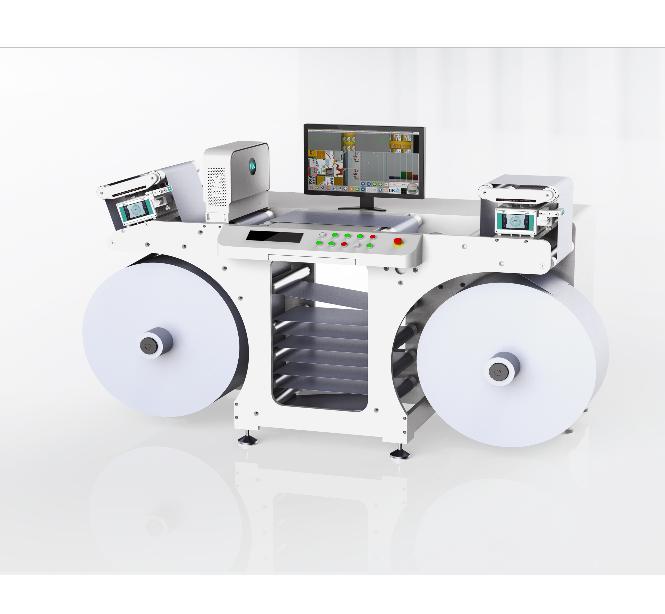
Many processors have successfully integrated modular inspection heads into existing continuous flexographic printing presses or slitting and rewinding machines. This makes phased investment possible, with the most critical “high-risk” production lines (such as those for medical or infant formula packaging) being upgraded first.
Phase 2: PDF to Printing Verification
To eliminate human errors during the setup stage, modern systems allow operators to upload the original design PDF files. The system then compares the first few meters of the actual printed product with this “golden master”. If there are installation errors or missing characters, the system will detect the problem before the actual printing begins.
Phase 3: Simplify the Work Process
For any technology to succeed in a busy production workshop, it must be easy to use. The focus in 2026 is on “one-click” operation loading. If the setup takes 20 minutes, the operator will consider it a hindrance. Modern user interface design is as intuitive as a smartphone, and it can be used with very little training.
Final
Today’s flexible packaging environment will not accept any “good enough” level of product quality. The divide between facilities that depend on automation and the rest of the field is evolving into an uncrossable gulf. With greater demands for transparency from consumers and less room for error, the need for total real-time inspection has become essential in today’s manufacturing process.
Installing automated systems is much more than acquiring another machine, but an investment in your company’s reputation and long-term viability. Human error caused by fatigue can be eliminated when utilizing the consistency of fast optic scanning machines to achieve true operational excellence.