
How to Reduce Printing Defects in High-Speed Web Production?
In the printing and converting industries that rely heavily on the web, increased production speed is mostly considered a shortcut to the desired outcome of higher output and lower unit cost at the same time. Yet, contrary to this belief, a lot of manufacturers find out that, in fact, the opposite is true; whenever the line speed is raised, the amount of printing defects also rises, sometimes to an astonishing extent.
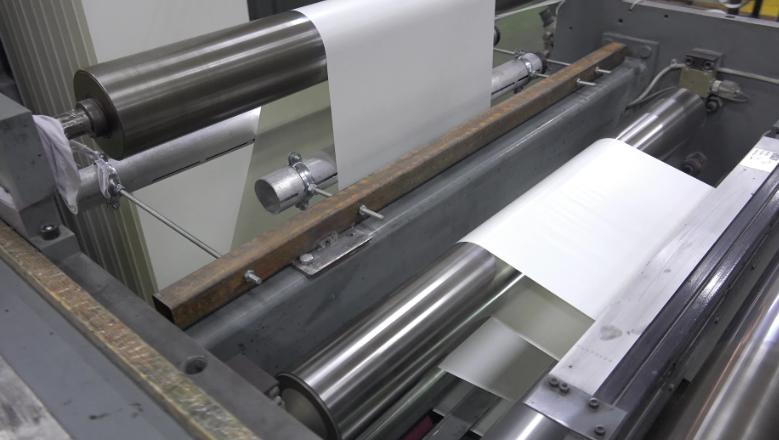
The web at the production line’s high speed passes through in a fraction of a second. Any slight change in tension, ink supply, plate condition, or mechanical alignment can result in visible defects right away. A problem that, at low speed, seemed to be a minor issue can easily turn into a serious quality problem when thousands of meters are produced every hour.
Another important aspect is the time it takes to react. The faster a production run, the shorter the time for the operator to detect problems and make adjustments. If a defect is already recognized, the quantity of wasted material could be great. This is why defect control has become one of the biggest challenges in the area of high-speed web production.
Table of Contents
Why Defects Are Hard to Control at High Speed
The higher the production speed, the more printing defects come out unavoidably and more secretly. In high-speed web production, the defects that arise can occur within seconds, and they are able to affect the entire output very rapidly. Some of these problems are not at all new, but they do become extremely hard to manage when the whole operation is running at a maximum speed.
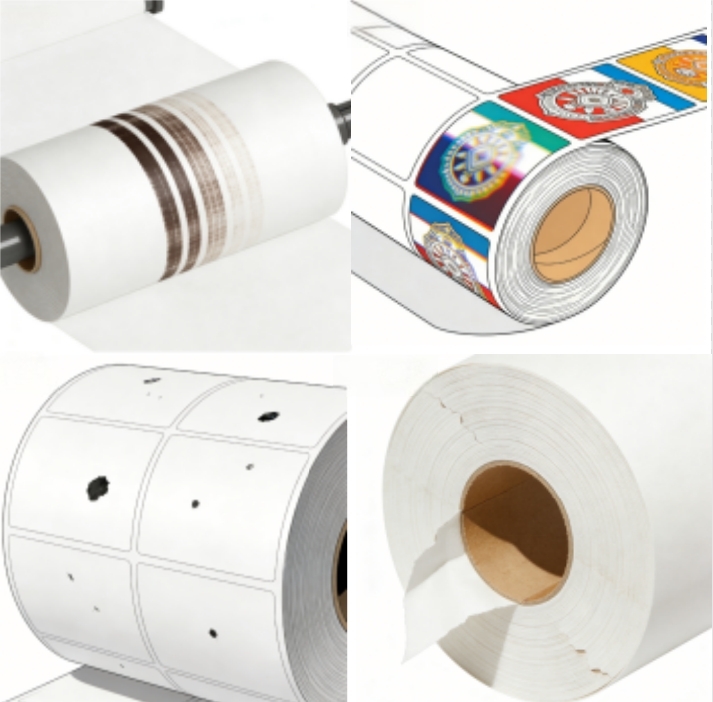
The defects that are most often seen are:
- Color variation and misregistration are frequently due to unstable web tension, changes in ink viscosity, or slight misalignments of the mechanical components.
- Streaks, lines, and banding, which in most cases are caused by roller wear, damaged doctor blades, or contamination of printing components.
- Missing print and weak print areas, for which ink supply fluctuations, plate wear, or poor ink transfer are potential causes.
- Spots and foreign particles, which are the result of dust, debris, or material contamination entering the process during production.
- Wrinkles, creases, and web breaks which are generally associated with tension imbalance or unstable web handling.
The major difficulty posed by these imperfections is their sporadic character. Most of them usually last for a short time and might be gone before the personnel observe them. In such a fast-paced environment, it is impossible to have a manual inspection that can pick up every defect reliably, more so when the web is in continuous motion.
Thus, defects are usually detected very late—at the time of rewinding, slitting, or after delivery—causing unnecessary waste, rework, and customer complaints.
Traditional Methods to Reduce Defects And Their Limitations
Traditional quality control methods, in combination with others, still play an important role in the daily operations of most web production facilities. These approaches have been around for a long time and have not yet been completely replaced by modern methods.
Some of the most prevalent traditional techniques are:
- Operators conducting manual visual inspections during production
- Printed materials are being randomly sampled for quality control checks done offline
- Rewind and slitting inspections
- Adjustments of the processes based on the operator’s intuition
The aforementioned methods are capable of detecting obvious and continuous defects, but they do not suit high-speed web production. Manual control over the entire web is not possible, and reliability decreases with an increase in line speed. Sampling only gives incomplete information, and therefore, it often overlooks short or random defects.
The defects are revealed very often after the production is over, and no corrective actions are possible then. In such cases, the wastage of materials in terms of scrapping or reworking may already be huge.
With the increasing production speed and quality demand, the limitations are becoming more and more expensive.
The Role of Web Inspection System in Defect Reduction
In order to considerably minimize printing flaws even at the fastest rate, a manufacturer must have an ideal, live, and impartial quality control system all the time. A modern Web Inspection System is the critical component here.
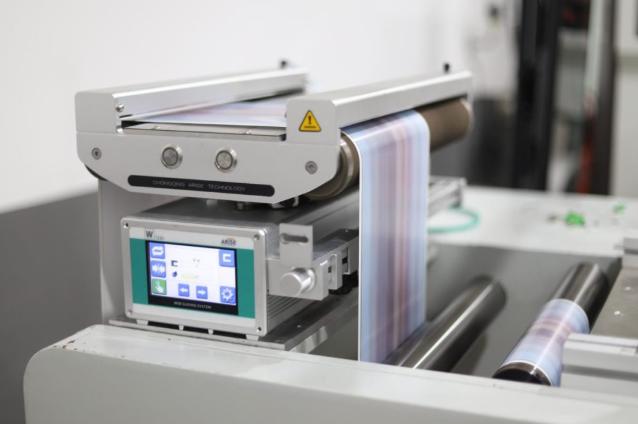
An industrial web inspection system, through the use of high-quality cameras, controlled lighting, and smart software, observes the web throughout the production using the same technique and quality as in the full production process. Therefore, instead of only checking some samples or certain areas, the system inspects the entire web at the same high production speed.
100% Inspection at Full Production Rate
The major benefit that a web inspection system can offer is 100% inspection.
The system takes images of the web without interruption, thus guaranteeing that every part has been examined. Even very short, momentary defects that last for only a fraction of a second can be identified and stored. This degree of control simply cannot be obtained through manual inspection.
For the production of high-speed web, this signifies that defects are no longer covered up. Quality information is accessible for every meter that has been produced.
Early Detection and Rapid Response
An inspection system for webs gives instant feedback.
The system identifies the fault on a live basis and notifies the operator. This makes it possible to quickly change over the ink supply, the tension settings, or even the mechanical parts before the fault goes further.
Real-time detection greatly cuts down on waste. Instead of finding defects after thousands of meters have been produced, manufacturers can respond in seconds. This results in smoother processing and lower waste rates over a longer period.
Reliable and Uniform Quality Standards
Another major advantage is uniformity.
In the case of a web inspection system, defects are determined by software parameters and not by subjective opinions. The same defect will be detected and classified in the same way, no matter who is working or what time it is.
This uniformity aids the manufacturers in setting up unambiguous quality standards, enhancing traceability, and producing trustworthy inspection records. It is particularly advantageous for customers who want quality control and adherence to industry standards to be documented.
To Conclude
As web production speeds go up, it becomes more and more difficult to control printing defects, mainly because of process instability, limited human inspection, and delayed quality feedback. Modern high-speed operations have surpassed the traditional inspection methods in terms of control. A real-time web inspection system implemented by the manufacturer gives him full visibility of print quality, faster response to defects, and more uniform quality standards.
If you want to lower waste, raise product quality, and make your high-speed production process more stable, learning about the web inspection system’s role in your line is a very useful next step. Arise is ready to help you with a thorough discussion of your application and inspection needs! Contact us at any time!