

How Print Inspection Systems Handle Eco-Friendly Materials?
Using eco-materials such as PLA or PBAT films as well as kraft paper is no longer negotiable for packaging plants. Consumers are asking for eco-materials, and printers need to supply them.
However, handling green substrates such as eco-materials is far from easy in the manufacturing process. Printers soon realize that such substrates are not as easy to process as regular PE and PP. Green substrates stretch differently, require different printing techniques, and lead to increased defect rates in a very short time. With today’s costs of materials, leaving your machines to work without proper inspection will ruin your profits immediately.
Human eyes and simple strobes are ineffective when working with such substrates. Automated print inspection solutions were created with this particular issue in mind.
Why Do Eco-Friendly Materials Cause More Printing Defects?
The stability of conventional plastics contrasts starkly with eco-materials that are unpredictable. These materials behave differently when exposed to drying tunnels or when going through impression cylinders.
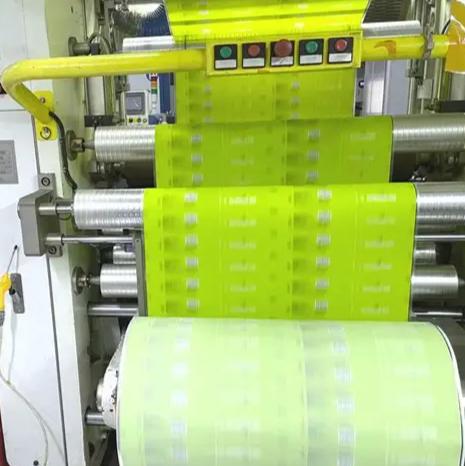
Biodegradable Films (PLA, PBAT)
Stretch from Heat and Tension: Eco-plastics usually have a lower melting point and high elasticity. They stretch when subjected to heat from the tunnels and web tension. The movement leads to instantaneous registration issues.
Reduced Dyne Level: Surface treatments on bio-films degrade rapidly. If the dyne level is below that required by the ink, you will get problems such as ink lift-off and scratching.
Kraft Paper & Recycled Stock
Variation in Absorption: Kraft paper lacks a coating and therefore is quite porous. As such, the ink penetrates certain areas and remains on the surface at other places, resulting in missing dots and color differences.
Paper Dust Buildup: Recycled material continuously loses fibers, resulting in buildup of paper dust on the print plates or gravure rollers, creating hickeys, streaks, and ink smudges across your job.
How Print Inspection Systems Solve These “Green” Challenges?
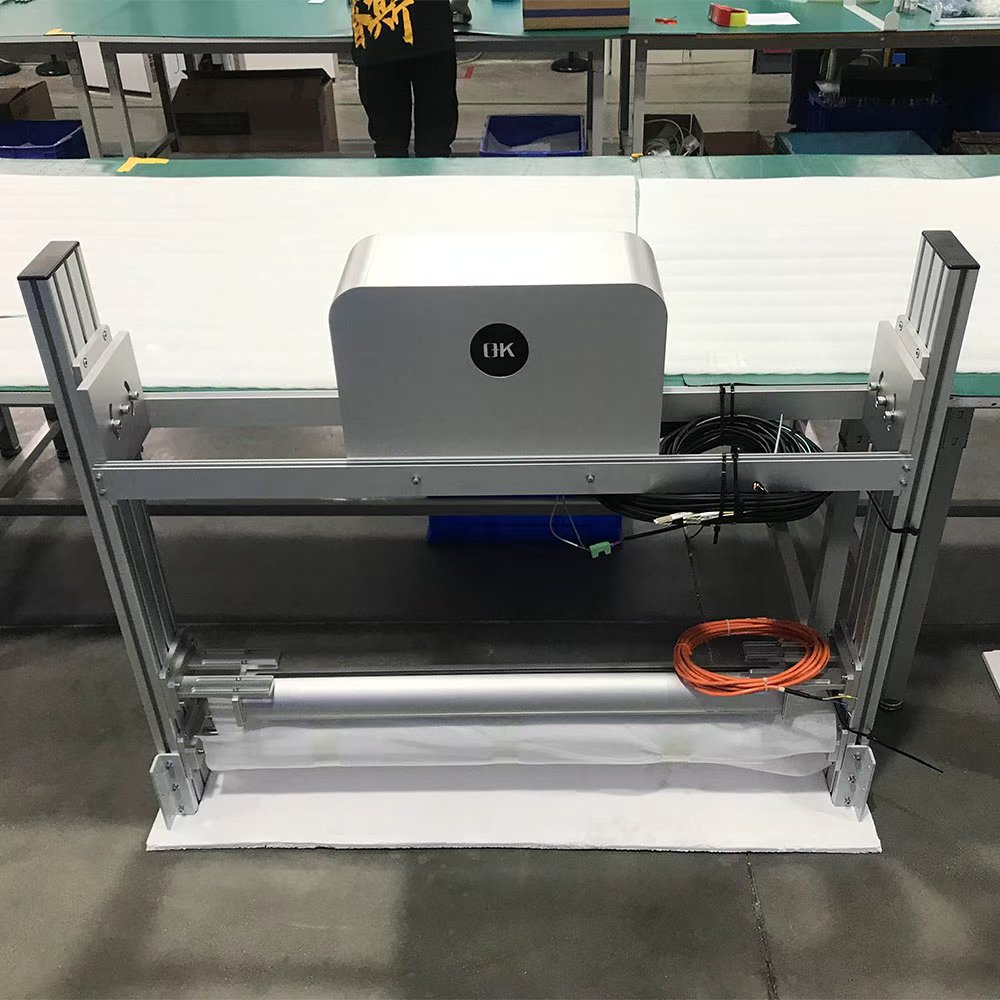
In order to avoid losses due to wastage while printing, the current machine vision solutions employ certain hardware and software upgrades for handling variation in substrates.
100% Real-Time Inspection For Print Defects
Printing at a rate of 300 meters per minute, a human inspection will not be able to detect a repeat print defect in clear bio-film after wasting hundreds of meters of precious material.
An automated solution will rely on high-speed line scan cameras that will perform 100% real-time inspection using two distinct technologies:
- Dynamic Tolerance Matching: With ordinary inspection technology, the slightest deviation due to stretching of the material would result in an error, thereby stopping the process line. New technologies apply methods for changing pixels. The software continuously monitors the slight stretch of the film and adapts the template “golden image” to match the stretching of the film. It will not detect slight material stretch, which is allowable, but will notice ink smears, broken text, etc.
- High Frame Filtering: Line-scan cameras operate at tens of kilohertz speed. The system is able to distinguish between dust flying from the paper that will disappear by the next scan and a defect, such as a scratch on the plate.
Advanced Color Management and Contrast Adaptation
Conventional vision systems focus on contrast differences against a uniform background, such as either white or transparent surfaces. This creates problems with Kraft Paper since its dark color and uneven fibers reduce contrast between the printed material and the substrate.
- Multi-directional Zoned LED Lighting: Due to the textured nature of Kraft paper, the light used is a combination of inline coaxial and low-angle light bars. Such a combination eliminates all micro shadows formed by the uneven paper fibers, thus digitalizing them to create a smooth substrate, allowing the camera to read only the ink layer.
- Color Distance Calculation: Rather than focusing on grayscale contrast detection, the software uses color distance measurement against a moving reference point. It continually checks the unprinted Kraft paper area to establish the color of pulp fiber variation. Once it finds that color, it can compare it against the ink color without mistaking pulp color differences for ink density defects.
Web Guiding System Synergy in Inspection
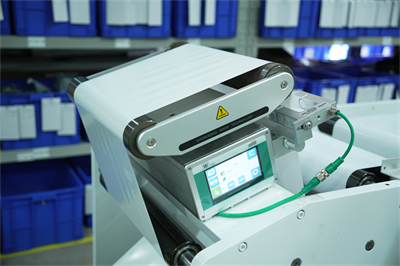
A print inspection camera can only inspect what is seen clearly. If the web material is fluttering, creased, or veering side to side, the camera would be unfocused, and any data collected would simply be garbage.
Eco-friendly materials are very prone to instability during transport. Flexible bio-films tend to become tangled whenever there are changes in tension, while the rugged edges of the Kraft paper often unwind in anything but a straight line.
Here is how web guiding system works:
- Focus Lock: When a thin layer of the biofilm shakes on the roller, it causes variation in the space between the lens and the film, resulting in blurry images and causing the system to reject the film erroneously. The web guider fixes the material by pressing it onto the idler roller under constant tension, ensuring a completely stable image for the camera to analyze.
- Elimination of Side Movement: Elastic or inconsistently wound eco-materials tend to wander from their path. The web guider uses ultrasonic edge detectors to spot any movement and adjust the position of the material before it reaches the inspection area, ensuring the print remains within the camera’s predefined tracking window.
Final Words
Operating sustainably and efficiently boils down to process control, not operating your machines more slowly. Biodegradable films and recycled paper stock have very large physical variations that cannot be overcome at the extruder or mill.
With the installation of a fully automatic print inspection machine coupled with an effective web guiding system upstream, you separate physical variation from printing problems. This way, you keep scrap rates low, prevent false alarms, and make sure your sustainable packaging production runs profitably.