
The Role of Precision Web Tension Controllers in Converting & Flexible Packaging
Modern soft packaging and roll material processing is increasingly moving towards applications with thinner, lighter and more heat-sensitive substrates. While this reduces material costs and enhances environmental attributes, it also poses significant challenges to stability control on high-speed production lines.
The high-precision sheet material tension controller is the key to addressing this problem. By continuously and precisely regulating the material strain in real time, the advanced tension management system can effectively control the waste rate, protect the vulnerable base materials, and ensure that each processing stage maintains the optimal output.
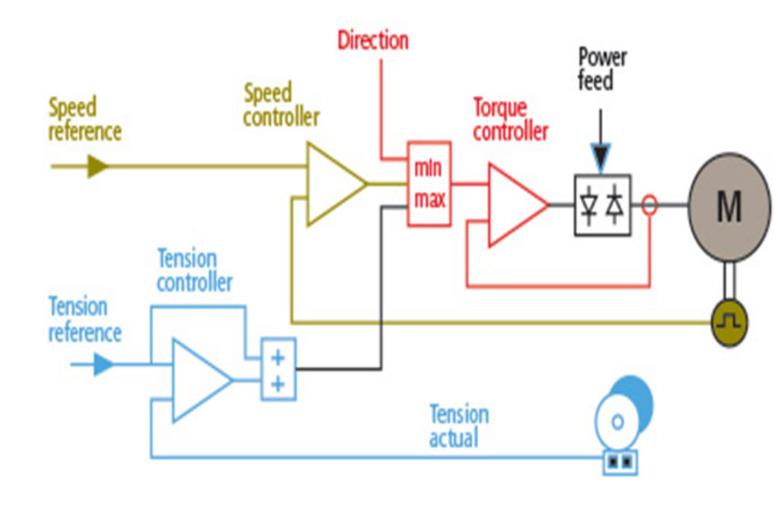
Table of Contents
Why Flexible Packaging Needs Precision Control
Soft packaging covers a variety of lightweight substrates, such as polyethylene (PE), polypropylene (OPP), polyester (PET), aluminum foil, and paper-based composite materials. Unlike rigid materials, these flexible substrates exhibit significant differences in mechanical properties, thermal expansion coefficients, and elastic moduli.
Lack of precise tension control can lead to serious quality defects even if there are slight fluctuations in line speed, roll diameter, or temperature:
- Material tensile deformation: Thin and lightweight polymers are prone to exceed the elastic limit when subjected to excessive tension, resulting in permanent distortion of dimensions and printed patterns.
- Sheet material wrinkling and sagging: Insufficient or uneven lateral tension can cause local sagging, resulting in wrinkles during the bonding or printing process.
- Base material breakage: Abrupt changes in tension can easily cause the thin aluminum foil or ultra-thin films (which are brittle materials) to break, resulting in unplanned downtime and material waste.
By using a dedicated high-precision tension controller, a constant tension can be maintained throughout the entire processing cycle, unaffected by changes in line speed or roll diameter attenuation.
Key Applications in Converting & Packaging Lines
In the field of sheet material processing (Converting), precise tension control is the foundation for the stable operation of all core equipment. The physical characteristics of different processes vary greatly, and therefore specific tension control strategies must be adopted.
Flexographic & Gravure Printing Presses
In multicolor flexographic printing and intaglio printing, extremely high registration accuracy is crucial. When the substrate passes through multiple printing units, even minor fluctuations in tension can cause local stretching of the substrate, thereby disrupting the micron-level alignment balance and leading to image blurring, text misalignment, or color bleeding. A high-precision tension controller can ensure that the tension remains highly stable throughout the entire transmission path, even under high-speed printing conditions, and guarantee precise registration performance.
Laminating & Coating Machines
The solvent-free and solvent-based composite production line is used to bond different substrates such as PET, aluminum foil, PE and paper. Due to the varying responses of different materials to tension and temperature, improper control can lead to uneven tension distribution during the composite molding process, which in turn causes curling, bubbling or delamination defects after curing. Precise tension synchronization ensures that the two substrates maintain the same relative tension at the composite pressing roller.
Slitter Rewinders
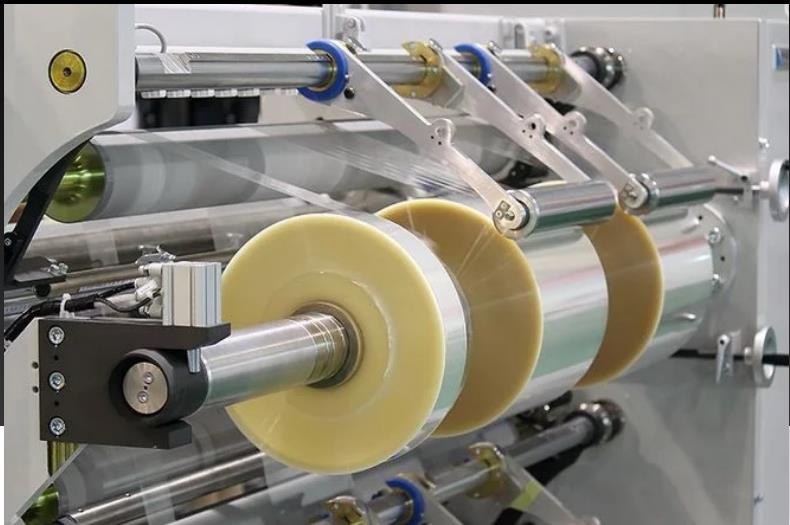
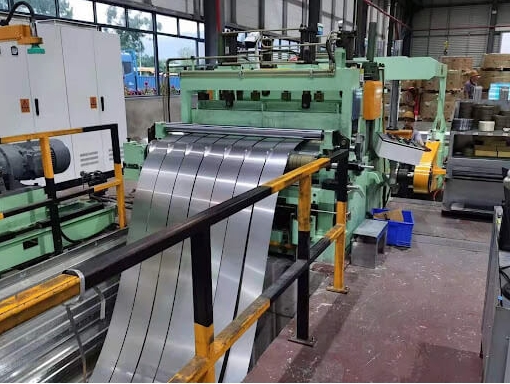
The slitting and rewinding machine precisely cuts large-sized master rolls into narrow rolls of the specified width during high-speed operation. As the unwinding diameter decreases and the rewinding diameter increases, the system’s rotational inertia continuously changes dynamically. The high-precision tension controller can adjust the torque in real time to prevent problems such as end face misalignment, paper core collapse, or loose outer layers during high-speed switching.
How a Precision Tension Controller Works: The Closed-Loop Difference
The basic open-loop system estimates the tension solely based on the roller diameter, while high-performance flexible packaging machines generally rely on closed-loop tension control systems.
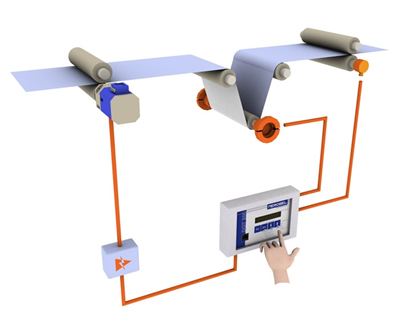
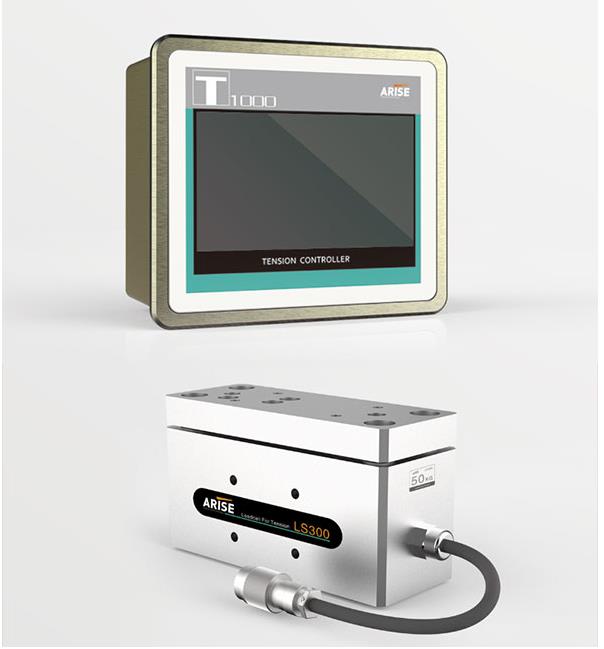
In the closed-loop architecture, the tension sensor or weighing sensor continuously collects the actual tension of the coil material and feeds this real-time load back to the tension controller. The controller compares the feedback value with the set target and immediately outputs correction instructions to the actuator (such as a magnetic powder brake, pneumatic clutch, or AC servo motor), thereby precisely regulating the coil material tension to the target value.
This continuous measurement and feedback loop has the following core operational advantages:
Preventing Web Wrinkling and Material Deformation
The closed-loop controller can real-time compensate for mechanical eccentricity, roller roundness error, and acceleration/deceleration shock, eliminating tension fluctuations. The film tension is stably controlled within the elastic limit, thereby eliminating sheet material stretching deformation, scratches, and longitudinal wrinkles.
Improving Printing Registration and Color Accuracy
By suppressing roll material jitter and eliminating tension drift between unwinding and printing stations, the system can lock the length of the roll material feeding path. This not only ensures extremely high registration accuracy but also significantly reduces startup waste and ensures clear and vivid colors.
Optimizing Taper Tension for Perfect Roll Quality
During the rewinding process, uneven tension is highly likely to cause air entrapment or internal stress accumulation, leading to “daisy core” (star-shaped) deformation or flattening of the roll core. The controller is equipped with a programmable conical tension curve. As the roll diameter increases, the rewinding tension automatically decreases according to the set ratio, ensuring that the end face of the finished roll is flat and the internal hardness is uniform.
Critical Converting Processes Requiring Precision Tension Control
To highlight the operational impact of tension stability, the table below outlines how precision control addresses specific challenges across core converting stages:
| Converting Process | Primary Tension Challenge | Impact of Precision Tension Control |
| Unwinding / Payoff | Rapidly decreasing roll diameter; high initial inertia | Smooth brake torque reduction prevents web snap and slack during emergency stops. |
| Coating & Drying | Heat exposure alters film elasticity and tensile strength | Compensates for thermal expansion, preventing web sag inside drying ovens. |
| Dry / Solventless Lamination | Mismatched tensile properties of different film layers | Equalizes web strain before the nip, eliminating post-lamination curling. |
| Rotary Die-Cutting | Intermittent shock loads caused by cutting blades | Isolates tension zones to prevent vibration from transferring back up the line. |
| Center / Surface Rewinding | Escalating roll weight and expanding leverage radius | Applies dynamic taper curves to ensure uniform roll hardness from core to outer rim. |
Key Features to Look for in a High-Performance Tension Controller
When selecting the tension control system for flexible packaging equipment, the engineering team should focus on evaluating the following key technical indicators:
- Millisecond-level digital response: The controller must be equipped with a high-speed microprocessor to achieve millisecond-level processing of weighing sensor signals and PID closed-loop control.
- Dual load cell input: It must support independent sensor inputs on both the left and right sides to accurately detect and compensate for the uneven lateral tension of the rolled material.
- Intuitive calibration and recipe management: In the face of frequent changes in substrates, the controller with a clear graphical interface, quick zero/range calibration, and multiple recipe storage functions can significantly reduce the time for changing production lines.
- Compatible with multiple types of actuators: The system should support diverse outputs such as 0-10V, 4-20mA, and PWM, enabling seamless and uninterrupted control of magnetic powder brakes, pneumatic valves, or variable frequency drives (VFDs).
- Correction and integration with the host system: Supports standard industrial buses such as Modbus, CAN, or Ethernet, enabling easy unified control with the main PLC and the correction system.
In the highly competitive field of conversion and flexible packaging, the accuracy of tension control directly determines the production profit. By upgrading to a high-precision closed-loop tension controller, equipment manufacturers can effectively eliminate the wrinkling of the roll material, ensure high-precision printing color matching, and at the same time significantly reduce material waste while outputting high-quality re-rolled products.
Whether it is the renovation of the existing slicing and rewinding machine, or the establishment of a brand-new multi-layer composite production line, or the introduction of an advanced tension control system, all these measures can significantly enhance the equipment’s production capacity and the quality rate of the finished products.