
How Web Inspection Systems Work for Ensuring Label Quality
In the packaging and labeling industry, it is very important to maintain a certain quality standard. Quality standards are important because labels are more than just identifying a brand, they carry important information related to the product, such as the ingredients, instructions, and compliance related to government regulations. Web inspection systems are necessary for ensuring label quality during the production process.
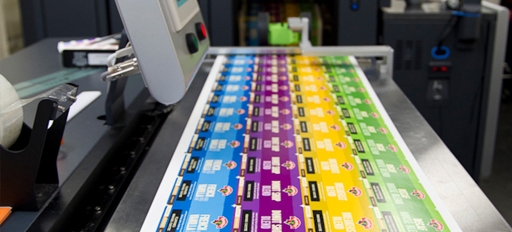
Table of Contents
Understanding Web Inspection Systems
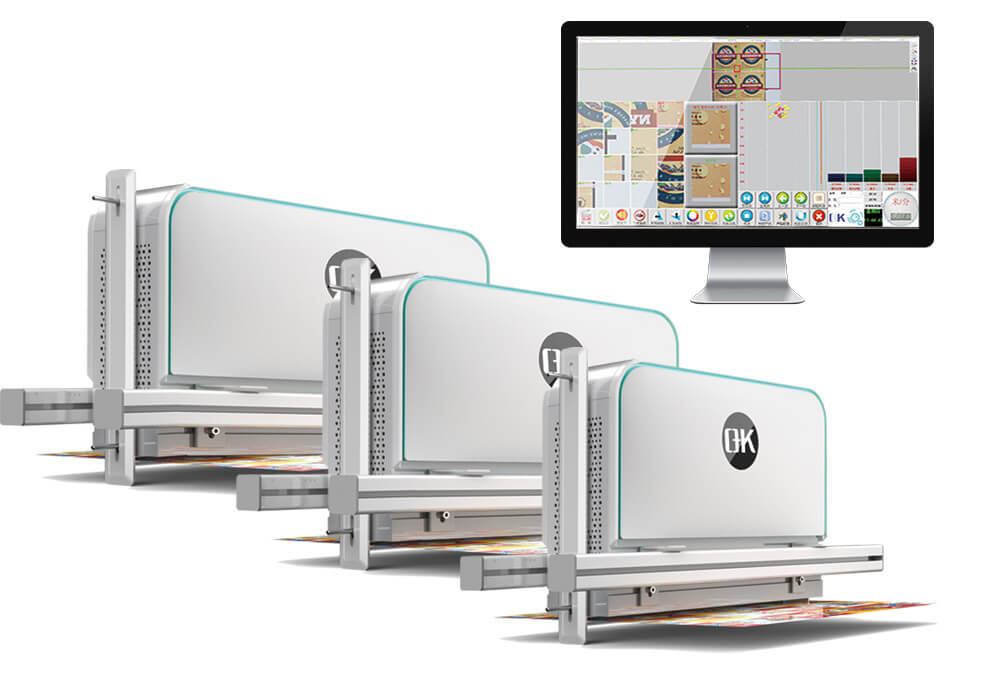
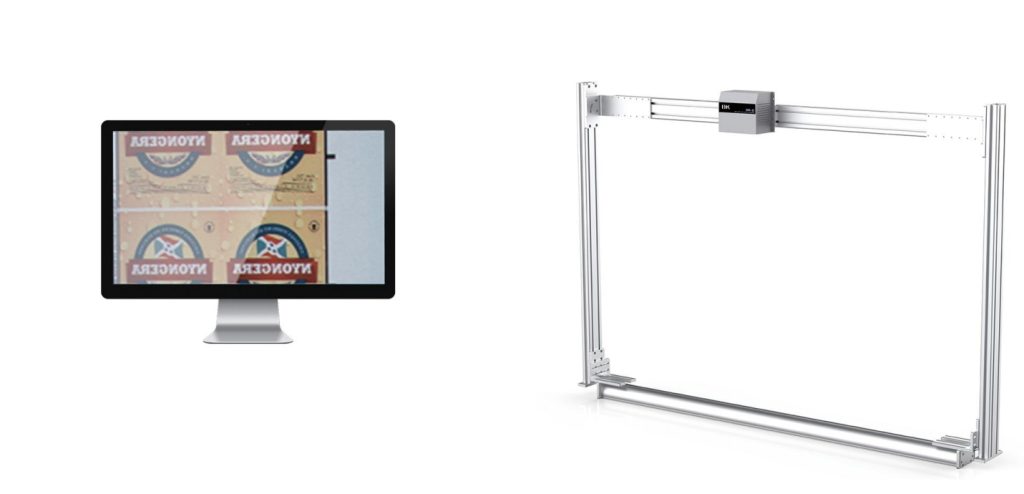
Web inspection systems are automated technologies that record in real time the production of a continuous roll of material, or in the case of labels, web, and analyse every printed and produced label on the production line, identifying precisely and quickly the defects that an individual, regardless of their abilities, may overlook. Web inspection systems improve quality control on a production line by providing real time feedback. If a defect is identified, immediate corrective measures can be taken to avoid a multitude of defects in the production run.
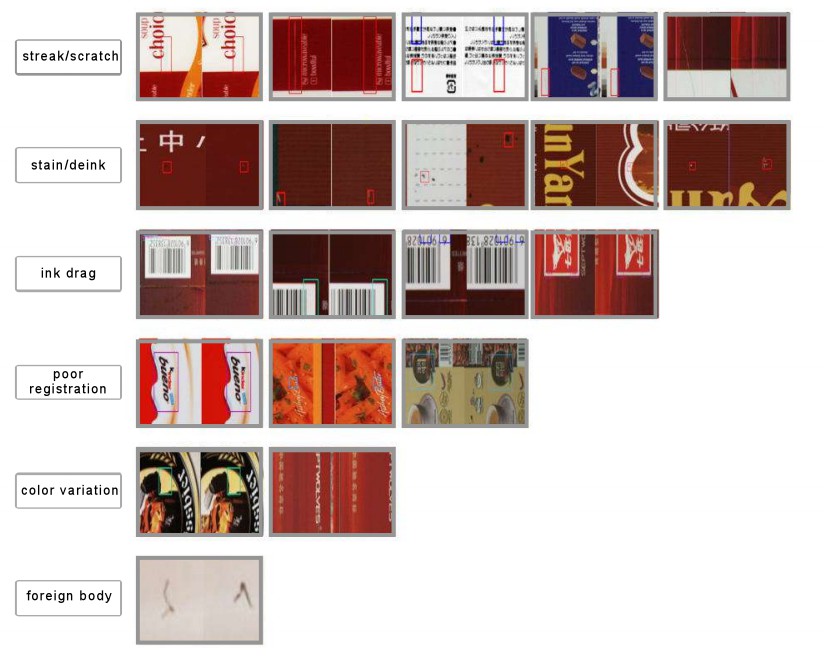
Key defects that web inspection systems can detect
| Defect Type | Description | Impact on Label Quality |
| Print Defects | Smudges, streaks, missing elements, blurred text or images | Reduces visual appeal, can mislead consumers, and damage brand image |
| Color Inconsistencies | Variations in color shade or density across labels | Causes branding issues and inconsistency in product appearance |
| Registration Errors | Misalignment of text, graphics, or multi-color prints | Affects readability, aesthetics, and may violate compliance standards |
| Cutting / Die-cut Errors | Incorrect die cuts, perforations, or spacing between labels | Leads to wasted material, misfit on products, or machine jams |
| Material Flaws | Tears, wrinkles, contamination, or surface defects | Weakens label integrity and reduces product protection |
| Barcode / QR Code Errors | Missing, incomplete, or unreadable codes | Impacts traceability, logistics, and regulatory compliance |
| Adhesive Problems | Labels not sticking properly or peeling off | Causes packaging failure and reduces customer satisfaction |
Key Components of Web Inspection Systems for Label Quality
| Component | Function | Importance for Label Quality |
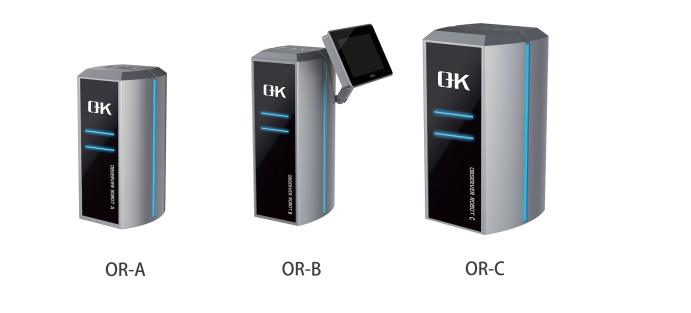
| High-Resolution Cameras | Capture detailed images of labels in real-time | Detect print defects, registration errors, and material flaws accurately |
| Lighting System | Provides consistent illumination of the web surface | Enhances image clarity for accurate defect detection, reduces false positives |
| Image Processing Software | Analyzes captured images using algorithms | Identifies defects, misalignment, color variations, and cuts in real time |
| Web Transport and Control | Moves the label web at a controlled speed | Ensures stable inspection and prevents errors caused by web motion |
| Defect Marking/Reject Mechanism | Marks or removes defective labels from the production line | Prevents defective labels from reaching packaging or shipment |
| Data Logging and Reporting | Records defect data and generates reports | Enables traceability, quality control analysis, and continuous improvement |
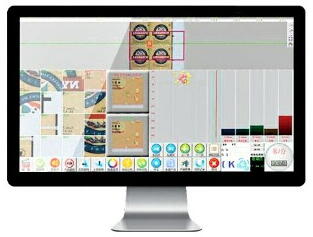
| User Interface /Operator Console | Provides control and monitoring of the inspection system | Allows operators to adjust settings, view defects, and make production decisions |
Advantages of Implementing Web Inspection Systems for Label Quality
Web inspection systems are an important part of the modern production of a label. Automated control systems facilitate the continuous production of high quality products and allow efficient use of resources.
1. Enhanced Quality Assurance
The first advantage of integrating these systems is the guarantee of consistent quality and supreme labels. With the help of technology, real-time tracking of each label is possible, unlike in manual inspections, where human error is inevitable. The systems mark each label and compare them to determined quality standards to flag any errors, such as misplaced artwork, color variation, smudging, and barcode defects. Only labels without defects are permitted to go to market.
2. 100% Data Verification
The web inspection systems provide 100% data verification, which is another advantage. Every label could be verified independently and checked for correctness. The 100% inspection systems for label quality, are critical for industries such as pharmaceuticals, food and beverages, and chemicals, where tracing is mandatory. With real-time data verification, manufacturers eliminate the risk of misprints or gaps in information, which improves compliance and safety for the consumer.
3. Reduction of Waste and Production Costs
Web inspection systems reduce waste and production costs. By identifying production defects early, broken labels can be removed, avoiding large scale waste of materials and labor. In addition, fewer defective labels enter the marketplace, thus avoiding costs such as returns, recalls, and damaged reputations. In the long run, the cost of web inspection systems pays for themselves.
4. Improved Operational Efficiency
The automated web inspection systems promote production efficiency. Rapid inspections mean even large production runs can be monitored without line slowdown. Automated reject systems quickly remove faulty labels, preventing downtime. Ongoing inspection systems lessen the need for manual inspections, allowing for higher production output and quality.
5. Regulatory Compliance and Brand Protection
Web inspection systems promote the protection of consumers and the company. Laws mandate information on labels, especially in highly regulated markets. The systems detect missing, pareddown, inaccurate, and illegible information, ensuring every label is compliant. This enhances company reputation, safeguards consumer confidence, prevents costly and embarrassing product recalls, and compliance fines. Wet inspection systems mitigate brand risk.
6. Data-Driven Insights for Continuous Improvement
Advanced web inspection systems offer an extensive range of analytical and reporting functionalities. By analyzing the information garnered from defects, their frequencies, and production trends, an understanding of these issues allows for the appropriate optimization of production processes. These insights can be applied by manufacturers to take corrective actions and fine-tune printing parameters to achieve continuous improvements in quality and efficiency of processes.
Applications of Web Inspection Systems in Label Production
| Application Area | Purpose | Benefits |
| Food and Beverage Labels | Ensure accurate printing of nutritional info, expiration dates, and branding | Compliance with regulations, consistent brand image, reduced recalls |
| Pharmaceutical Labels | Verify dosage instructions, safety warnings, and batch numbers | Prevents critical errors, ensures patient safety, meets strict regulatory standards |
| Cosmetic and Personal Care Labels | Maintain color consistency, graphics alignment, and brand aesthetics | Enhances visual appeal, supports premium branding, reduces waste |
| Industrial and Chemical Labels | Check barcodes, serial numbers, hazard warnings, and material integrity | Ensures safety compliance, prevents mislabeling, improves traceability |
| Promotional / Retail Labels | Inspect high-volume runs for print quality and design consistency | Reduces defects, maintains marketing quality, supports fast turnaround |
| Security and Holographic Labels | Verify holograms, embossing, or tamper-evident features | Protects against counterfeiting, ensures authenticity, enhances brand protection |
Challenges and Considerations for Implementing Web Inspection Systems for Label Quality
Manufacturers need to carefully consider several technical, operational, and organizational factors to ensure successful integration and optimal performance of web inspection systems.
1. Technical Challenges
Concerning the installation of a web inspection system, a variety of technical issues must be solved. A great deal of resolution in the cameras, correct lighting, and sophisticated software is required to detect even tiny flaws, but bad calibrations, or setups, can result in false positives, or, missed defects, which is an imbalanced system in need of resolution. At even the highest production speeds, it can be especially difficult to keep the cameras and the web in alignment. Additionally, variations in label materials, inks, and printing methods can affect inspection accuracy, requiring customization of the system to specific production lines.
2. Integration with Existing Production Lines
Seamless integration of web inspection systems with existing printing and converting equipment is another important consideration. Not all inspection systems are compatible with all types of printing technologies: digital, flexographic, offset, etc. Manufacturers need to ensure that systems are capable of communicating with production lines on a seamless basis to avoid bottlenecks and other disruptions. In some cases, retrofitting older equipment is necessary, introducing additional complexity and costs.
3. Managing Data and Analytics
Web inspection systems capture volumes of inspection data, from defect detection logs to production metrics, and high-speed production environments. Manufacturers have a need for actionable data to be derived for greater value, and without effective data management, systems lose most of their value through unencountered defects or incomplete inefficiencies.
4. Balancing Speed and Accuracy
A common issue in many industries is how to control the accuracy of a product inspection when production speed is high. Defects can slip by undetected, and the fault of that oversight can often be attributed to the fault of the inspectioning soft/hardware. Striking the appropriate speed to resolution ratio is the result of a thorough and precise choice of quality soft/hard ware and is the result of steady ongoing measuring of performance as time goes on. Manufacturers also need to be concerned with the optimization of overall efficiency when a clear trade-off exists between the inspection of extremely fine details and the rate of false negatives.
5. Training and Workforce Adaptation
When deploying a web inspection tool, the production staff responsible for operating, maintaining, and interpreting the inspection results each need to undergo training. An untrained person can cause system inefficiencies by not operating it correctly, or may even cause unintentional system downtime. A system user training program, along with standard operating system documentation for routine system troubleshooting and maintenance, is an organizational must. The quality control and efficiency of the operations can be improved, but to fully enjoy those benefits the system user training must be required, as it is the key to system acceptance.
6. Maintenance and Calibration
To ensure that high detection accuracy is sustained, web inspection systems require routine maintenance and adjustments. Periodic checks and refinements are necessary for software calibration, camera settings, and lighting systems. Increased vibration, temperature changes, and dust are environmental issues that can affect the functioning of the systems. To ensure sustained dependable functioning for the systems, manufacturers should incorporate systems of predictive maintenance to mitigate the risk of sudden downtime.
7. Cost Considerations
A web inspection system is a costly acquisition that includes the purchase of machinery and equipment, the installation process, training of personnel, and continual system upkeep. While the benefits over time, like loss mitigation, enhanced quality, and adherence to industry regulations, tend to validate the costs, organizations should determine the costs and benefits of the system to define value from an operational and budgetary standpoint. Expenses and the financial gains from the system should be assessed considering the operational aims and budget of the organization.
Future Trends in Label Quality Web Inspection Systems
Label quality inspection systems have a promising future brought about by advancing technology that aims to improve and streamline the performance and operational capabilities of the systems.
1. Integration of Artificial Intelligence and Machine Learning
One of the most significant trends in web inspection systems is the integration of artificial intelligence (AI) and machine learning. Defect retention, loss or deviation can easily be isolated, analyzed and identified by the advanced inspection systems integrated with AI. With machine learning, it is possible for systems to be made adaptable and intelligent, insulating themselves from taxing manual reformatting to systems to allow changing to new materials and labels.
2. Real-Time Data Analytics and Predictive Insights
The use of modern web inspection systems is expected to further developed and be integrated onto highly advanced data analytics to provide immediate data reflection of the running production system. Understanding the data that shows a pattern of defects, creates a unity of production systems, and integrates to performance of equipment is going to give the manufacturer the ability to enhance production systems. Predictive data models allows the manufacturer to know and respond to impending defects and quality loss to enhance efficiency of the production systems.
3. High-Speed and High-Resolution Capabilities
With the advancing speed of production, future web inspection systems will have even greater speed and resolution capabilities. Cutting-edge Defect-detecting cameras and lighting systems will be able to detect minor defects without sacrificing production throughput. This means even higher volume production lines will consistently produce defect-laden labels. Consequently, the likelihood that errors and defective products will be produced and disseminated to the market will be reduced.
4. Multi-Sensor and Multi-Modal Inspection
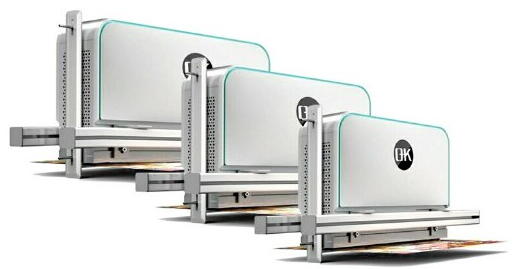
To boost defect detection, new systems are incorporating multi-sensor and multi-modal inspection. The combination of visual with infrared, UV and laser sensors lets inspection systems detect a greater variety of defects, including minor color changes, surface dirt, and material inconsistencies. This thorough strategy enhances predicaments overall reliability and accuracy, especially with complex, high-value label jobs.
5. Automation and Integration with Smart Manufacturing
Web inspection systems are becoming an important part of smart manufacturing. The integration with manufacturing execution systems (MES), Programmable Logic Controllers (PLC), and automated reject systems allows for greater communication synchronization. This integration of systems promotes automated quality control and immediate feedback, streamlining operational processes to be more efficient.
6. Future-Proofing Through Flexible and Scalable Systems
There has been an increase in demand by manufacturers for systems that can be flexibly adapted and scaled to meet the changing inspection demands of production. With modular systems, it is possible to make hardware and software upgrades without extended downtime, while scalable configurations can deal with additional sizes, materials, and methods of printing labels. This ensures continued capital sustainability and optimal ROI with respect to web inspection technology.
Summary
Web inspection systems are essential for ensuring label quality in contemporary production. Through the provision of accurate and non-defective labels, these print inspection systems assist companies in protecting their reputation, adhering to regulations, and in the minimization of waste in production. The continuing advancements in technology, especially the integration of artificial intelligence and analytics, will equip manufacturers with the ability to fine-tune their operational efficiency to unprecedented levels in label production.