
The Integration of Web Guide Systems with Automated Inspection Systems
In today’s high-speed manufacturing environments, which are seen in several industries such as printing, packaging, textiles, and film processing precision and quality control have been handled with considerable rigor. Web guide systems and automated inspection systems fall into the two major technologies enhancing such logic control. While maximizing the efficiency and intelligence of one of these due to the other shows some value, the integration of these technologies sustains a higher level of efficiency, precision, and process control. This article discusses how the integration of web guide systems with automated inspection systems results in enhancing production performance, reducing wastage and supporting the evolution toward intelligent manufacturing.
Table of Contents
Understanding the Core Functions of Web Guide Systems and Automated Inspection Systems
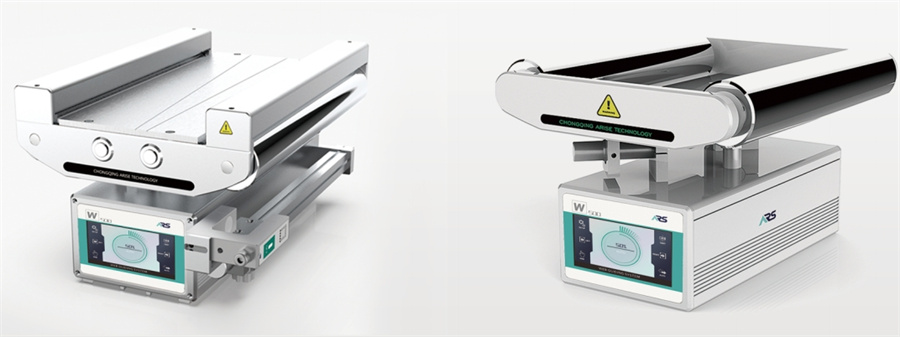
Web Guide Systems
The main function of web guide systems is to keep the web (such as paper, film, foil, textile, or other material) in the desired lateral position. These systems feature sensors and actuators. By sensing the web’s lateral misplacement and taking necessary action, they ensure the right alignment across the production line.
The main functions of these systems are:
- Edge and centerline alignment
- Material wandering reduction
- Better product consistency
Automated Inspection Systems
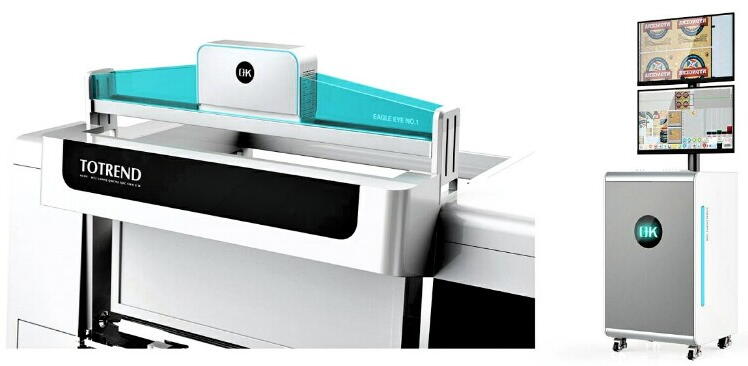
Automated inspection systems use machine vision, cameras, and intelligent algorithms can detect defects in real-time. The systems could identify defects like surface defects, misprints, impurities, or dimensional inconsistencies.
Key capabilities include:
- High-speed image capture
- AI-based defect recognition
- Real-time quality monitoring
Why the Integration of Web Guide Systems with Automated Inspection Systems is Important
The importance of web guiding control system integrated with automated inspection systems is that it ensures a seamless, smart production process.
1. Bridging the Gap Between Detection and Correction
Nonetheless, automated inspection systems are only able to determine defects and inform the system that the web guide mechanism ought to run in the process-the system usually meets this demand. This sequence creates a delay from defect detection to the possibility of correction. Setups must try to integrate inspection data to align the controls4 of the DFS. If this is achieved, the proper adjustments may be implemented with minimal delay and in close proximity to the issue. This approach virtually eradicates product defects because timely means of adjusting for alignment problems can benefit the performance required by the system-in contrast to having to react after a product is already tarnished by poor quality.
2. Enhancing Product Quality Consistency
Industries with continuous webs need to uphold a commitment to good quality to prevent film, paper, textile, and packaging materials from being wasted. They would otherwise tend to download the document(s) perinatally associated with the inspection apparatusess, the web guides related to it. The system identifies defects from such accidents which result from misalignments, thereby quantifying them. It would adjust them on their own, giving continual assurance of compliance with strict quality standards for the entire production set.
3. Reducing Material Waste and Production Costs
Defective products that are not identified right after the earliest stages of production will lead to massive amounts of unnecessary wastage. It can now be made possible, with the combined employment of real-time inspection and immediately corrective alignment responses, for manufacturers to cut down heavily on scrap rates. Apart from anything else, increasing the outflow of raw materials for little more than no good reason, it also damages production significantly in terms of efficiency and reduces the scope of sustainability.
4. Enabling Real-Time Process Optimization
The integration essentially converts disparate systems to a single data-path control loop. Inspection data is not just used for quality reporting but can now offer assistance with process optimization. Guiding parameters can be adjusted dynamically by the system upon receipt of live feedback to achieve outstanding performance even during variables of speed variations or material inconsistencies.
5. Supporting High-Speed Manufacturing Requirements
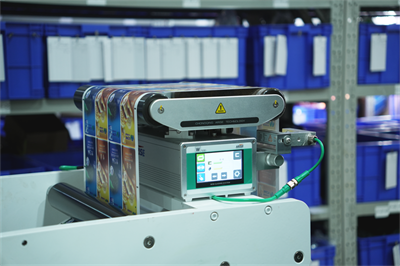
As line speed increases, the margin for error becomes increasingly smaller. Manual intervention and/or delays are strictly forbidden. An integrated system capable of receiving data, handling signals, and carrying out corrections within a very minuscule time fraction to maintain exactitude at those fast speeds is, therefore, needed for high-speed machining. It also lets the manufacturer increase outputs while still being accurate and reliable.
6. Improving Operational Efficiency and Automation
The integration strategy reduces the demand for manual intervention as well as manual synchronization. Opertors can trust the integrative system to execute automatic detection and calibration of the component parts, thus giving them an opportunity to work on highly intellectual operations like process optimization and the planning of maintenance. Thus, this change boosts efficiency while earning benefits for future fully automatic, smart manufacturing environments.
7. Providing Comprehensive Data for Decision-Making
An integrated system results in one united data-set, where tracking information is combined with defect data. This data aids in analysis of production trends in recognition of repeated problem occurrences and in decision making. This ultimately means more process stability, predictive maintenance, and continuous improvement programs.
8. Strengthening Competitiveness in Modern Manufacturing
Given the highly competitive nature of today’s industrial scenario, manufacturers are under great pressure to bring out high-quality products at a lower cost and above all, time. Integration of the web guide system with automated web inspection vision systems is an edge to all the precision that minimizes waste and eliminates inefficiencies. Companies that adopt such defined systems are in a better position to yield resources that meet customer expectations and evolve with the changing market.
Key Approaches for Integrating Web Guide Systems with Automated Inspection Systems
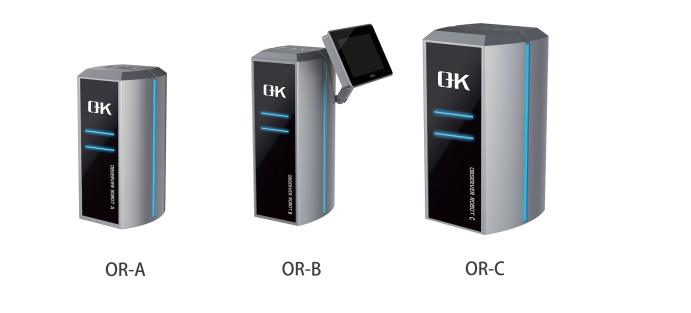
Alignment of data flows, control logic, and system architecture offers the basics for integrating web guide systems with automated inspection systems. The success of such integration progresses with the right application of technical approaches that are responsive, dependable, high-speed, and scalable.
1. Synchronizing Sensing and Measurement Systems
A fundamental task in successful integration is the synchronization and compatibility of sensing information for both systems. Web guide sensors track material transverse motion, and cameras or other recording devices monitor the surface for imperfections. Once timers and math are used in comparing scales at the speed of the moving material, both the inspection system and web guiding system can indeed find the time and place to corner any detection to its web material location. This synchronization also ensures that other associated issues can be identified with pinpoint accuracy, thereby leading to precise corrective actions instead of broad brush stroke corrections.
2. Establishing Real-Time Communication Protocols
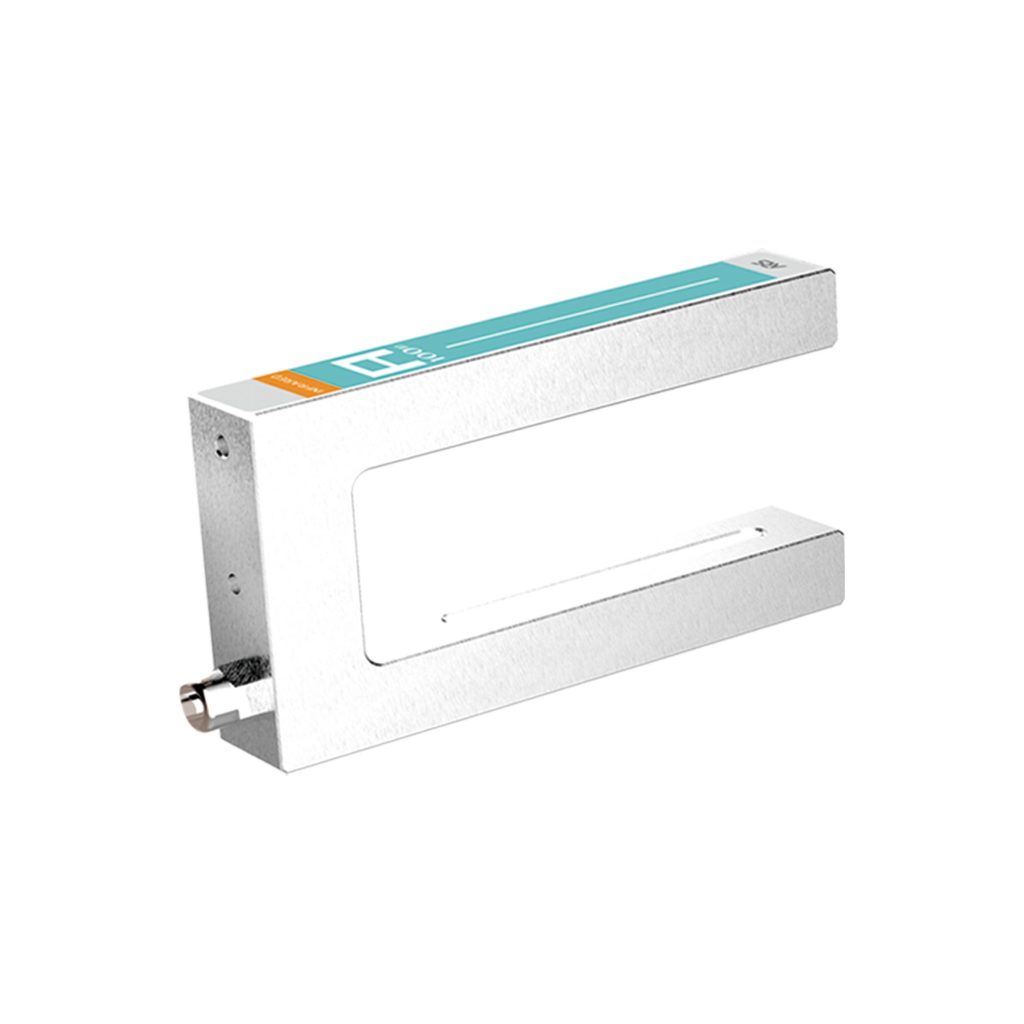
Effective integration requires fast and reliable communication between systems. Real-time industrial communication protocols such as Ethernet/IP, PROFINET, or OPC UA are commonly used to enable seamless data exchange. These protocols allow the 100% inspection systems to transmit defect signals, positional deviations, or trend data directly to the web guide controller. Low-latency communication is essential, especially in high-speed production lines, where even minor delays can result in significant material loss or quality degradation.
3. Implementing Closed-Loop Control Strategies
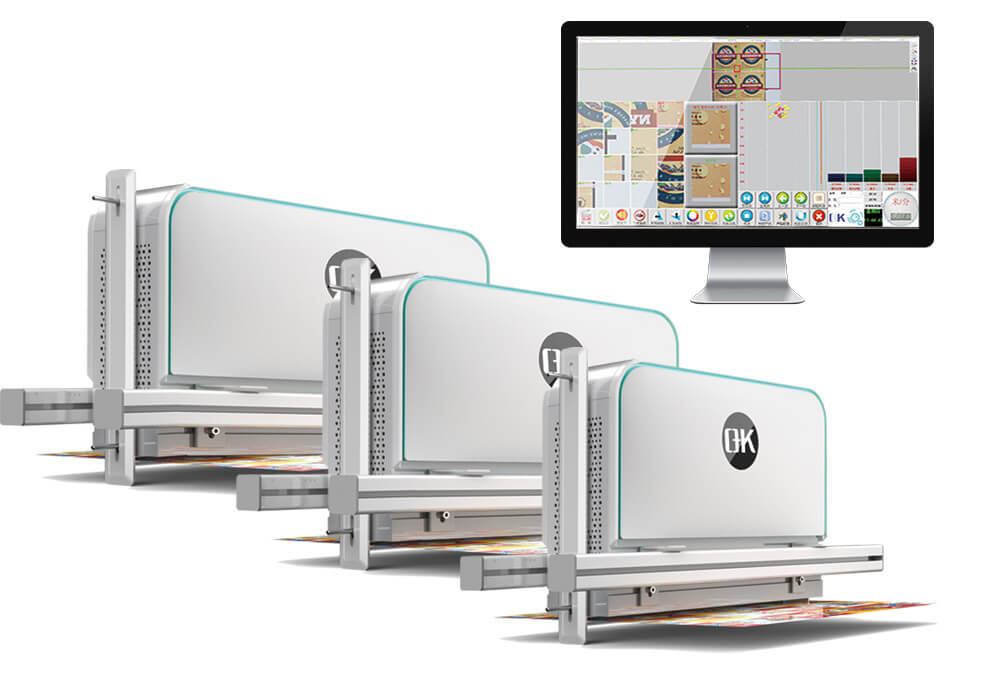
One of the most impactful approaches is the implementation of closed-loop control. In this setup, automated inspection systems act as feedback providers, continuously supplying data that influences the behavior of the web guide system. When a defect related to misalignment is detected, the system automatically adjusts guiding actuators to correct the issue. This continuous feedback loop transforms the production line from a reactive system into a proactive one, significantly improving stability and reducing defect rates.
4. Integrating Centralized Control Platforms
A centralized control platform provides a unified interface for monitoring and managing both web guiding and inspection functions. By consolidating system controls into a single platform, operators gain a comprehensive view of production conditions, including alignment status and quality metrics. This approach simplifies system operation, reduces the risk of miscommunication between subsystems, and enables coordinated adjustments across the entire production line.
5. Utilizing Edge Computing for Faster Decision-Making
In high-speed manufacturing settings, processing data in close proximity to its generation is of paramount importance. Edge computing permits inspection data to be analyzed on-site, mitigating the time to send information to a central server and receive instructions. This highly reduces latency and enables faster defect detection or alignment response. In a way, this leads to corrective techniques being implemented in near-real time, thus improving efficiency and product quality.
6. Leveraging Artificial Intelligence and Predictive Analytics
AI and Machine Learning are being melded in the next level for their integration with other techniques. These technologies enable data that have happened or are occurring to be analyzed for a general understanding of observed patterns and to anticipate possible changes in the alignment before they are revealed. In effect, the system sets some parameters assuming that the problem will already exist with such a proactive structural change. This very particular predictive capability will engender greater process stability as a result of continuous improvement.
7. Ensuring System Compatibility and Standardization
At another level of integration, the most befitting strategy is to install the automata open standards-friendly systems with the communicable interfaces on hand. This means such linking would reduce integration complexities and finally lead to a smooth communication chain between all hardware and software components. Standardizing is also a mechanism within which the manufacturers can readily carry components should the need to upgrade or expand any of the systems in the future arise without being hemmed by proprietary technologies’ limitations.
8. Designing Scalable and Modular Architectures
Systems scalability comes in as a primary consideration when it comes to complex systems. This is most evidently shown in the possibility to develop a semimodular structure for easy implantation and renovation of any individual machines like sensors, cameras, commands, and expressive modules, not to forget that next generation development of manufactories is quite predicated on an idea of the changing of the machinery or at least on a future transfer of insight(s) into appropriate technologies for the firm in terms of new revenue streams be it production quality, costs, and resources availability.
9. Addressing Data Management and Storage
Integration chains supply the highest grades of data obtained from Big Data with high-resolution images and continuous measurements of references. Effective management of the available data must be put in place so as to cope with mounting levels. Real-time filtering of data needs to be implemented, as must the provision of one or two storage activities for backtracking, and the eventual success analysis engines on the three basic data types. Proper data handling will thus provide an avenue for extraction of valuable insights without system resource waste.
Challenges and Potential Solutions in the Integration of Web Guide Systems with Automated Inspection Systems
| Challenge | Description | Potential Solution | Impact After Solution |
| System Compatibility Issues | Different vendors use proprietary protocols and data formats, making communication difficult | Adopt open communication standards such as OPC UA, Ethernet/IP, or PROFINET; select interoperable equipment | Enables seamless data exchange and simplifies system integration |
| Data Synchronization Errors | Misalignment between inspection data and web position leads to inaccurate corrections | Implement precise time-stamping, encoder-based tracking, and synchronized control architecture | Ensures accurate correlation between defects and web position |
| High Data Processing Load | Full-surface inspection systems generate large volumes of image data that must be processed in real time | Use edge computing and high-performance processors to handle data locally and efficiently | Reduces latency and ensures timely corrective actions |
| Latency in Communication | Delays in transmitting inspection signals to the web guide system can cause defects to persist | Utilize real-time industrial networks and optimize communication protocols for low latency | Improves responsiveness and minimizes defect propagation |
| Complex System Integration | Integrating mechanical, optical, and digital systems requires advanced engineering and coordination | Employ modular system design and collaborate with experienced system integrators | Simplifies implementation and improves system reliability |
| High Initial Investment | Integration requires significant capital for equipment, software, and system upgrades | Conduct ROI analysis, implement integration in phases, and prioritize critical production lines | Balances cost with long-term gains in efficiency and quality |
| Calibration and Alignment Challenges | Maintaining accurate calibration between sensors and cameras is difficult over time | Schedule regular calibration routines and use self-calibrating or adaptive systems | Maintains long-term accuracy and reduces drift-related defects |
| Operator Skill Requirements | Advanced integrated systems require skilled personnel to operate and maintain | Provide training programs and user-friendly HMI interfaces | Enhances usability and reduces operational errors |
| Data Management Complexity | Large datasets from inspection and guiding systems can be difficult to store and analyze | Implement structured data management systems and analytics platforms | Enables better decision-making and process optimization |
| Scalability Limitations | Legacy systems may not support future expansion or upgrades | Design scalable, modular architectures with upgrade-friendly components | Supports future growth and technology adoption |
Industrial Applications of Integrating Web Guide Systems with Automated Inspection Systems
| Industry | Application Scenario | Role of Web Guide System | Role of Automated Inspection System | Integration Benefits |
| Printing and Packaging | Printing quality inspection for High-speed label production | Maintains precise web alignment for accurate registration | Detects print defects, color variations, and misregistration | Ensures consistent print quality, reduces waste, improves registration accuracy |
| Flexible Packaging | Film converting and laminating processes | Controls web positioning across multiple rollers | Identifies surface defects, wrinkles, and coating inconsistencies | Enhances product uniformity, minimizes material loss, improves process stability |
| Textile Manufacturing | Fabric weaving, dyeing, and finishing | Keeps fabric aligned during continuous processing | Detects weaving defects, stains, and color inconsistencies | Improves fabric quality, reduces rework, ensures consistent finishing |
| Paper and Pulp | Paper production and coating | Guides paper web through rollers and coating stations | Monitors thickness, holes, and surface defects | Reduces downtime, improves paper quality, ensures uniform coating |
| Plastic Film and Foil | Extrusion, stretching, and slitting | Maintains alignment during high-speed film processing | Detects scratches, pinholes, and thickness variations | Enhances product consistency, reduces scrap, supports high-speed operations |
| Electronics Manufacturing | Production of flexible circuits and display films | Ensures precise positioning of delicate substrates | Detects micro-defects, contamination, and pattern deviations | Increases yield, ensures high precision, reduces costly defects |
| Nonwoven Materials | Production of hygiene products (e.g., wipes, diapers) | Maintains alignment of nonwoven webs | Identifies defects such as holes, contamination, or uneven layers | Improves product reliability, reduces waste, supports continuous high-speed production |
| Metal Processing | Foil rolling, coating, and stamping | Controls strip alignment during processing | Detects surface defects, cracks, and coating flaws | Enhances surface quality, reduces rejects, improves downstream processing efficiency |
Final Thoughts
Integrating web guide systems with automated inspection systems is one of those major landmarks that move production lines towards intelligent and self-optimizable stages. Like a bridge of sensing and correction, the integration links the sensing of defects into the execution of corrective action so that the producer may attain better quality, higher productivity, and a lower cost of operation. At a point when manufacturers will be using digital transformation methodologies, the integration become a necessity for high precision manufacturing levels to stay competitive.