
Edge-sensor vs. Vision-based Web Guide Systems: How to Choose the Right Type
The active function of web guide systems enables industrial operations to sustain their production output while maintaining product quality. Web guiding systems operate to maintain the correct position of continuous materials such as film, paper, foil, fabric, or non-woven materials, throughout their production process. Edge-sensor and vision-based web guide systems represent two of the most widely used web guiding technologies. Each method shows its own specific benefits which depend on the material type, application needs and accuracy requirements. Manufacturers can select their optimal web guiding solution through understanding the distinct technological aspects of both systems.
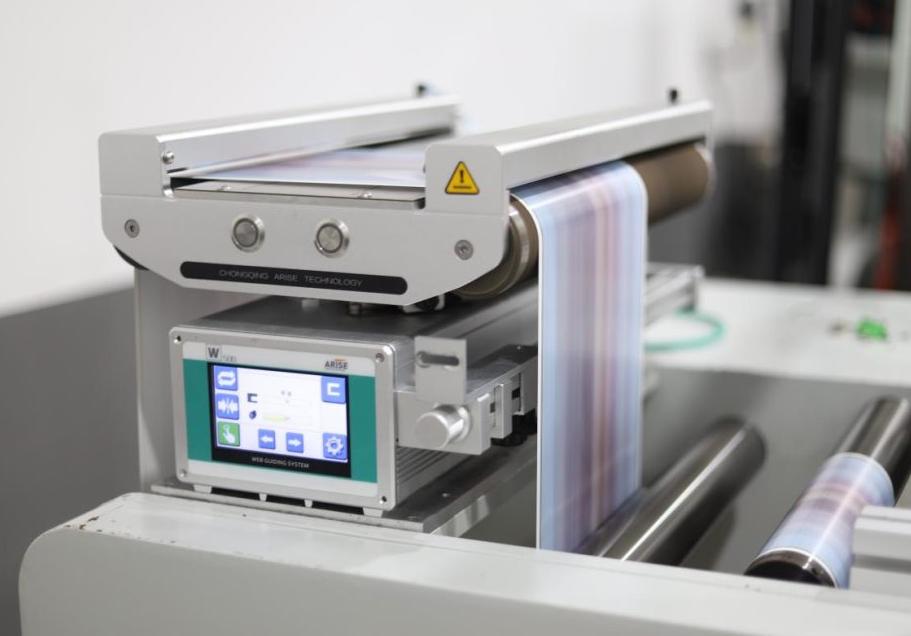
Table of Contents
What is an Edge-sensor Web Guide System
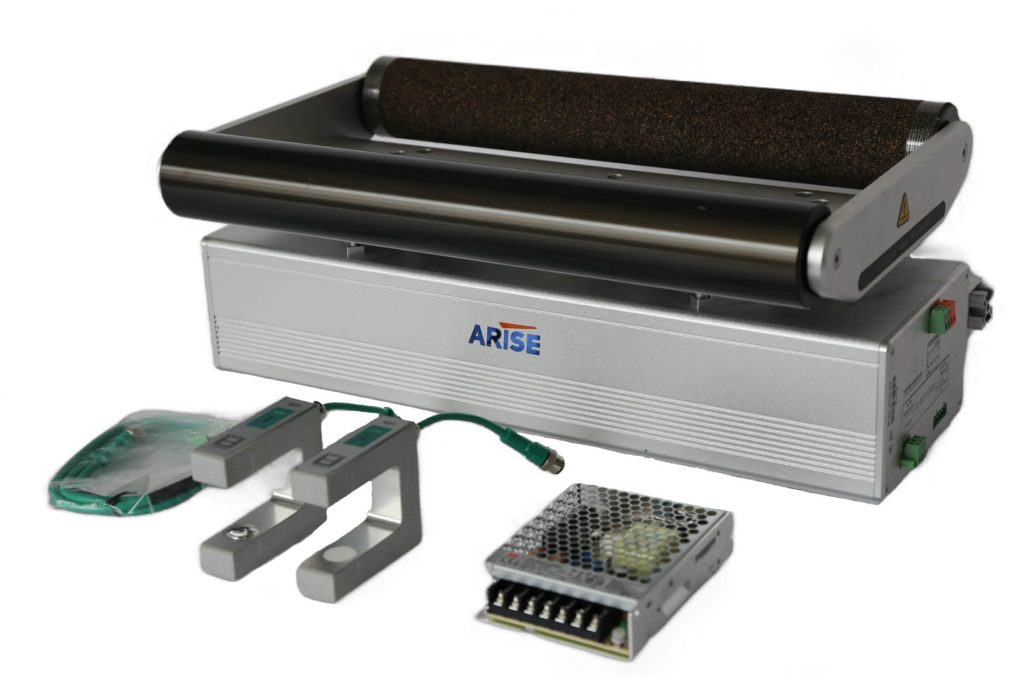
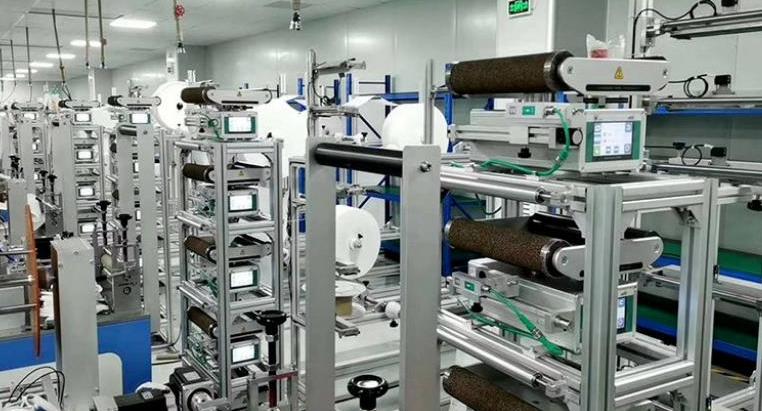
An edge-sensor web guide system operates as an automatic alignment control system which companies use to process materials that come in continuous roll format. The system detects material edge position and automatically adjusts web path until proper alignment occurs during the production process. Printing packaging converting and textile manufacturing companies use these systems because any web misalignment will result in production waste and machine downtime and printing errors.
How it Works
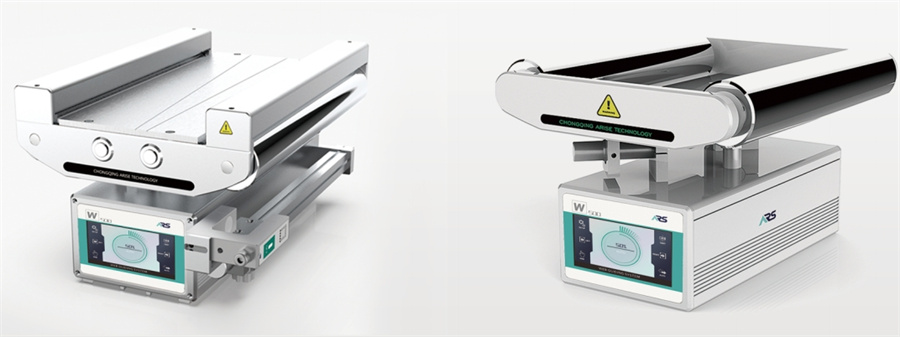
The web edge guiding system uses one or more sensors positioned near the moving material edge. These sensors monitor the edge location in real time and send signals to a controller. If the material drifts left or right, the controller activates an actuator, steering frame, or guide roller to return the web to the correct position.
Common sensor technologies include:
- Ultrasonic edge sensors
- Infrared edge sensors
- Photoelectric sensors
- Laser sensors
- Pneumatic sensors
Main Components
| Component | Main Function | Description | Importance in the System |
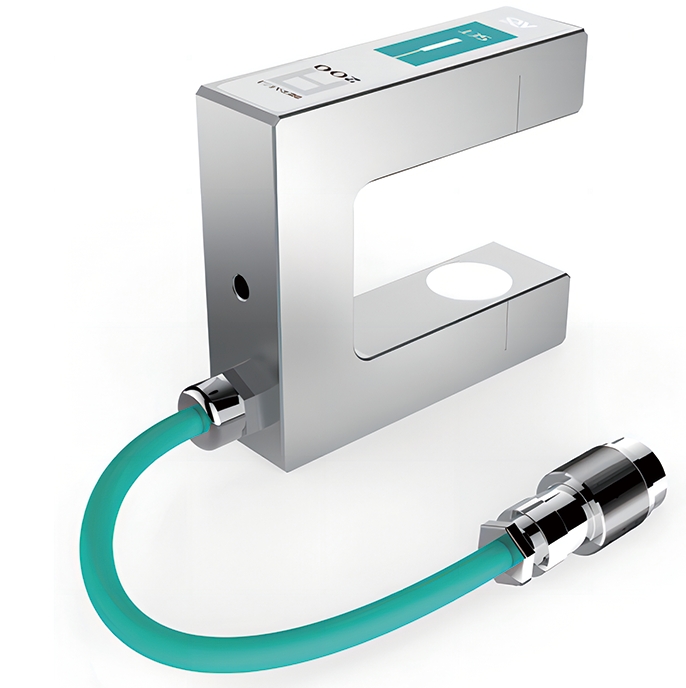
| Edge Guide Sensor | Detects web edge position | Monitors the location of one or both edges of the moving material using ultrasonic, infrared, photoelectric, laser, or pneumatic sensing technology | Core sensing element that provides real-time position data |
| Guide Controller | Processes sensor signals | Receives edge position data, compares it with the target position, and calculates correction commands | Acts as the brain of the system for accurate alignment control |
| Guide Actuator | Creates corrective movement | Uses electric, hydraulic, or pneumatic power to move the guide frame or steering mechanism | Converts control signals into physical motion |
| Guide Frame / Steering Unit | Redirects material path | Shifts rollers or pivots the web path to bring the material back into alignment | Main mechanical correction component |
| Guide Rollers | Supports web movement | Carries and stabilizes the material while allowing smooth steering adjustments | Helps maintain web tension and smooth tracking |
| Mounting Brackets / Sensor Supports | Holds components in position | Provides stable installation for sensors, rollers, and mechanical assemblies | Ensures system accuracy and durability |
Advantages
- High Reliability for Standard Materials: Edge sensors generally guarantee reliable and precise performance of material guidance as long as they have pronounced and consistent edges.
- Cost-effective Solution: An edge sensor system is generally cheaper in terms of initial investment as it is able to offer a realistic solution to the user’s problem without over-kill requirements.
- Fast Response Time: Since the sensor detects the edge movement very quickly, it perturbs the correct direction to prevent the material from deviating too much.
- Easy to Install and Operate: The guiding system available today is very much plug and play and it can be calibrated easily and is very user-friendly and therefore applicable to small or large new and retrofit projects.
- Reduced Material Waste: Aligning material systems minimizes slitting off-center, registration errors, wrinkles, and scrap.
- Low Maintenance Requirement: With few components interpretable as simple compared to a vision web guide system.
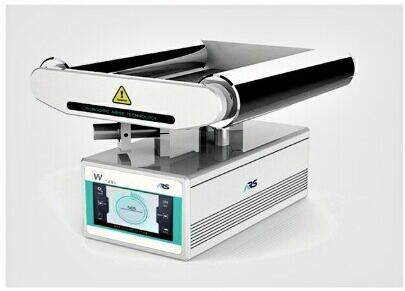
Limitations
- Depends on Clear Material Edges: When the web edge is uneven, transparent films, perforated, or inconsistent, sensing precision may get decreased.
- Limited to Edge Tracking: Basically, the earlier edge-sensor systems worked by realizing the edge of the web so that detection on mark or pattern or centerline of the type found on the substrate of the printed project, or with printed centerlines, or printed lettering, was rarely an easy proposition.
- Challenges with Transparent or Reflective Substrates: Material properties with a high proportion of transparent or reflective surfaces may not allow certain sensor designs to detect an edge consistently.
- Less Suitable for Complex Applications: The sensor type would be inadequate to use for processes that rely on the precision of printed registration or multi-point alignment and be advised to switch to a vision-based solution.
- Sensitivity to Sensor Placement: Poor mounting, dust, or vibration will compromise performance unless monitored appropriately.
What is a Vision-based Web Guide System
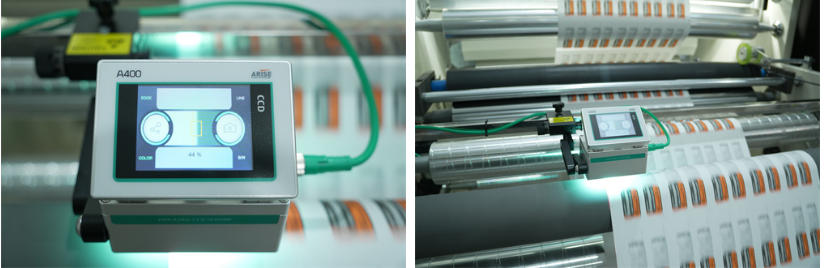
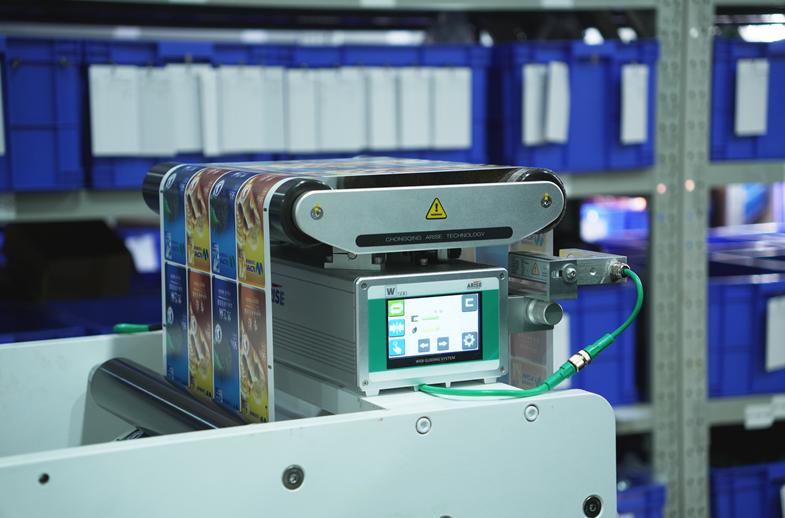
Identified as an advanced form of web guiding technology, a vision-based web guide system is an automatic system that helps manage web positioning of continuous web materials during the manufacturing process. Unlike traditional physical edge components that measure web length, industrial cameras, illumination systems, various image processing technologies, and algorithms perform the online monitoring responsibility of the web while maintaining a position along its path. These systems are widely used in print, packaging, converting, laminating, coating, battery production, textile processing, and other sectors where web positioning holds a vital role.
How it Works
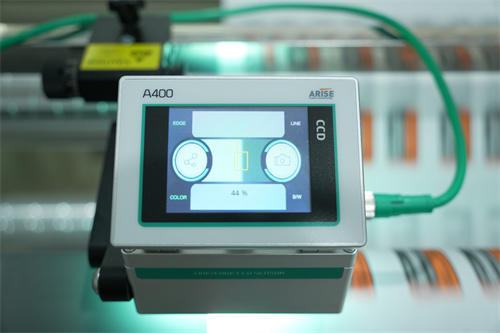
In a vision-based web guiding system, the industrial cameras, control lighting, and image processing software monitor the position of materials like film, paper, foil, fabric or labels with respect to manual machining parameters and tolerances. The camera captures images of the web continuously and analyses reference points like edges, printed marks, centerline, logos, or patterns. Should the system detect some movement or drift from the target position, the controller sends immediately to actuator or steering control messages to auto-aligning the rollers and web. All in a closed-loop way and on runtime, it will generate awesome guiding precision generating margin toward waste and ensuring efficient production.
Main Components
| Component | Main Function | Description | Importance in the System |
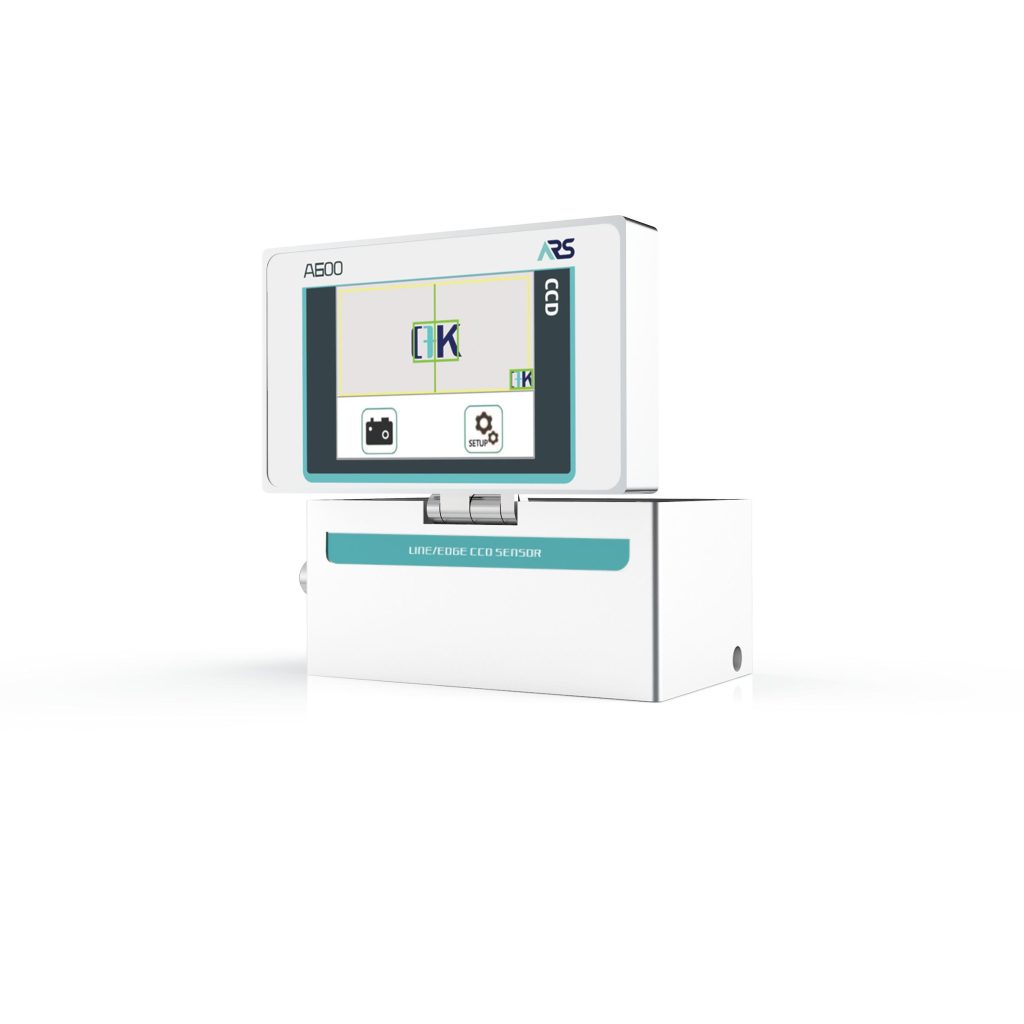
| Industrial Camera | Captures images of the moving web | Continuously takes high-speed images of the material surface, edges, marks, or patterns during operation | Core sensing device that provides visual data for alignment control |
| Lighting System | Provides stable illumination | Uses LED or specialized lighting to ensure clear image capture regardless of ambient conditions | Critical for image clarity, detection accuracy, and consistent performance |
| Image Processor / Vision Controller | Analyzes captured images | Processes images in real time to identify edges, centerlines, print marks, logos, holes, or contrast zones | Main intelligence unit that determines web position and correction needs |
| Motion Controller | Generates correction commands | Converts processed vision data into precise control signals for steering adjustments | Ensures rapid and accurate system response |
| Actuator | Produces physical movement | Uses electric, hydraulic, or pneumatic power to move guide rollers or steering frames | Converts electronic commands into mechanical correction |
| Guide Frame / Steering Mechanism | Redirects the web path | Shifts or pivots rollers to return the material to the desired running position | Main mechanical alignment component |
| Lens Assembly / Optical System | Focuses image capture | Provides correct focal length, field of view, and sharpness for target detection | Essential for precise visual measurement |
| Mounting Brackets / Camera Supports | Secures hardware position | Holds cameras, lights, and mechanical components in stable alignment | Prevents vibration errors and maintains accuracy |
Advantages
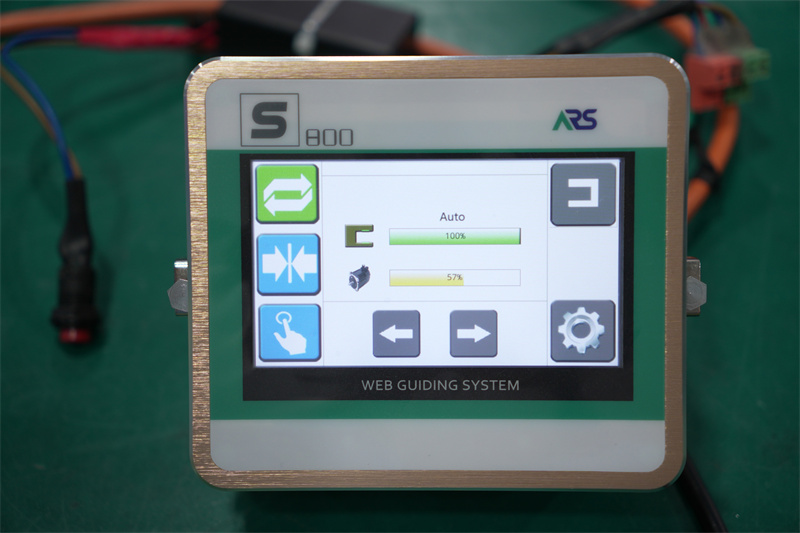
- Multi-target Tracking Capability: Vision systems have the ability to track edges, printing marks, patterns, centerline, or other visual references, unlike traditional edge sensors.
- High Precision Alignment: Vision systems are capable of comfortably handling applications requiring high precision, tight tolerances, and repeatability of positioning.
- Perfect for Printed Materials: In cases of printed packaging, labels, decorative films, and materials with patterns, you can guide them with registration marks or graphic representation rather than relying solely on the material edge.
- Better Handling of Difficult Materials: Materials that are difficult to work with such as transparent films, perforated webs, irregular edges, or uneven materials are handled more easily with camera technology.
- Flexible Changeovers: Changeovers with guiding references or products can be made by operators via software settings without requiring significant changes in the hardware of the system.
- Data and Smart Automation Integration: The diagnostics of many systems include image storage, production analytics, and interfacing to the factory automation software.
Limitations
- Higher Initial Cost: These systems often cost considerably more than edge-sensor systems by virtue of the cost of camera, processor, lighting, and software.
- More Complex Setup: More expertise is required in setting up the system due to camera placement and lighting adjustment, alongside target teaching and software setup.
- Sensitive to Lighting Conditions: Dust, shadows, glare, reflections, or changing ambient light can reduce image quality if lighting is not controlled properly.
- Higher Maintenance Needs: Lenses maintenance will periodically be calibrating the lighting units and software settings.
- Processing Demands: Depending on processor speed and camera quality, the system’s performance may drop because of this at high speeds or in the face of processing-heavy applications.
Key Differences Between Edge-sensor and Vision-based Web Guide Systems
| Comparison Factor | Edge-sensor Web Guide System | Vision-based Web Guide System |
| Detection Method | Uses ultrasonic, infrared, photoelectric, laser, or pneumatic sensors to detect web edge position | Uses industrial cameras, lighting, and image-processing software to detect web position |
| Main Tracking Target | Tracks one or both material edges | Tracks edges, centerlines, print marks, logos, patterns, holes, and contrast zones |
| Accuracy Level | High for standard edge-guiding applications | Very high for complex alignment and registration tasks |
| Best Material Types | Best for materials with clear, stable, and consistent edges | Ideal for printed, transparent, reflective, perforated, patterned, or irregular materials |
| Response Speed | Very fast direct sensor response | Fast real-time response depending on processor speed and camera setup |
| Flexibility | Limited mainly to edge positioning | Highly flexible with multiple selectable guiding references |
| Setup Complexity | Easier to install and calibrate | More complex; requires camera alignment, lighting, and software configuration |
| Initial Cost | Lower purchase and installation cost | Higher due to cameras, controllers, lighting, and software |
| Product Changeovers | May require manual sensor repositioning or adjustment | Faster digital changeovers through saved recipes or software settings |
| Data and Automation Integration | Basic control integration | Advanced diagnostics, image data, analytics, and smart factory connectivity |
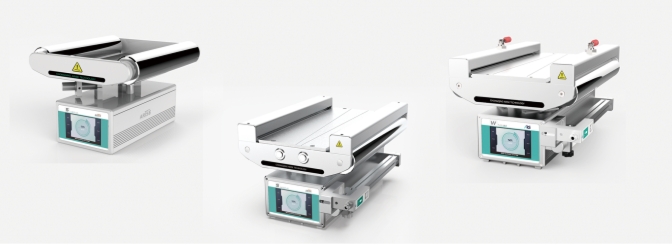
Key Factors to Consider for Choosing Between Vision-based and Edge-sensor Web Guide Systems
Selecting between vision-based and edge-sensor web guide systems is an important decision for manufacturers working with continuous materials. The right choice depends on your production environment and operational goals.
1. Material Type and Surface Characteristics
First and foremost, choose the material to be processed. For materials with clean and regular edges, an edge-sensor system usually works well and saves money. Paper, coated film, foils, and other clean roll materials can be guided just fine with the edge detector. On the other hand, a vision-based system might perform better if the material is semi-transparent, coated with reflective material, has perforations, non-uniform edges, or, worst of all, unpredictable edges. Camera technologies can process multiple visual cues other than just the edge, making this technology feasible for difficult materials that bewilder the conventional sensors.
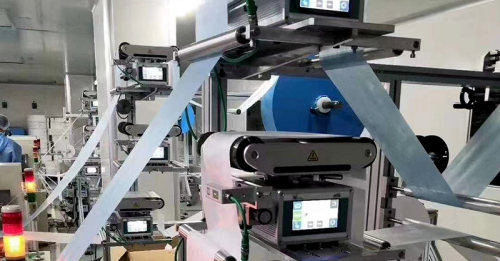
2. Guiding Accuracy Requirements
The necessary web guiding accuracy is another important consideration. For basic niche slitting, rewinding, coating, or laminating operations, edge-sensor systems provide ample accuracy. When production requires exacting tolerances, perfect print registration, or precise centerline tracking, a vision-based system can undoubtedly provide greater control. Specific industries, such as various in flexible packaging, label printing, electronics materials, and battery manufacturing, require such high degrees of precision.
3. Type of Reference Target Needed
Some production processes are interested only in tracing the web’s edges, while others must be guided through an inspection of print marks, graphics, logos, centerline, or holes. An edge sensor system works best for web edge. In contrast, a vision-based system is more versatile as it can accommodate and follow a variety of reference target types. This might be particularly useful in situations where products are variable and subject to frequent changes or if printed patterns must be followed.
4. Production Speed and Process Stability
Flow-line production presupposed a good quick response to rectify problems and stable control. If correctly chosen, both systems perform nicely at high speeds, but process conditions are other concerns. Edge-sensing gearing systems are very quick in instant functional response and are widely recognized in many standard applications for their dependable operation. Vision systems can also cater to high-speed lines with modern orchestrators. However, it is essential to match them properly in terms of line speed and lighting conditions and the requirement of image processing.
5. Budget and Total Cost of Ownership
However, for simpler applications, costs involving an edge sensor system are relatively cheaper. Installation and maintenance expenses of this category of products are lower compared to their counterparts at the high end equipped with cameras, lighting, software, and fancier controllers. However, if they reduce waste, improve registration, shorten changeover times in production, or morph into a premium-product supporter, the decision would be justified by the return on investment in the long run.
6. Installation and Maintenance Requirements
Ease of implementation should be another consideration. Edge sensor systems are easier to install and calibrate. Maintenance of web guide systems primarily consists of cleaning and sensor adjustments. Vision systems require monitored camera mounting, lighting control, lens cleaning, and configuration of visuals. Without advanced technical resources, facilities with less ability to support advanced systems may be more inclined toward the simpler sensor-based system.
7. Changeover Frequency and Product Variety
Operations that run small numbers of stable products may enjoy good service from edge sensors for their simple mechanisms. When up and running, these systems operate dependably through their long production runs. Manufacturers with frequent product switches, multiple SKUs, custom-printed designs who benefit from vision-based solutions. Most configurations can be adjusted digitally and hence could lead to speedier changes between jobs and almost eliminate all downtime.
8. Automation and Data Integration Goals
The goal of this modern factory is to establish connectivity and put data analysis in the hands of work optimization. Vision systems can provide diagnostics, image records, process analytics, and work as part of a larger automation environment. Edge-sensor systems connect with the process controls but cannot provide advanced data structures. When smart manufacturing is one of the longer-term plans, the vision technology may best expand with your long-lasting planning.
9. Environmental Conditions
Dust, vibration, moisture, glare, and uneven lighting conditions can have an impact on system performance. For some cases and depending on the type of sensor used, these sensors tend to be quite reliable in harsh industrial environments. Vision web guide systems may require protective housings, stable illumination, more exacting maintenance setups when used under trying situations. It is therefore of prime importance to look at actual operating conditions before establishing the final choice.
Summary
For standard applications requiring dependable and cost-effective edge tracking, the edge-sensor web guide system is a better option.
For advanced lines needing flexibility, complex target detection and superior precision, vision-based web guiding systems often deliver greater value.
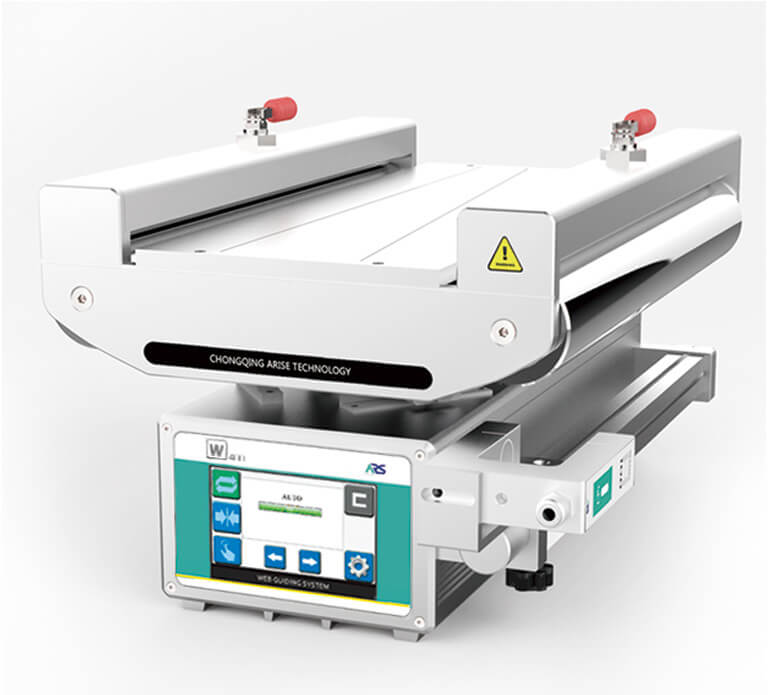
Final Thoughts
Both vision-based and edge-sensor web guide systems are a core part of the material web management in industries. Selecting the appropriate options depends on the features of your material, requirements for precision, your automation objectives and the budget. With increasing production demand, the right web guiding technology can favorably enhance productivity, diminish waste, and increase product quality. In standard edge web guiding applications, a simpler edge-sensor system might suffice for economical consideration.