
Automated Inspection Systems for Print Quality Control
Printing companies need to deliver stable quality because their business success depends on satisfying customers, protecting their brand image and their operational efficiency. The detection of small defects results in product rejection which requires expensive reprinting work. Manufacturers face challenges because their production rates increase while their customers demand higher product quality standards which traditional inspection techniques cannot meet. Modern print quality control requires automated inspection systems as essential components of their operational processes.
Table of Contents
The Growing Need for Automation in Print Inspection
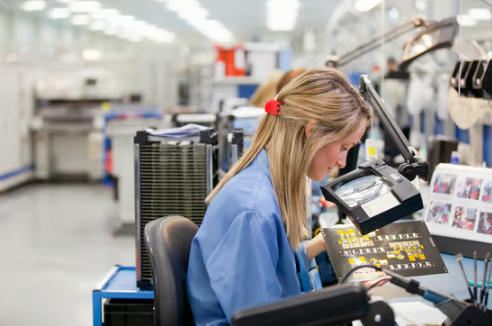
Traditional print inspection depends on human operators to identify defects during or after the printing process. The process of manual inspection controls direct defect detection through which advanced inspectors can find numerous defects. Human fatigue and uneven decision-making together with production machinery operating at high speeds create situations that diminish trustworthy results.
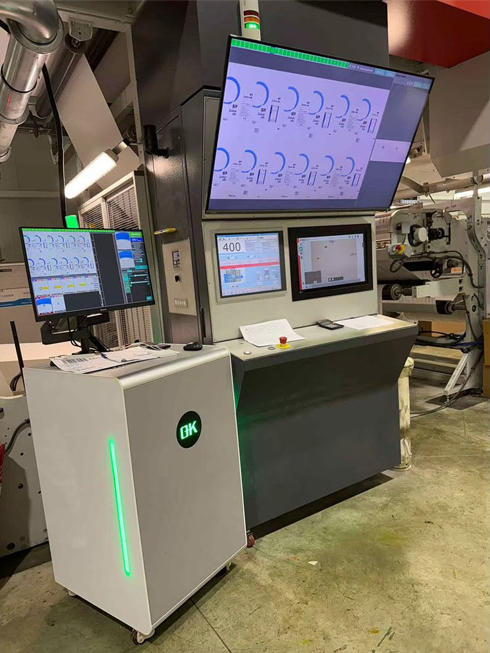
Automated inspection systems solve these challenges by using advanced cameras, sensors, and intelligent software to continuously monitor printed materials in real time. The print inspection systems establish quality assessment processes that deliver quick and dependable results which manufacturers use to decrease production waste while achieving uniform quality benchmarks.
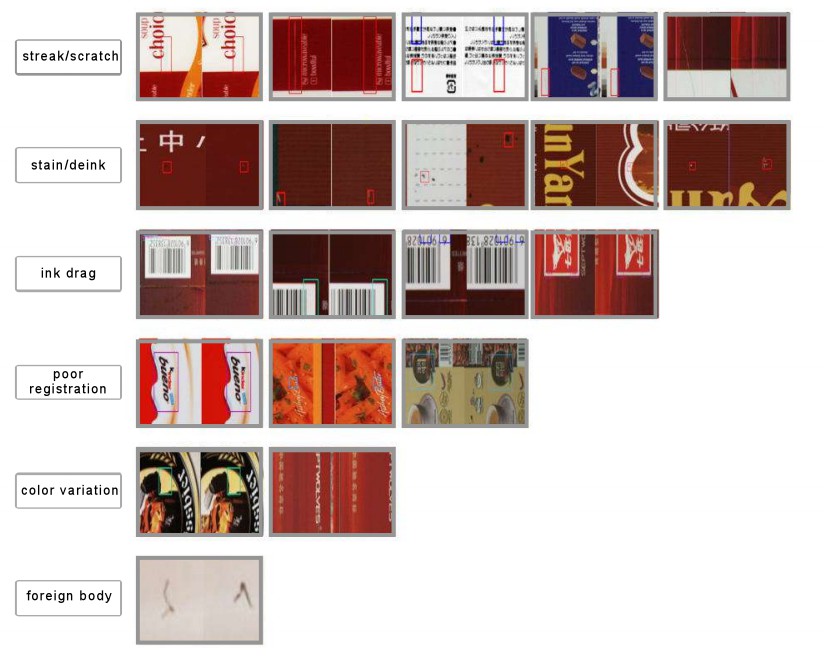
Types of Printing Defects can be Analyzed Through Automated Inspection Systems
| Type of Printing Defect | Description | How Automated Inspection Systems Detect It | Common Cause |
| Color Variation | Printed color differs from approved standard or batch consistency. | Measures density, tone, and color deviation against reference values. | Ink imbalance, poor calibration |
| Misregistration | Colors or layers are not properly aligned. | Detects positional shifts between print layers. | Mechanical movement, tension issues |
| Missing Print | Portions of text, images, or graphics are absent. | Compares live print image with master file. | Ink starvation, clogged nozzles |
| Smudging | Wet ink spreads or transfers unintentionally. | Identifies blurred or irregular ink areas. | Slow drying, excessive ink |
| Streaking | Continuous lines or bands appear on print surface. | Detects repeating linear defects across print width. | Dirty rollers, damaged blades |
| Blurred Text/Image | Edges of graphics or text lose sharpness. | Measures focus and edge contrast. | Poor registration, movement vibration |
| Ink Spots / Splashing | Random dots or unwanted marks appear. | Finds isolated irregular marks outside design area. | Ink contamination, splatter |
| Barcode Defect | Barcode is unreadable or distorted. | Verifies code contrast, spacing, and scan quality. | Misprint, low contrast |
| Text Error | Wrong, missing, or distorted characters. | Uses OCR to compare printed text with expected data. | File error, variable data mismatch |
| Wrinkles / Creases | Material folds or surface distortion during printing. | Detects shape irregularities and surface deformation. | Web tension issues, substrate handling |
| Contamination | Dust, fibers, or foreign particles on print. | Identifies unexpected spots or texture changes. | Dirty environment, material contamination |
| Repeating Defects | Same defect repeats at fixed intervals. | Tracks recurring patterns linked to machine rotation. | Damaged cylinder, worn roller |
| Uneven Coating / Varnish | Coating layer appears patchy or inconsistent. | Measures gloss, reflectivity, or surface uniformity. | Coating application issues |
| Variable Data Error | Incorrect serial numbers, dates, or batch codes. | Matches printed data with database records. | Data transmission or coding errors |
The Working Process of Automated Inspection Systems for Print Quality Control
| Process Stage | Description | Main Benefit |
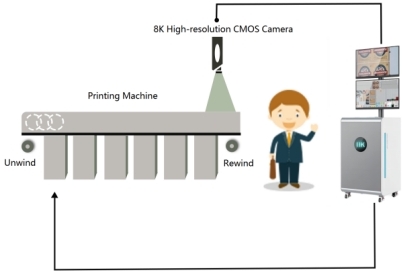
| Image Capture | High-speed cameras capture continuous images of printed sheets, labels, films, or webs during production. | Real-time monitoring without slowing production |
| Illumination Control | Controlled lighting ensures clear visibility of colors, text, edges, and surface details. | Accurate image clarity and defect visibility |
| Reference Comparison | Captured images are compared with approved master files or golden samples. | Consistent quality verification |
| Defect Detection | The system identifies defects such as misregistration, streaks, smudges, missing print, and color variation. | Fast and reliable defect recognition |
| Measurement and Verification | Critical elements like barcode readability, dimensions, alignment, and color density are measured. | Compliance with specifications |
| Decision Making | The software determines whether the print passes or fails based on preset tolerances. | Standardized pass/fail judgment |
| Alert or Rejection Action | Defective products are marked, removed, or operators are alerted instantly. | Immediate corrective response |
| Data Recording | Inspection results are stored for reporting, traceability, and quality analysis. | Better process tracking and audits |
| Feedback Optimization | Production settings are adjusted based on recurring defect patterns. | Continuous process improvement |
| Final Quality Assurance | Only approved printed products continue to packaging or delivery stages. | Higher customer satisfaction and reduced waste |
Key Technologies Behind Automated Inspection Systems for Print Quality Control
The automated inspection systems combine advanced hardware and intelligent software to monitor print quality in real time and ensure consistent production standards.
1. High-Resolution Camera Systems
At the heart of every automated printing inspection system are the high-resolution industrial cameras. These instruments continuously capture images of printed materials as they run through presses, coating lines, or finishing equipment.
Two common camera types are line scan cameras and area scan cameras. Line scan cameras are good for web printing because they take images line by line, hence at very high speeds. Area scan cameras, in contrast, take full-frame images and are therefore more appropriate for such applications as sheet-fed printing or label inspection. Image resolution is therefore critical because precise identification of imperfections depends upon clear and fine image details.
2. Advanced Lightning Technology
Successful print checking is considerably influenced by lighting. Without illumination that remains consistent, even the most sophisticated high-speed camera will fail to observe defects accurately. Automated web inspection systems make use of LEDs to pleasant effects on print details, textures, gloss levels, and surface imperfections. Diffuse lighting helps to minimize glare, which does hide some scratches or embossing defects while angled lighting could emphasize sculptural features. Finally, the combined contribution of strobe lighting and high-speed-synchronous strobing makes sure motion is frozen and also contributes toward capturing sharp images. These lessen inspections outputting mistaken errors of defect.
3. Image Processing Software
Once the images are given over by the sensor system onto the software implementation, the images are then analyzed by the software doing image processing in a highly accelerated fashion. Results invariably are viewed in both live video image data and the correct reference image file decided for or live sample testing.
The system checks for differences in alignment, print density, missing elements, smudges, streaks, text clarity, and other quality parameters. High-speed processors allow this analysis to happen instantly, even on fast-moving production lines. Modern software also enables operators to set tolerance levels so minor acceptable variations do not trigger unnecessary alarms.
4. Artificial Intelligence and Machine Learning
Artificial intelligence(AI) is boosting the capabilities of print inspection by means of magnitudes. Traditional methods use strict rules and thresholds which AI-supported systems overcome. AI algorithms are able to perceive intricate patterns and minor defects. Perhaps they are a more flexible and abstract notion that cannot be independently described. Historical defect data may also be used to train machine learning models. Only with time the machine becomes able to discriminate between actual defects and mere variants in the decoration, thus reducing false rejections and in turn enhancing reliability on the whole. This is particularly true when it comes to complex packaging, ornamental printing, and individual designs.
5. Color Measurement and Spectral Analysis
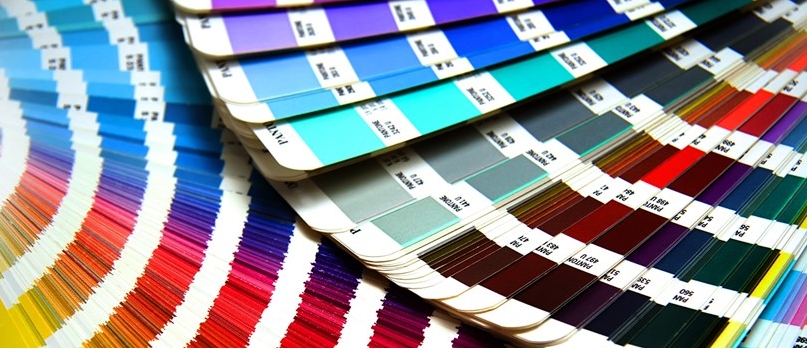
Color consistency is the most important asset in branding, packaging, and commercial printing. The automated inspection systems comprise the color measurements tools to keep analyzing printed colors taking into account the target standards. Densitometers, spectrophotometers, or digital color sensors often monitor ink density, tone values, and color deviations. Right before any out-of-color is produced, the solution itself enables the operators to adjust ink settings. Thus, this technology will maintain the consistent color for company brand across production batches.
6. Optical Character Recognition and Barcode Verification
In several printed products, text, serial codes, QR codes, or barcodes must be accurate and readable. OCR and bar code verification are used by automated inspection systems for the inspection of these types of elements.
OCR confers correct text placement, spelling, and readability. Barcode verification ensures clarity of codes, contrast, and the ability to scan. Visual inspection is critical for pharmaceutical packaging, food labels, logistics labels, and security printing.
7. Real-Time Data Communication and Integration
Modern 100% printing inspection systems have increasingly connected to more extensive networks available in manufacturing. Indeed, they can communicate with printing presses, manufacturing execution systems, and enterprise software platforms.
This link provides real-time alerts, production reporting, quality dashboards, and closed-loop adjustments. It helps the operators with quick tracking of the root cause and optimizing machine settings once recurring defects are detected. Such an integrated app reinforces smarter production environments that follow principles of Industry 4.0.
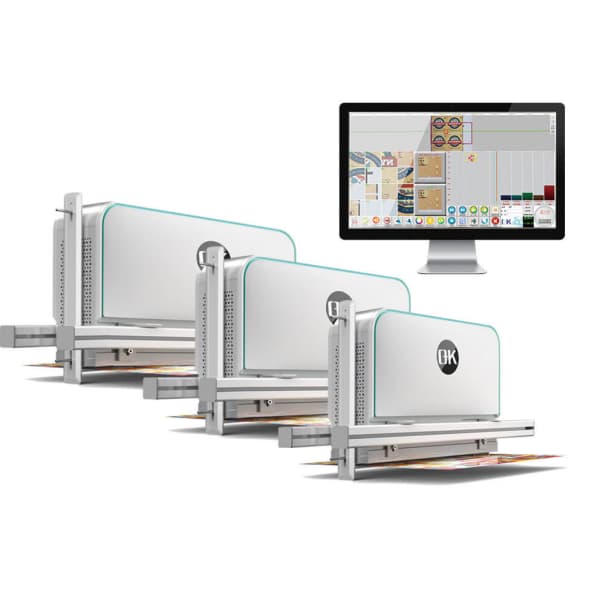
8. Defect Rejection and Process Control Mechanisms
Inspections are always best exercised through immediate corrective actions. Automated full surface inspection systems for printing quality, often connect to reject gates, marking devices, alarms, or sortation devices, which automatically remove bad parts. Some operations control and support closed-loop, so that machine settings such as registration, tension, or ink flow could be adjusted automatically according to feedback from input techniques. This upfront investment will reduce downtime and prevent the repetition of defects.
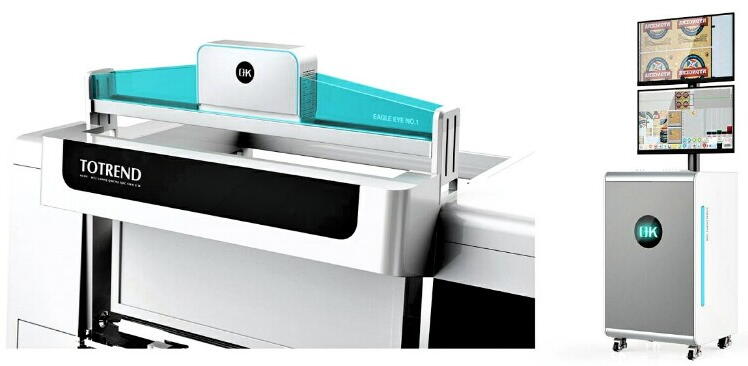
Applications across the Printing Industry of Automated Inspection Systems
| Printing Industry Segment | Application | Key Items Inspected | Key Advantages |
| Packaging Printing | Monitors cartons, boxes, pouches, and flexible packaging during production. | Graphics, color, text, barcodes, sealing marks | Brand consistency and reduced waste |
| Label Printing | Automated label inspection systems are used for pressure-sensitive labels, shrink sleeves, and product labels. | Registration, variable data, barcode quality, die-cut accuracy | Accurate labeling and compliance |
| Commercial Printing | Controls quality for brochures, catalogs, flyers, and magazines. | Image clarity, color balance, page alignment, text quality | Professional print appearance |
| Newspaper Printing | Ensures stable high-speed print quality on large-volume presses. | Ink density, page position, streaks, missing print | Faster correction and lower spoilage |
| Book Printing | Verifies content consistency across long print runs. | Text sharpness, pagination, cover alignment, color accuracy | Fewer reprints and reliable quality |
| Security Printing | Supports inspection of sensitive printed materials. | Microtext, serial numbers, holographic areas, codes | High accuracy and fraud prevention |
| Pharmaceutical Printing | Checks medicine cartons, inserts, and labels. | Batch codes, expiry dates, barcodes, legal text | Regulatory compliance and safety |
| Food and Beverage Printing | Inspects packaging for consumer goods and beverages. | Nutritional text, branding colors, date codes, barcodes | Correct labeling and shelf appeal |
| Textile Printing | Monitors patterns and designs printed on fabrics. | Pattern repeat, color consistency, stains, misalignment | Reduced rejects and better aesthetics |
| Tissue and Hygiene Product Printing | Controls decorative or branded printing on tissue and hygiene goods. | Print position, logo clarity, color consistency | Better product presentation |
| Corrugated Box Printing | Inspects outer shipping cartons and industrial packaging. | Logos, handling symbols, text, barcode readability | Stronger logistics accuracy |
| Digital Printing Services | Supports short-run and customized print jobs. | Variable data, image quality, personalization accuracy | Efficient mass customization |
| Decorative Printing | Used for laminates, wallpapers, flooring, and panels. | Surface design, repeat patterns, color matching | Premium finish quality |
| Wide Format Printing | Checks banners, posters, signage, and displays. | Large image consistency, banding, color uniformity | Improved visual impact |
| Mailing and Transactional Printing | Verifies invoices, statements, and direct mail pieces. | Address data, document integrity, sequence control | Accurate delivery and customer trust |
Final Thoughts
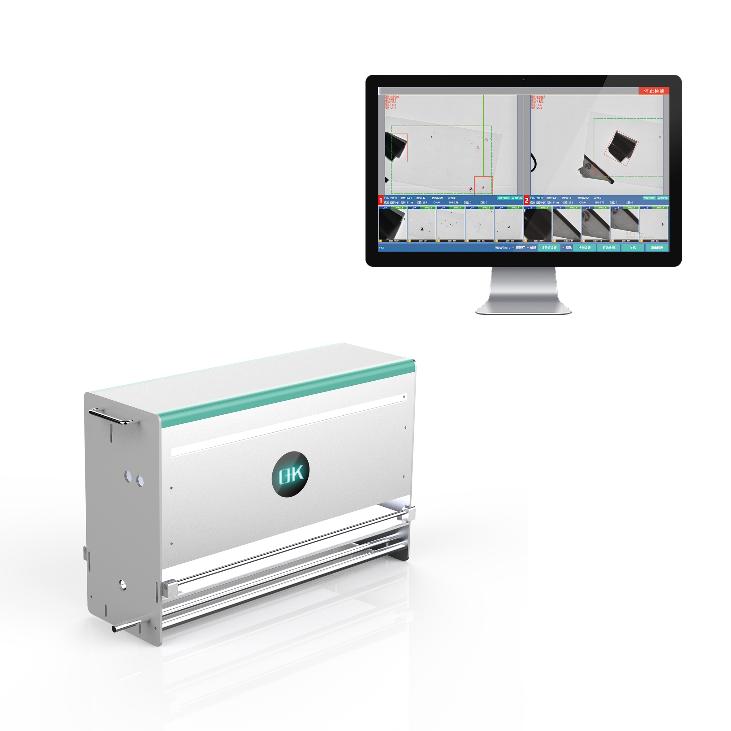
The modern printing operation more and more relies on automated inspection systems for print quality control. They provide the speed, precision, and reliability needed to meet higher production demands while reducing waste and improving customer satisfaction. With the advancement of technology, these systems will play an even more crucial role in bringing up intelligent, efficient print production environments.