
Cost vs Performance in Common Types of Web Guide Systems
Web guide systems are essential for achieving the required uniformity and consistency within industries, such as printing and packaging. The process of choosing the right type of web guiding system provides the best cost-performance ratio for the particular application is therefore a major concern. Manufacturers have many choices, from the most elementary manual systems right up to the most advanced automated systems and they have to make the decision carefully.
Table of Contents
Understanding the Cost-Performance Relationship in Web Guide Systems
Cost sloshing around in web guide systems is not a matter of installation but involves decision on energy consumption, maintenance and downtime. Performance must rest on measurement of the level of the desired accuracy versus the average economic time, considering each with dignity under the variable working conditions.
Although cheap designs suffice with scant precision needs for plain applications, they lead to high long-term costs in terms of material wastage and inefficiency. In contrast, high-performance designs always call for higher initial investment but tend to deliver improved productivity and lower operational loss.
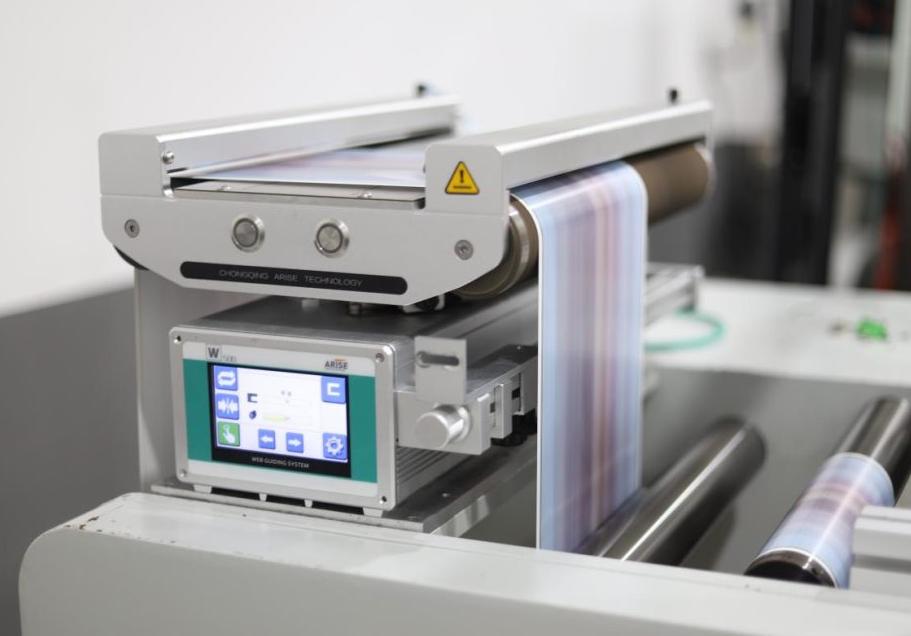
Types of Web Guide Systems and Their Cost–Performance Profiles
| Type | Working Principle | Typical Cost Level | Performance Level | Best Application Scenarios |
| Edge Web Guide System | Uses sensors to detect the edge position of the web and adjusts alignment accordingly | Low to Medium | Medium | Basic applications such as paper, film, and textile processing where edge position is consistent |
| Line Web Guide System | Tracks a printed line or pattern on the web for alignment control | Medium | Medium to High | Printing and packaging industries where pre-printed lines are available for guidance |
| Center Web Guide System | Maintains the web centered based on width measurement rather than edge detection | Medium | High | Applications requiring precise centering, such as wide webs or variable edge conditions |
| Ultrasonic Sensor Web Guide System | Uses ultrasonic waves to detect edges or gaps in transparent or uneven materials | Medium | High | Transparent films, nonwoven materials, or applications with challenging optical conditions |
| Infrared (IR) Sensor Web Guide System | Detects contrast differences using infrared light sensor for web positioning | Medium | Medium to High | Applications with consistent contrast between web and background |
| CCD Camera-Based Web Guide System | Use CCD image sensors to track edges, lines, or patterns with image processing | High | Very High | High-precision industries such as electronics, lithium battery production, and advanced printing |
| Laser Sensor Web Guide System | Employs laser beams for precise edge or position detection | High | Very High | High-speed, high-precision applications requiring minimal deviation |
| Hybrid Sensor Web Guide System | Combines multiple sensor types (e.g., ultrasonic + optical) for enhanced detection | High | Very High | Complex environments with varying materials and lighting conditions |
| Pneumatic Web Guide System | Uses air pressure mechanisms for web correction instead of electric actuators | Low to Medium | Medium | Cost-sensitive applications with moderate precision requirements |
| Servo Motor-Driven Guide System | Uses servo motors for precise and dynamic web alignment control | Medium to High | High to Very High | High-speed production lines requiring fast response and high accuracy |
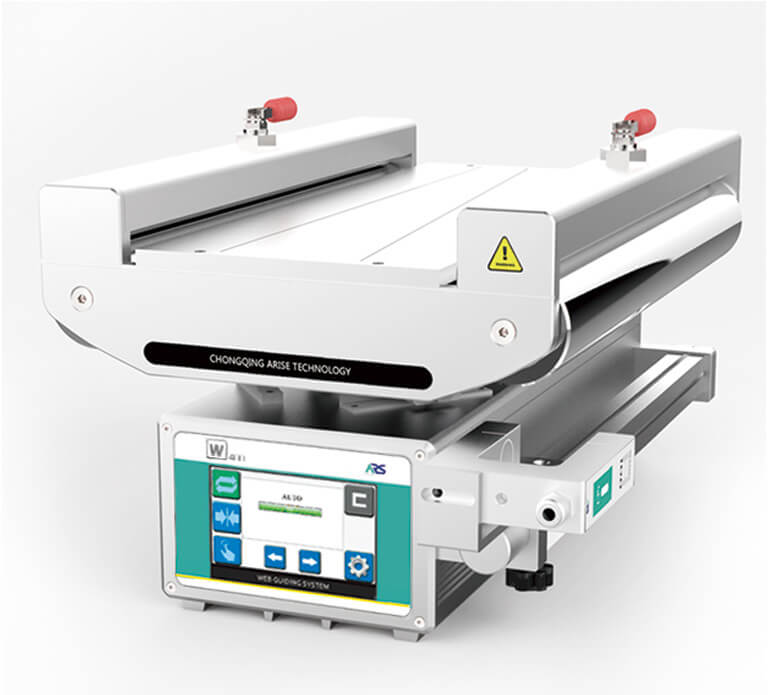
Key Considerations for Choosing the Right Type of Web Guide System in terms of Cost vs Performance
The primary goal of the current manufacturers who angage in printing, packaging, and conversion is wisely choosing the right type of web guide system, justification being the superparation of the cost constraints of the program with good operational performance so as to improve efficiency and quality. One needs to know about the manufacturing and his material characteristics in order to make the best choice. The economic effect of the choice made is very important to think about for the long term.
1. Understanding Application Requirements
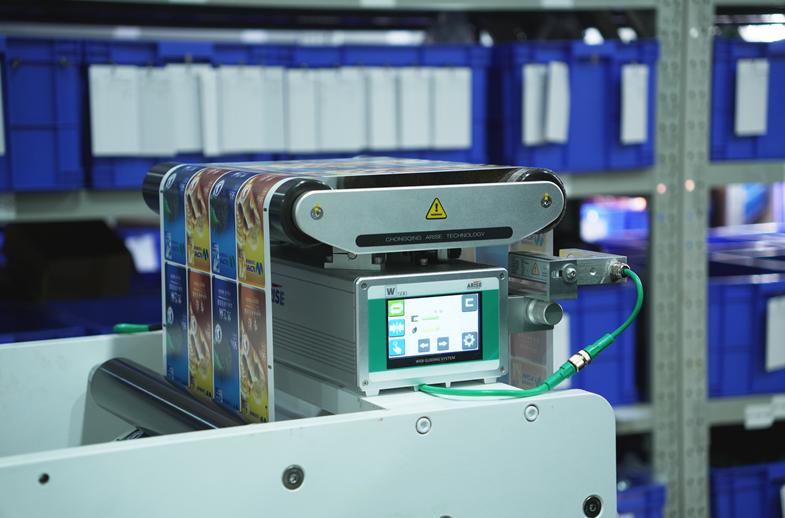
The first step is to define in clear-cut terms what the application requirements are. Hardware tolerance and control requirements vary based upon the process at hand as do the applications; producing at high speeds demands very tight tolerances, while slow and simple; such as slitting and winding might be comfortable with slight deviations.
In applications with high-value materials or strict quality standards, buying a higher performance system is often worth the investment. In less demand-oriented applications or less valuable materials, a lower-cost solution with reasonable performance may suffice.
2. Evaluating Material Characteristics
Material properties play a significant role in determining the guiding technology most appropriate for a given situation. Materials can be controlled on the basis of transparency, reflectivity, thickness, or homogeneity.
Transparent films or reflective foils may require ultrasound or more sophisticated optical systems. These higher-cost systems, which are often above the price range of other technologies, offer reliable performance in critical conditions. If a material varies in the thickness, it would suit line or camera-based systems that track the pattern, not the edge. Matching the behavior of the material as close in form as possible usually avoids the performance issues and keeps waste to a minimal level.
3. Balancing Initial Investment and Total Cost of Ownership
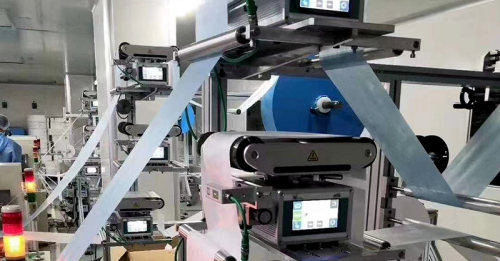
Although the initial cost of purchase is very important, it should not be the only consideration. Total cost of ownership (TCO) takes into account installation costs, maintenance, energy use, and possibility of system downtime.
Cheaper systems, while very attractive initially, often turn out to result in higher total costs in the long run on account of many adjustments, waste points, or unoptimized production levels. Though expensive at the procurement stage, the high-performance systems usually provide better quality for their intended operational lifespan, consume lesser maintenance, and enhance productivity, translating to higher return on investment.
4. Assessing Required Accuracy and Speed
Production speed and required accuracy are closely related to system performance. High-speed operations necessitate quick reaction times and a high degree of accuracy in the correction required to maintain alignment.
Simpler systems could have trouble keeping up with quickly traveling webs, leading to mistakes or loss. Fast-processing and high accurateness are particularly relevant to demanding environments in today’s case, giving systems like optical or camera-oriented guides these benefits. The correct-size system shall be set to the operation speed profile, ensuring steady operation without paying extra for the capabilities not needed.
5. Considering Environmental Conditions
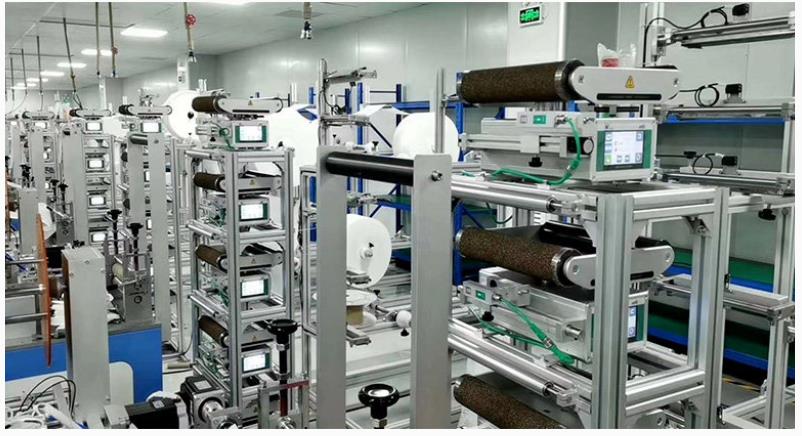
The operating environment has a huge effect on system performance and operating costs. Dust, vibrations, temperature differentials, and lighting conditions have an influence on sensor reliability.
For instance, optical systems would be likely to lose accuracy when under dusty or poorly lit conditions, whereas ultrasonic systems, in general, enjoy better performance in such conditions. Choosing a system that is intended for full dependability in a specific atmosphere might reduce time spent in maintenance, and build cost efficiency in the end.
6. Integration with Automation and Control Systems
Modern manufacturing is increasingly dependent upon automation and digital integration. These Web guiding systems are constructed such that they can easily integrate with current control systems such as PLCs or centralized monitoring platforms, offering advanced efficiency, and scalability.
Even if their initial costs of integration are somewhat higher, integrated systems tend to give better process control, real-time adjustments, and data optimization. This can increase their overall performance significantly and cut down operational costs considerably in the long run.
7. Maintenance and Technical Support Considerations
In the list of advantages of automation, we must consider that maintenance requirements of web guiding systems and the existence of technical support are often missed upon but are significant for long-term performance. Simple systems require frequent manual adjustments, whereas the more advanced ones may need frequent targeted maintenance but few mere interventions.
Regular, dependable, and strong support infrastructure known for long-term performance will invariably reduce downtime by providing a wider range of spare parts on time, thereby extending the life s pan of the web guiding system.
8. Scalability and Future-Proofing
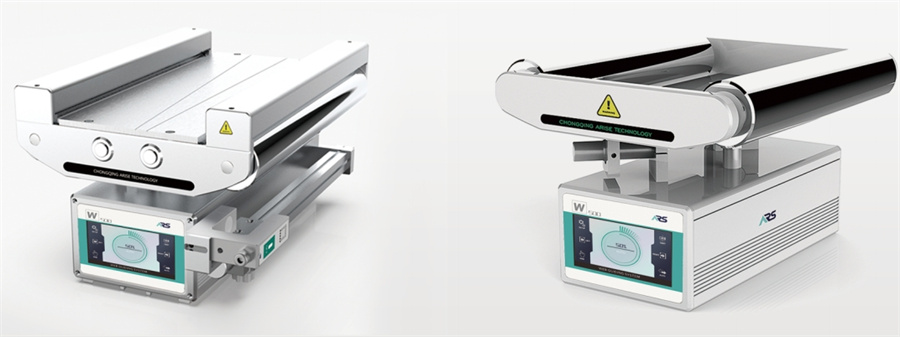
With changing production requirements, the system should have good ability to cope with future needs. The best investment is scalable technology that may be updated when new technologies are seamlessly incorporated.
While being an initial investment, these systems save on huge commitment of new basic systems closer to the end, simple growth in the capacities of the manufacturing plants. This approach will keep pooling its resources toward functionality and cost-effectiveness.
Summary
- The simple and manual web guide systems offer low initial costs but limited performance, making them suitable for simple tasks.
- Mid-range systems such as edge, center web guides provide a balance between cost and efficiency for standard applications.
- High-end solutions, including ultrasonic and vision-based web guiding systems, deliver superior performance at a higher cost, making them ideal for demanding, high-precision environments.
Final Thoughts
To select the right web guide system, a comprehensive cost vs. performance analysis is essential. A comprehensive strategy will lead to an option that enables investment in web guiding technology with the most advantageous performance results for the cost accorded.