Gone are the days of Offline Weighing Inspections, CTS 3.0 Delivers a New QC Solution for Composite Production
【Technology Trend: Single inspection has limitations, and dual inspection has become a new direction for quality control.】
Practitioners engaged in flexible packaging processes may ponder: Can your current inspection equipment monitor product quality in all aspects?
Standalone X-ray or near-infrared testing only obtains coating weight data and cannot observe product surface conditions. Traditional visual inspection is limited to detecting superficial defects, unable to judge the coating uniformity within substrates. The narrow perspective of single inspection modes creates many quality control blind areas.
Limitations of Single Inspection Mode
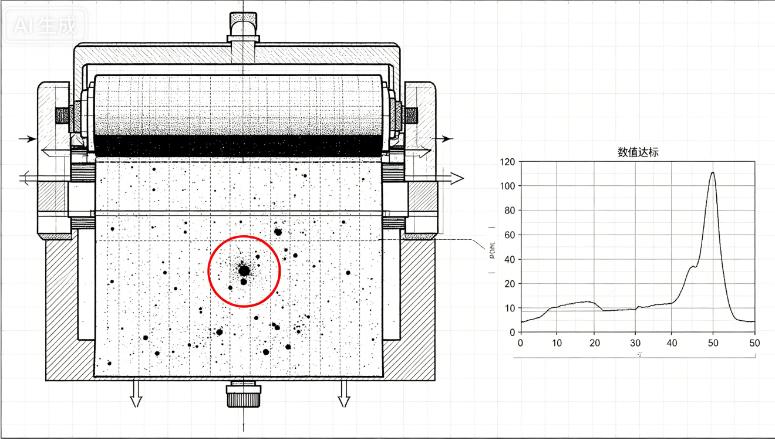
Limitation 1: Coating metrics pass inspection while surface anomalies emerge
The measured coating parameters are up to standard, but glue accumulation and grain defects arise on the product surface. Single-function inspection devices lack synchronous detection capability, resulting in unresolved quality issues.
Limitation 2: Good visual appearance with internal coating deviations
Though the surface is smooth by visual inspection, the adhesive coating inside the substrate suffers from position and thickness deviations. Such problems will result in inadequate peel strength and other after-sales complaints, and are hard to foresee beforehand.
Limitation 3: Segregated data prevents integrated quality judgment
Various inspection datasets are governed by different benchmarks and cannot be shared or compared, bringing difficulties to on-site quality assessment.
Chongqing ARISE CTS 3.0 Coating Quality Tracking System, powered by dual coordinated detection, effectively cuts down quality control blind areas. The microwave radar can penetrate substrates and ink layers, keeping track of coating weight variations in real time.
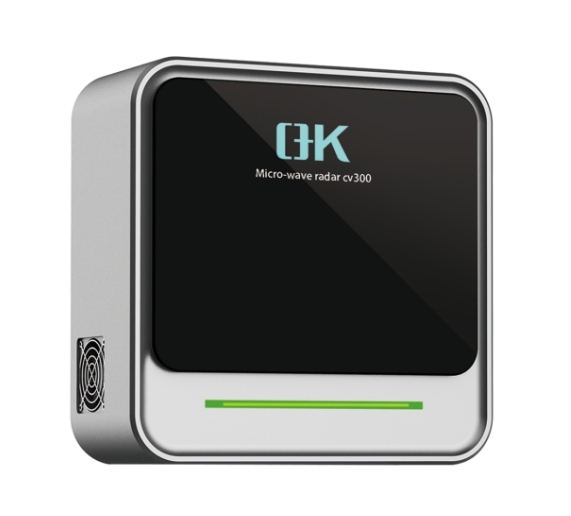
Machine vision performs real-time synchronous scanning on product surfaces, picking out a full range of exterior imperfections.
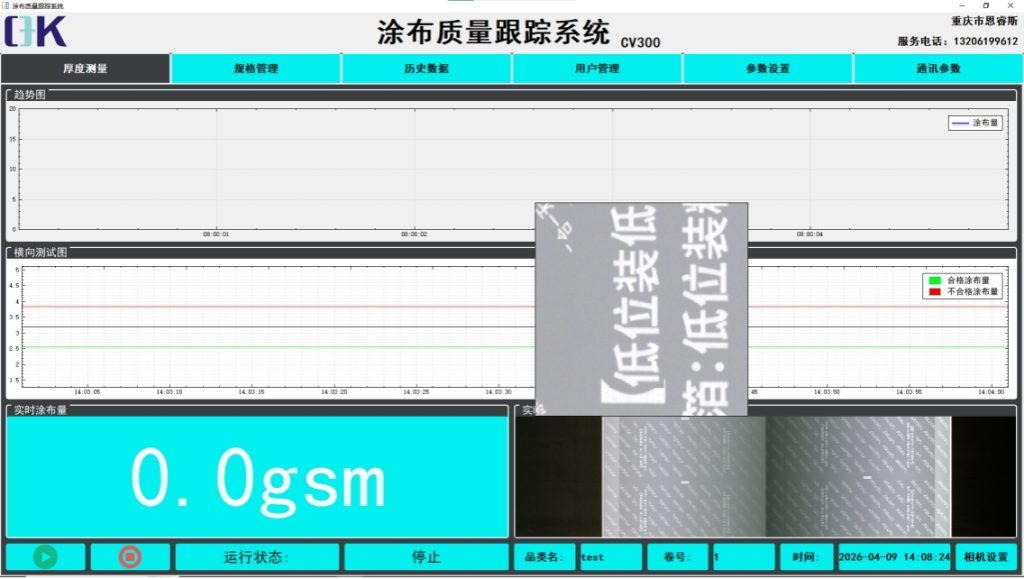
Data Linkage: The two detection technologies serve for mutual reference and verification to address the limitations of single-mode inspection.
High technical standards are required for signal synchronization, integrated data analysis and overall defect identification. The entire system is developed with our proprietary technologies.
Live Footage of Equipment Operation: Intuitive Display
The video records the full operation of the CTS 3.0 Coating Quality Tracking System, presenting its steady working procedures vividly. With dual inspection components operating simultaneously, the system gathers production data on a real-time basis and keeps track of the whole coating process.
With only one inspection method applied, subtle parameter variations are hard to spot early on, leading to defective goods, increased production costs and hidden after-sales troubles. The combined dual inspection system keeps a simultaneous watch on inner coating layers and exterior surfaces. It detects anomalies rapidly, allowing staff to tweak parameters immediately and fully guarantee the quality of end products.
Dual inspection is not an optional extra, but a reliable line of defense for production quality.
Equipped with a comprehensive inspection framework, the CTS 3.0 coating quality tracking systems provided by Arise, help elevate overall quality across composite production.