
How Inline Vision Inspection Reduces Waste and Increases Profit in Bag Production?
In high-speed bag-making production, the profit margin of the factory mainly depends on two core indicators: production capacity output and material utilization rate. With the continuous increase in the costs of soft packaging materials such as multi-layer composite films, high-barrier aluminum foil, and environmentally friendly paper, factory management and quality assurance personnel can no longer consider material waste as an inevitable daily operating cost.
However, despite the continuous improvement in the operating speed and production capacity of modern bag-making machines, many factories still lag in their quality control measures. Deploying an automated in-line vision inspection system is the most effective way to eliminate unnecessary material waste, ensure strict quality standards, and optimize the overall equipment efficiency (OEE) in daily operations.
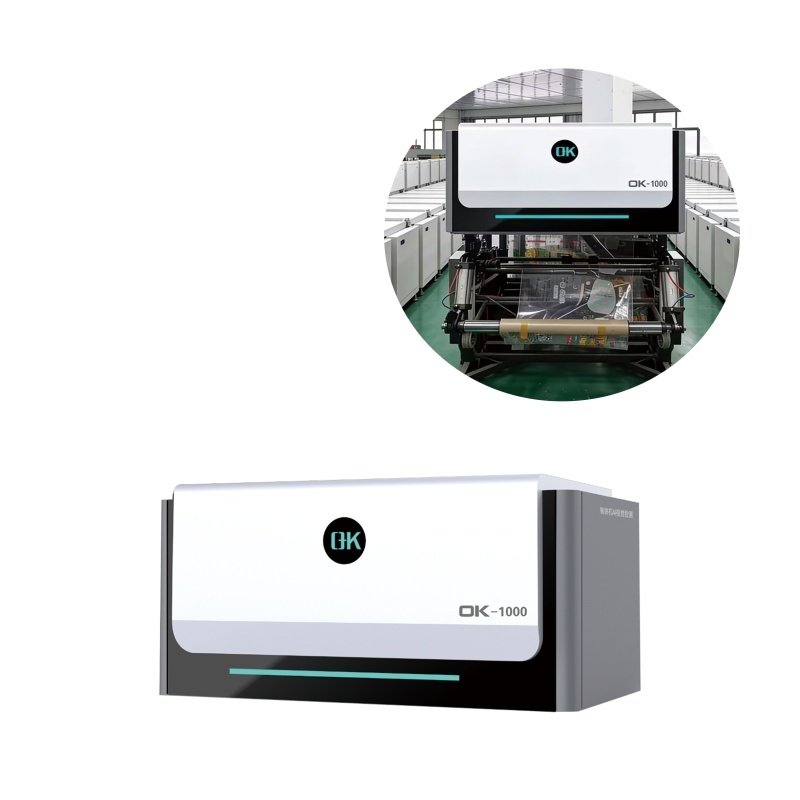
Table of Contents
The Hidden Costs of Traditional Manual Inspection in Bag Making
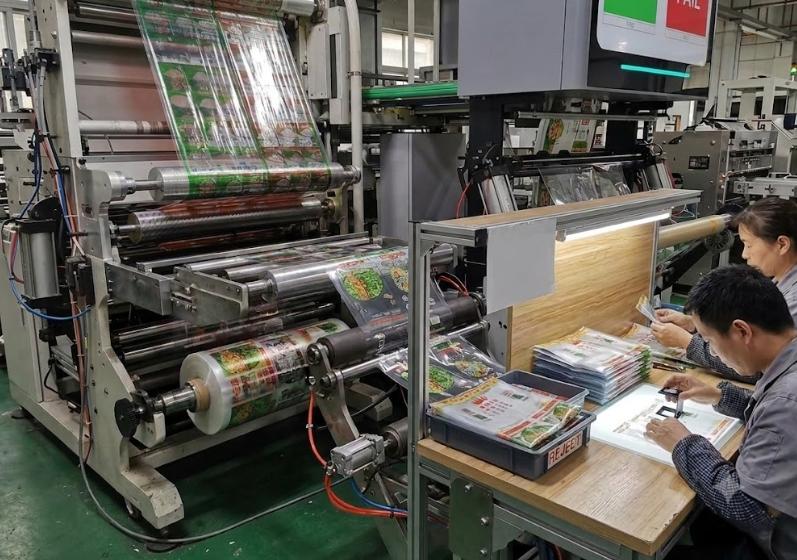
For decades, bag-making factories have relied heavily on manual offline quality inspections. Quality inspectors would take samples at fixed intervals and assess the quality by visually inspecting them on the inspection table, thereby deciding whether to continue production or halt production for rectification. This traditional approach seemingly saved upfront equipment investment, but in reality, it concealed huge hidden costs, secretly eroding the factory’s net profit:
The trap of large-scale scrapping caused by “lagging response”
On a high-speed bag-making machine with a production speed of 200-300 bags per minute, thousands of defective products may have accumulated by the time the operator discovers the problem during routine inspections. When defects such as wire pulling, knife marks, or misalignment of the printing are found, the hundreds of meters of expensive laminated film for printing has already become unusable waste that cannot be recycled.
Visual fatigue and the physiological limits of manual detection
Looking at the running rolls or formed bags for a long time under the workshop lighting can easily cause eye fatigue. Manual quality inspection inevitably leads to missed detections, especially for extremely fine trailing marks, faint ink spots, or slight scratches – this problem is particularly prominent during long night shifts.
Detection blind spots for occasional minor pollutants
Manual visual inspection is almost unable to detect the occasional and instantaneous contamination flaws that occur during high-speed movement, such as insects, hairs, dust particles, or trace amounts of oil. Once these defective packaging bags enter the hands of high-standard end customers in industries like food, medicine, or cosmetics, the resulting returns claims, fines, and damage to brand reputation will far exceed the cost of purchasing automated inspection equipment.
3 Ways Inline Vision Inspection Systems Cut Waste & Maximize Yield
Modern automated visual inspection systems have completely transformed the quality management process from a passive “post-event screening” to an active “source prevention”. Advanced online inspection systems can conduct continuous real-time monitoring of 100% of the products at the full production line speed, and directly and precisely intercept material waste through three core mechanisms:
1. Real-Time Detection to Prevent Mass Scrap
The main cause of catastrophic material loss is often continuous repetitive defects. For instance, when mechanical components wear out, or the ink scraper experiences minor chipping, continuous elongated scratches or wire-like flaws will form on the high-speed running web.
The online visual system conducts 100% continuous analysis on every packaging bag passing through the camera. Once repetitive defects are detected, the system will immediately trigger an audible and visual alarm to notify the operator, or directly link with the bag-making machine to achieve automatic shutdown. By accurately identifying printing flaws, wire drawing, ink omission, and registration deviations at the very moment the first defective product appears, it eliminates large-scale centralized scrap at its earliest stage.
2. Precision Multi-Channel Regional Rejection
Traditional early automated systems often encounter the problem of a high false reject rate. Due to the imprecise response timing of pneumatic mechanisms, when the equipment detects a single defect, it often discards a large amount of qualified materials, and even continuously rejects multiple consecutive packaging bags, resulting in serious secondary waste.
Modern high-precision online inspection systems employ a multi-channel area exclusion mechanism. The intelligent exclusion unit does not discard the entire batch of materials. Instead, it can precisely locate the specific coordinates of the defective bags within milliseconds and accurately trigger directional jetting or mechanical exclusion actions. The adjacent qualified products will smoothly remain on the main conveyor line, minimizing unnecessary losses caused by incorrect exclusion and ensuring that the actual yield rate truly reflects the outstanding performance of the equipment.
| Rejection System Type | Handling Strategy | Scrap Impact |
| Traditional Sorting | Rejects broad web sections or multiple bags | High material loss and false discards |
| Multi-Channel Rejection | Pinpoints exact defective bag location | Minimal material waste; max target yield |
3. Dual-Sided Coverage in a Single Pass
Due to the different functional and processing requirements on the front and back sides of the packaging bag, the focus of quality inspection also varies significantly. The front side usually focuses on the control of the printing visual effect, while the back side is more prone to carry mechanical contamination and structural defects during the forming and transmission processes.
The high-performance online inspection system employs a dual-line array camera (or an optional four-camera array configuration), combined with a highly precise transmission and reflection optical path design, to simultaneously complete the scanning of both the front and back sides of each packaging bag during its high-speed operation:
- Key points of front-end detection: printing registration accuracy, identification of scratch marks/brushing lines, detection of ink splatter, and monitoring of surface stains.
- Backside inspection focus: Detection of surface minor foreign objects (such as insects, hairs, fiber thread ends), pinhole penetration, and mechanical oil contamination leakage.
A single pass can complete 360° comprehensive quality verification, ensuring that any hidden defects cannot bypass the quality inspection barrier. This completely cuts off the possibility of defective products flowing to downstream customers from the source.
Seamless Integration with High-Speed Bag-Making Lines
Many factory managers are generally concerned that upgrading the automated visual system on existing equipment will lead to long-term downtime, face complex non-standard customized engineering, and even require frequent recalibration by professional technicians in the future.
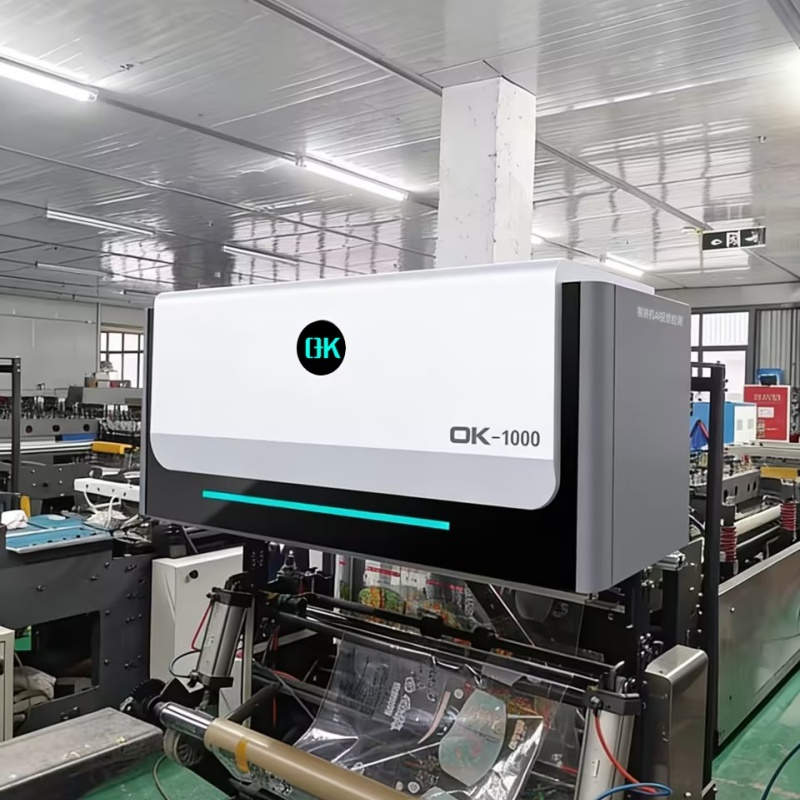
Modern visual inspection systems have completely solved these integration problems through an integrated design. The system integrates industrial-grade line array cameras, dedicated LED light source arrays, and high-precision optical components into a compact housing. It does not require occupying a large space or conducting major surgeries on the existing production line. Instead, it can be quickly and seamlessly integrated into the existing bag-making machine frame.
In addition, the optical hardware that has undergone pre-calibration upon leaving the factory eliminates the cumbersome on-site calibration process. The workshop operators can easily switch the product formula in seconds through the intuitive human-machine interface (HMI), enabling this system to perfectly adapt to small-batch, multi-variety customized production, as well as handle large-scale standard product continuous manufacturing with ease.
What to Look for in a Cost-Effective Bag Inspection System?
Investing in online visual inspection equipment is not merely about purchasing high-resolution camera hardware; what’s more important is to select a system solution that can handle the complex production environment of flexible packaging with ease. When evaluating the equipment selection, it is recommended to focus on the following four core indicators:
- Adhesion and material compatibility: Ensure that the system has the ability to quickly set and switch formulas. It should be capable of precisely controlling the color deviation and pattern misalignment of complex color-printed films, and also be able to conduct highly sensitive inspections for black spots, pinholes, and foreign objects in pure color/transparent packaging bags.
- Sensitivity of defect detection: Opt for equipment with a high-resolution linear optical system to ensure it can stably capture extremely tiny defects as small as 0.05–0.2 mm². This is particularly important for hidden flaws that are easily missed by traditional methods, such as transparent fibers, fine hair debris, and faint ink marks.
- Immunity to Factory Interference: During operation, the high-speed bag-making machine is bound to generate mechanical vibrations, electromagnetic interference, and fluctuations in ambient light. The optical protective cover of the system and the software image algorithm must possess extremely high anti-interference capabilities to ensure stable operation in a real factory environment and to prevent false alarms.
- Integrated Rejection Capabilities: The value of the visual system ultimately depends on its ability to respond and execute in real time to the detection results. Systems with built-in multi-channel elimination signal output capabilities should be given priority, as they can seamlessly link with pneumatic or mechanical elimination mechanisms within milliseconds.
Take Control of Your Bag Production Quality
Operating a profitable bag manufacturing facility requires eliminating silent profit killers like material waste, customer returns, and manual inspection bottlenecks. By equipping your lines with inline vision technology, you safeguard your factory against mass scrap, pass tough client audits with ease, and secure higher-margin packaging contracts.
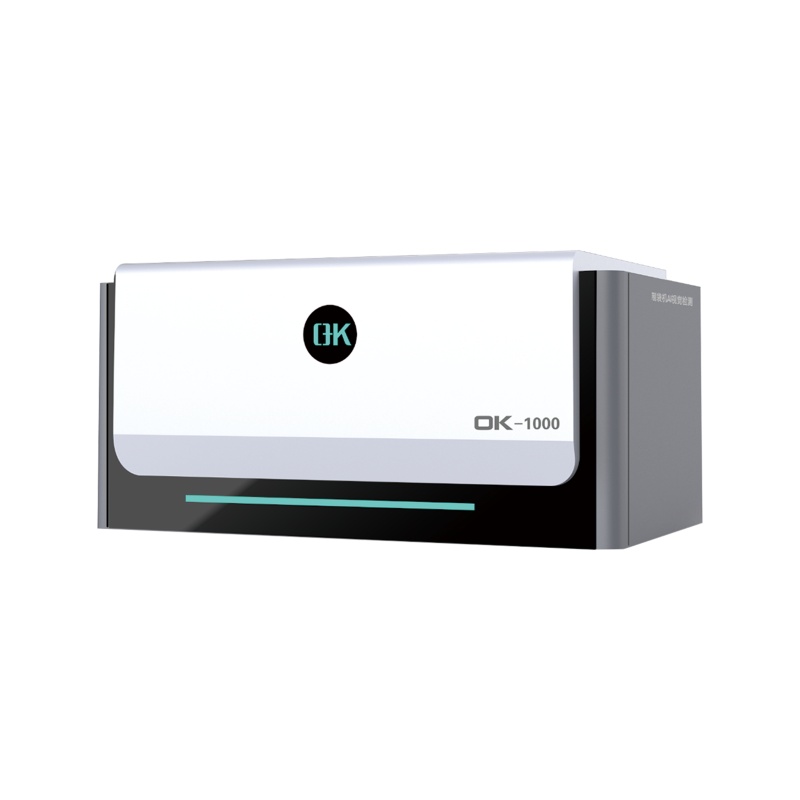
Learn how the Arise OK-1000B Vision Inspection System delivers dual-sided insect and defect detection for high-speed bag makers, or contact our engineering team today to discuss custom integration for your plant.