
How to Choose the Best Print Inspection System for Gravure Printing?
Choose printing detection system for gravure printing production line, not just a high-resolution camera; consider web width, printing speed, substrates, defect types and quality requirement.
The inspection needs of different production lines are different, and the same system may not achieve the same inspection effect on different production lines. Therefore, before purchasing, one should first assess the inspection needs of the production line and clearly identify which functions are the most important for quality control.
When choosing a gravure printing inspection system, the following five factors are mainly considered.
Table of Contents
Start With the Defects You Need to Detect
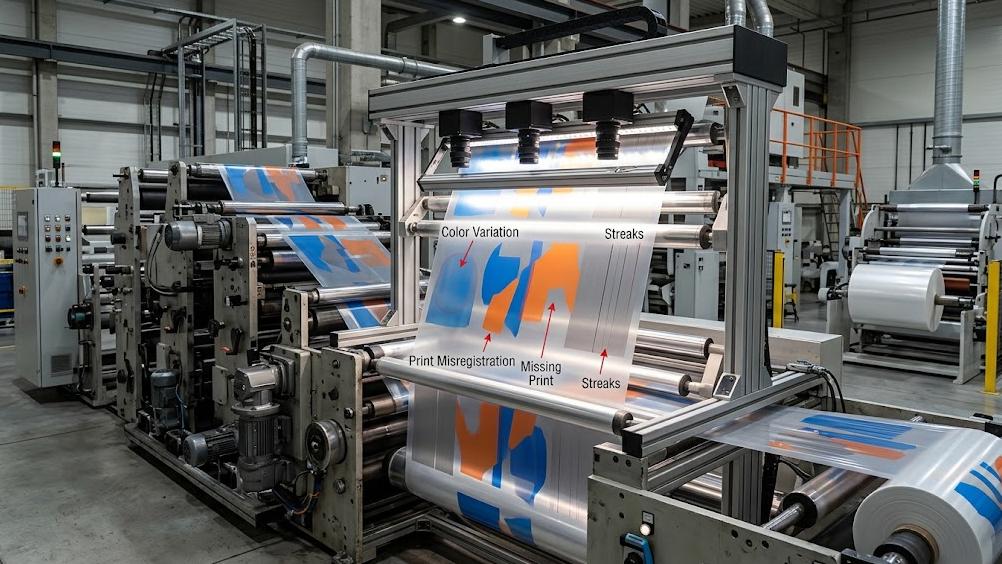
First, it is necessary to determine which defects the system needs to detect.
Common defects in intaglio printing include:
- Color difference
- Incorrect offset printing
- Omission of printing
- Ink spots and contamination
- Blending and smudging
- Stripes
- Scraping marks
- Pores and voids
- Printing deformation
Not all detection systems can reliably detect these defects.
If the main focus is on registration and color consistency, a system with precise contrast and color detection capabilities should be selected. If there are frequent occurrences of missed printing, stripes, ink spots or bleeding in the production process, a stronger surface defect detection ability is required.
Therefore, the most critical defect types should be determined first, and then different detection systems should be compared based on these requirements.
Match the Inspection System to Your Gravure Press
The detection system must be matched with the actual operating conditions of the intaglio printing machine.
Width
The detection width should cover the entire production width. The camera configuration depends on the maximum width and the required detection resolution.
Printing speed
High-speed intaglio printing lines generate a large amount of image data quickly. The camera, processing system and software should support continuous detection at the actual production speed.
Number of colors and printing units
Multi-color intaglio printing has a high requirement for color registration accuracy. The detection system should promptly identify registration errors to avoid generating a large amount of defective materials.
Substrate
Films, papers, foils, transparent materials and metallized films have different optical properties, which will affect image contrast, lighting requirements and defect detection results.
Online detection or offline detection
If it is necessary to detect defects in the printing process promptly and take measures, online detection is more suitable. Inspection during rewinding or finishing processes is more suitable for offline detection.
Pay Attention to Camera, Lighting and Detection Resolution
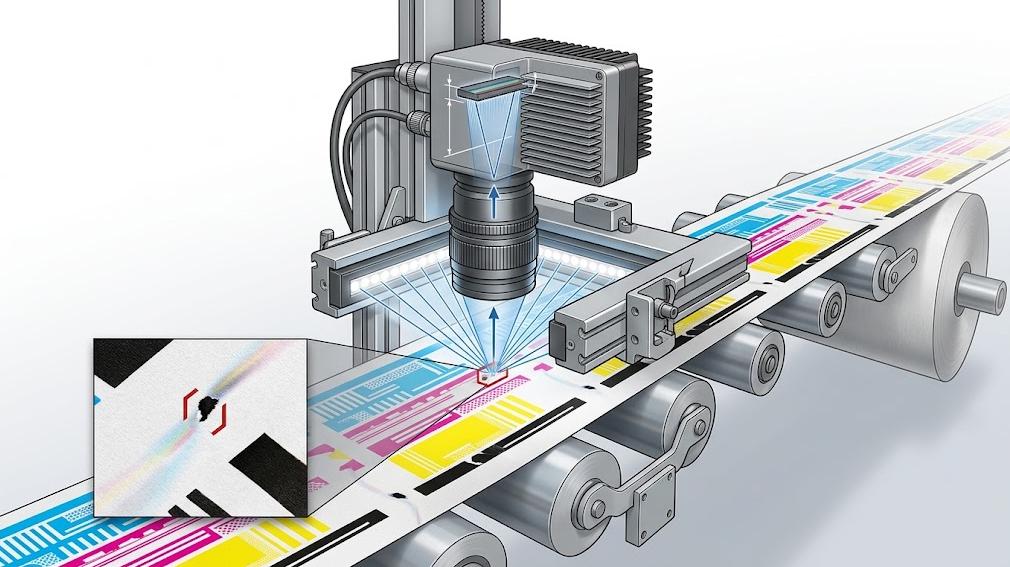
Three technical factors directly affect the detection performance: camera resolution, lighting, and detection sensitivity.
Higher resolution is not necessarily better. The appropriate resolution depends on the smallest defect you need to detect, the width of the sheet, and the production speed. Increasing the resolution while maintaining a wide detection area and high production speed will also increase processing requirements.
Lighting is equally important. Smooth, transparent, or metallized substrates can produce reflections and glare, making it difficult to distinguish defects from the background. A well-designed lighting system helps maintain consistent image quality throughout the detection area.
You should also check how the system handles detection sensitivity. Different products or printing areas may require different detection tolerances. Adjustable sensitivity helps detect meaningful defects while reducing false alarms and unnecessary waste.
Look for Real-Time Detection and Defect Tracking
An excellent printing inspection system should not only be responsible for identifying defects.
When comparing different systems, attention should also be paid to how the detected defects are handled.
Practical functions include:
- Real-time alarm – Promptly notify the operator when a defect occurs, facilitating rapid response.
- Defect image – Record the actual defect image for verification and analysis.
- Defect location and reel mapping – Display the specific location of the defect on the reel.
- Production data – Record the type, frequency and location of the defects, providing a basis for quality analysis.
These functions can make the inspection results better serve production management.
For example, when the system detects that stripes repeatedly appear in the same area, the operator can promptly check the printing unit or the ink scraper to avoid a large amount of material waste caused by the problem.
The goal is not only to detect defects, but also to detect them as early as possible, locate them accurately, and help the operator take timely measures.
Choose a System That Fits Your Production Line
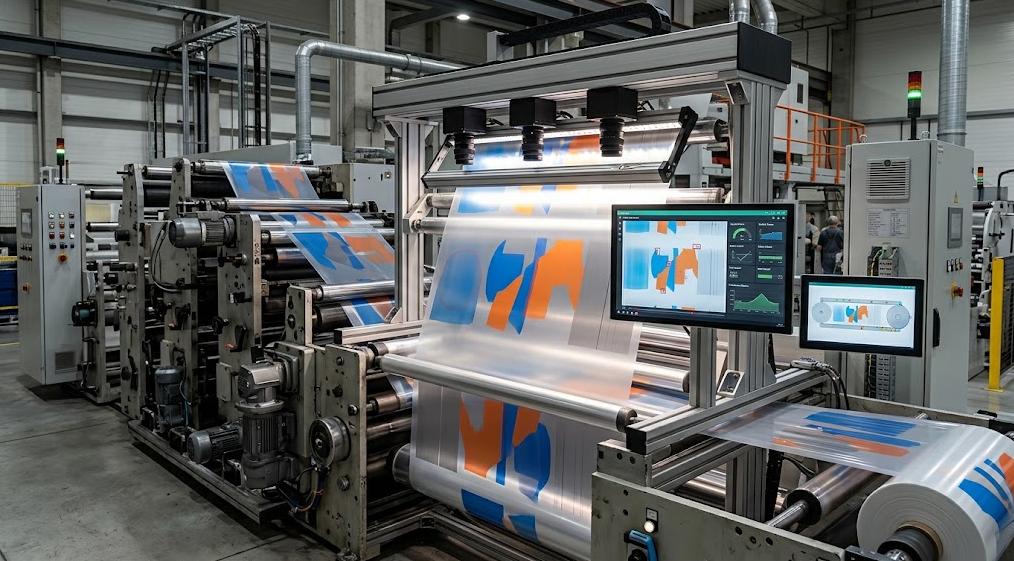
Before choosing a gravure printing inspection system, please confirm the following information:
- What is the maximum printing speed?
- What is the maximum width?
- What is the minimum defect that needs to be detected?
- Which defects will directly affect product quality?
- Which substrates are used?
- Is color and registration detection required?
- Is 100% online detection needed?
- Is defect image and roll mapping required?
- Can the system be integrated with the existing intaglio printing machine?
- Can the detection sensitivity be adjusted according to different products or areas?
The best system is not the one with the most functions, but the one that is most suitable for production conditions and can detect key defects.
To Conclude
For gravure printing production lines that require continuous online quality inspection, the Arise OK-8000 online quality inspection system is specially designed for real-time printing quality monitoring and defect detection, and can be configured according to the width, printing speed, substrate and inspection requirements.
If you are evaluating gravure printing inspection systems, providing this basic information to your supplier can help you determine a suitable solution more quickly.
Need help choosing a gravure printing inspection system? Contact Arise and provide the roll width, printing speed, substrate, and main defect types. We will provide you with a matching inspection solution.