
Vision Inspection Systems: AI-Powered vs. Machine Vision
Modern manufacturing uses vision inspection systems to keep product quality consistent. They help manufacturers catch issues early, cut down on waste, and speed up output. Usually, the system includes cameras, imaging technologies, and intelligent software, which can spot irregularities. After that, the system checks whether each product fits the agreed quality standards.
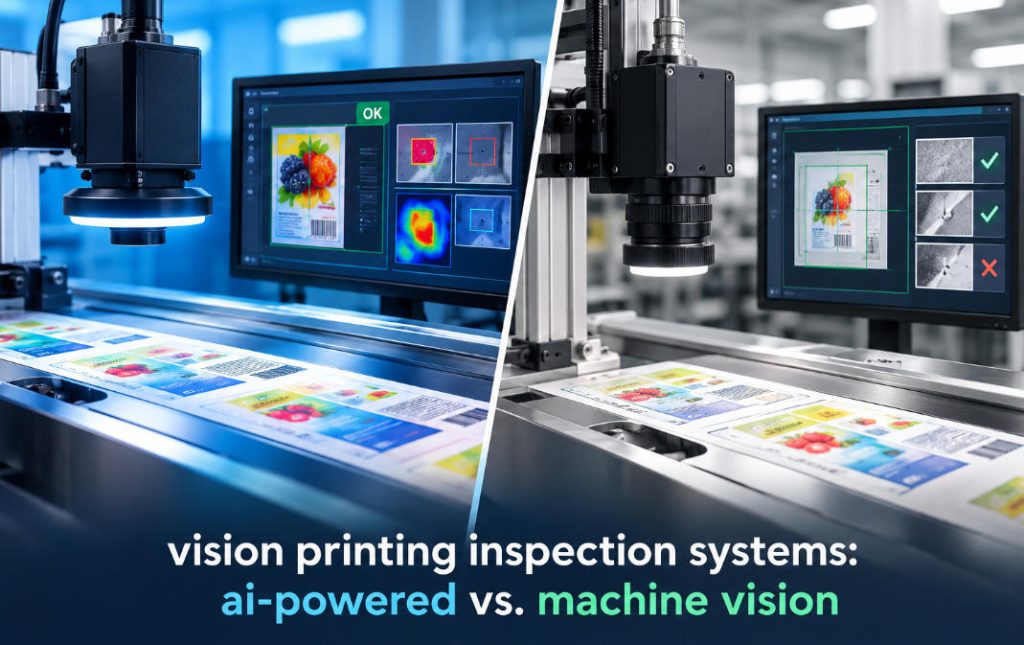
Automation has kept moving forward. Because of that, two methods get a lot of focus, which include traditional machine vision inspection systems and AI-powered vision inspection systems. Both use visual data to evaluate products. However, they differ in how they handle images, recognize defects and how well they cope when the line changes.
Knowing how these two vision inspection systems differ can guide a manufacturer in selecting the most appropriate solution for their applications, production requirements, and goals of quality control.
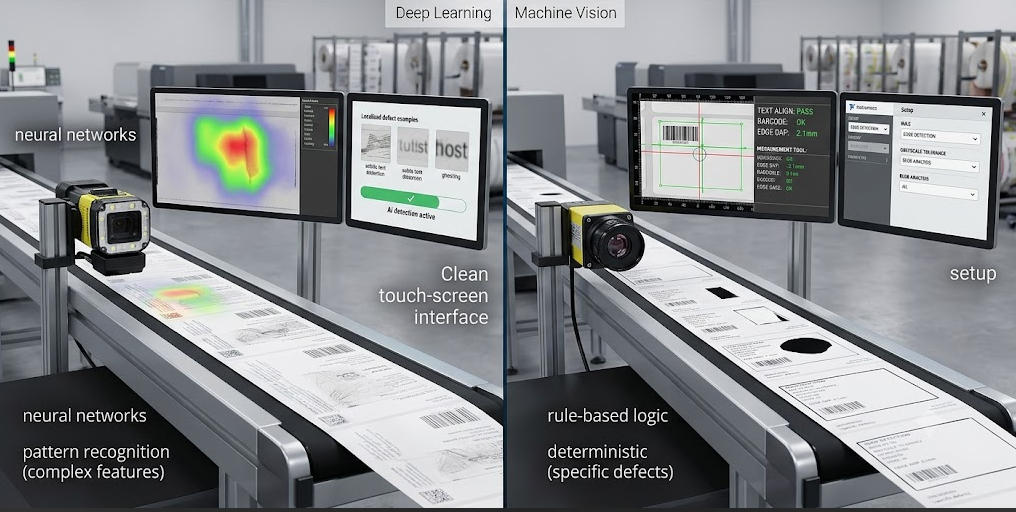
Table of Contents
Understanding the Basics of a Traditional Machine Vision Inspection System
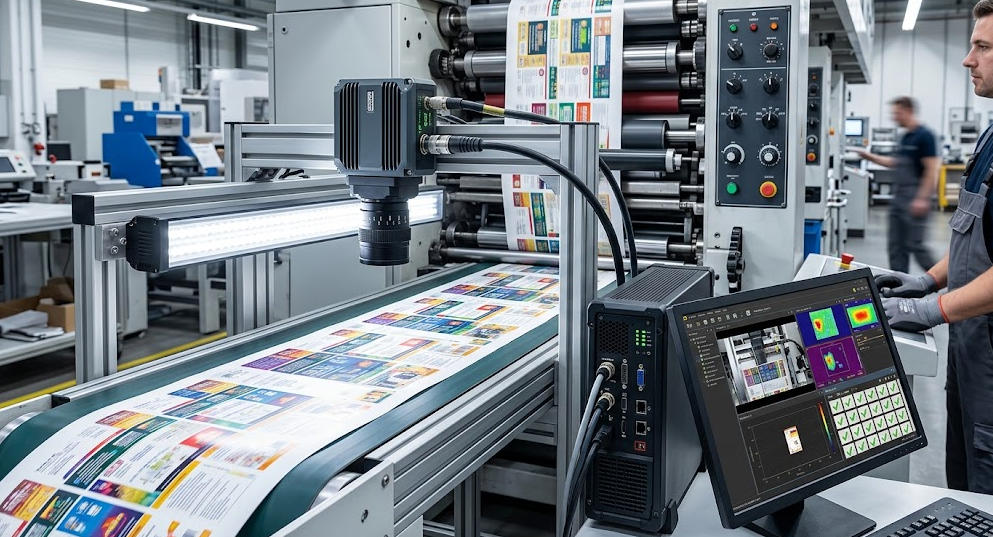
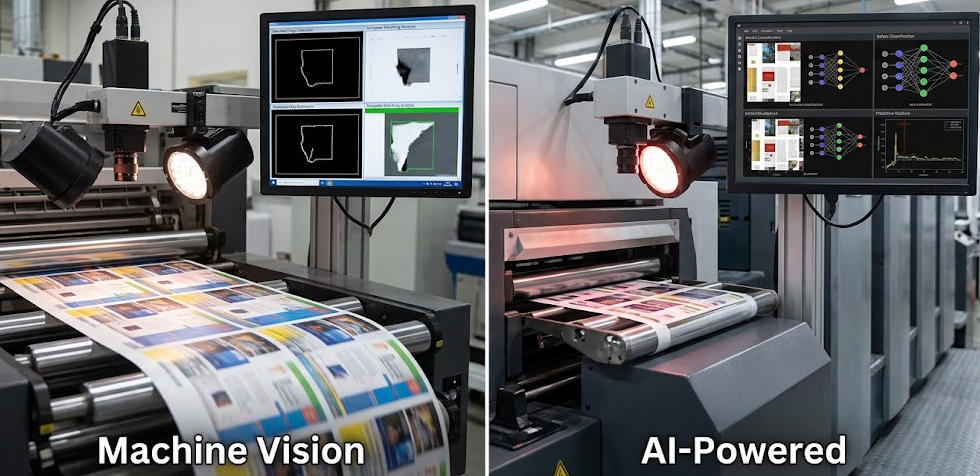
A traditional machine vision inspection system uses cameras, lighting, image-processing tools, and set inspection rules. The camera grabs views as items move along the line. Then the software checks chosen features to decide if parts pass.
These systems often use rule-based methods. Common ones include edge detection, thresholding, pattern matching, geometric checks, and template comparison. An engineer sets the settings based on product needs. They also choose what defect types to target.
For example, in printing and packaging, a traditional system can check label size. It can flag missing printed bits. It can also verify that colors and elements line up. In addition, it can spot color shifts using fixed limits.
Understanding the Basics of an AI-Powered Vision Inspection System
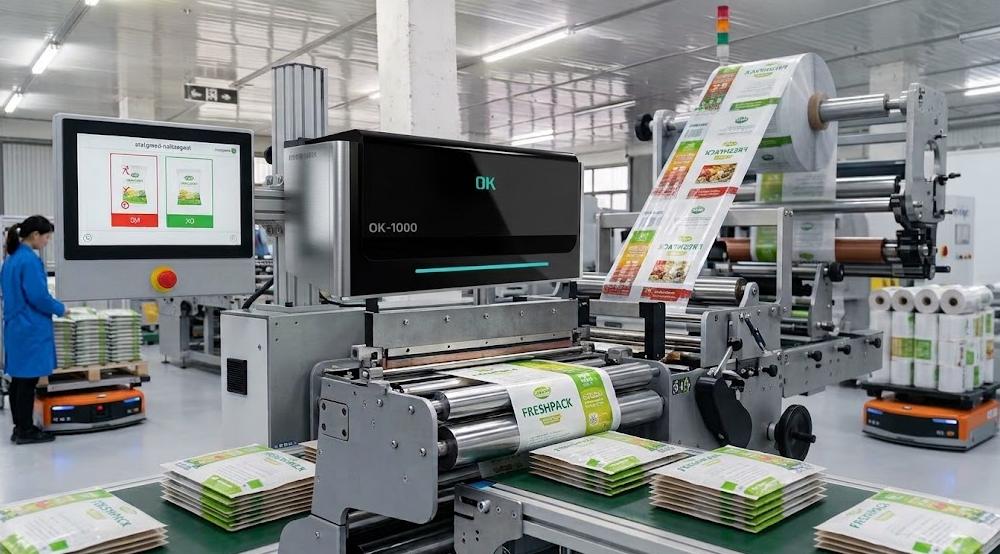
An AI-powered vision inspection system pairs industrial cameras with AI methods. It often uses machine learning and deep learning. The goal is to review product images and find quality concerns.
Instead of only following strict rules, AI systems learn from examples. Training data helps the model learn what is normal. Then the system can sort images, mark known defect types, and notice new odd patterns. It can also tell the difference between changes that are fine and changes that mean a real defect.
In a printing inspection use case, the AI model may learn to spot scratches and ink smears. It can find registration mistakes too. It may also catch missing text and odd print streaks. With enough training data, it can handle shifts in texture and lighting. It can also deal with how defects look in different cases, better than fixed rule inspections.
Key Differences Between AI-Powered Vision Inspection Systems and Machine Vision Inspection Systems
1. Inspection Technology and Working Principles
Traditional machine vision uses fixed algorithms and clear inspection rules. Industrial cameras take pictures of items. Then image software checks traits like shape, size, color, position, and surface detail.
AI-powered vision inspection uses artificial intelligence methods such as machine learning and deep learning. It studies images and learns patterns that match defects or quality issues. Instead of only using hand-made rules, it learns from training data.
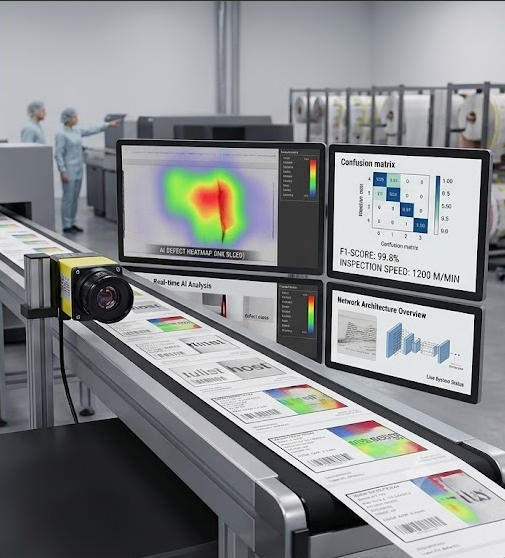
So the main difference is this: traditional systems follow set logic, while AI systems learn from examples. In real lines, many AI systems still use normal image steps and rule checks.
2. Defect Detection and Recognition Capabilities
Defect detection is one of the most important differences between the two technologies.
Traditional machine vision works best when defects look consistent. If a defect can be tied to measurements, like size limits or contrast bands, it can be detected well when the setup stays stable.
When defect shapes are odd, textures change, contrast is weak, or the look varies a lot, fixed methods can miss issues or flag too many false cases.
AI-powered vision inspection can learn from many images that show both defects and normal parts. This helps when the surface or material looks different across batches. It is often used for products such as printed materials, textiles, electronics, and other items with changing visual patterns.
For instance, a basic system might look for scratches by a single contrast cue. An AI model can still find scratches even if they differ in shape, angle, or how they appear.
Still, AI is not a sure win in every case. Results depend on camera image quality, the training set, how the model is built, and how it is tested. For very simple and well-defined defects, traditional machine vision can stay more dependable.
3. Flexibility and Adaptability
Traditional machine vision usually needs changes when products or conditions shift. Engineers may update settings for new designs, new materials, different lighting, or new quality targets. Big changes in products can mean more tuning work and more code updates.
AI-powered vision inspection system can be more flexible in many setups. If it is trained with samples that cover different products and defect types, it can handle new variation without every detail being typed in by hand.
For instance, companies making multiple package layouts often end up setting up several rule sets in a basic inspection setup. An AI-based option can handle more layouts by using a model that has been trained, or by using multiple tested models.
However, AI vision inspection does not remove the need for checks. If a new item, new material, or new production setting is added, the system should be tested again. Bigger shifts may call for fresh training data, model changes, and a review of how well it works.
4. Data Requirements and System Configuration
Traditional machine vision mainly needs clear product specs, pass and fail tolerances, a good imaging setup, and well-tuned inspection code. Engineers decide the logic that marks each item as acceptable or not.
This style can be easier to roll out when the inspection rules stay steady and are already clear.
AI-based vision takes more setup. With different methods, teams may need pictures that show both good items and bad ones, images that represent the main defect types, and separate sets for training and for checking results.
Data quality matters a lot. If the training photos do not match what the line really looks like, the model can struggle after launch.
If bad samples are hard to find, teams may look at anomaly detection, synthetic image creation, or mixed inspection designs. These paths can ease some data gaps, but they still need close testing.
5. Inspection Speed and Processing Performance
Both traditional and AI-powered vision inspection systems can support high-speed manufacturing, but their processing requirements differ.
Basic machine vision steps often use less compute, especially for straightforward tasks. Examples include count checks, presence detection, alignment checks, and size measurement. With tuning, these setups can run quickly and stay consistent.
AI vision inspection systems can need more hardware, mainly with deep learning and large images. Even so, careful model tuning and edge devices can let AI run at line speed.
When choosing between them, compare the full workflow. Include camera capture, image processing, sending the decision, and triggering the reject step.
The fastest image processing part is not the only goal. The whole system has to keep up with the line rate. It also must hold acceptable defect detection and limit false rejections.
6. Accuracy, Consistency, and Reliability
Inspection accuracy depends on the application, imaging conditions, algorithm design, and quality of the inspection setup.
Traditional machine vision often gives consistent outcomes for inspection jobs that are the same every time. For instance, it can measure part size and check it against preset limits. It can also confirm where a printed mark sits.
AI vision printing quality inspection system can spot tricky defect patterns that are hard to describe with old style code rules. Still, results can shift when new images do not match what the system saw during training.
Each approach can make two kinds of mistakes. A false positive means a good item gets turned away. A false negative means a bad item is allowed through.
So, plant teams should test every setup with samples that look like real output. They should track key metrics such as defect detection rate, false rejection rate, repeatability, and inspection speed.
7. Cost and Return on Investment
The price of a vision inspection system is not just the camera and software cost. Work for integration, engineering, and setup matters. Computing hardware, ongoing upkeep, staff training, and production stoppages during rollout also affect the final total.
For simpler and steady checks, traditional machine vision can cost less. It usually needs less data cleanup and less model building.
AI-powered inspection may cost more at the start. Data gathering, labeling, model training, compute time, and validation add up. Even so, it can pay back over time if rare but complex defects create big scrap, drive up manual checks, or lead to quality losses.
A case in point: if a line sees many false rejects because surfaces look different from part to part, AI defect recognition may help. On the other hand, if the only goal is to confirm that a part is present, a simpler traditional setup may be enough.
A practical ROI review should include losses tied to defects, reduced labor needs, how much of the product gets checked, upkeep effort, and the cost of missing defects.
8. Explainability and Maintenance
Traditional machine vision can be easier to debug. Its output follows clear rules, set limits, and measurement steps. Engineers can review the logic that is already configured, then change one parameter at a time when results drift.
AI-powered systems are harder to read, especially when they rely on deep learning. Some tools show confidence levels or heat style maps. But these views do not always spell out why the model chose a result.
Maintenance is also not the same. With traditional systems, changes in lighting, materials, or line conditions may require recalibration or parameter tweaks. With AI systems, teams need to watch for performance decline. They may also need retraining if defect types change or if the product looks different over time.
Routine checks help with both options. That includes camera upkeep and lighting maintenance. Document the validation steps, too. Also keep change control clear and consistent.
9. Industrial Applications
AI-powered and traditional machine vision inspection systems are used across numerous industries, often for different but complementary tasks.
Comparison of Application Scenarios
| Industry | AI-Powered Vision Inspection | Traditional Machine Vision Inspection |
| Printing and Packaging | Detects complex ink smears, irregular print defects, and surface flaws | Checks print registration, label dimensions, and missing printed elements |
| Automotive | Identifies paint defects, surface damage, and irregular appearance | Measures components and verifies assembly positions |
| Electronics | Classifies complex solder defects and surface anomalies | Checks component placement and geometric tolerances |
| Food and Beverage | Identifies unusual product appearances and surface blemishes | Verifies fill levels, packaging, and label positions |
| Pharmaceuticals | Classifies complex visual defects in products and packaging | Checks package presence, printed codes, and tablet dimensions |
| Textiles | Detects irregular fabric defects, stains, and complex weave variations | Measures fabric width and checks pattern alignment |
Summary Comparison Table of AI-Powered Vision Inspection Systems and Machine Vision Inspection Systems
| Comparison Factor | AI-Powered Vision Inspection Systems | Traditional Machine Vision Inspection Systems |
| Core Technology | Uses artificial intelligence, machine learning, and deep learning | Uses rule-based image processing and predefined algorithms |
| Working Principle | Learns visual patterns from training data to identify defects | Analyzes images according to predefined rules and thresholds |
| Defect Detection | Suitable for complex, irregular, and variable defects | Effective for clearly defined and predictable defects |
| Image Analysis | Recognizes complex patterns and visual characteristics | Analyzes measurable features such as edges, shapes, colors, and dimensions |
| Flexibility | Can adapt to visual variations when properly trained | Often requires manual adjustment of inspection parameters |
| Data Requirements | Typically requires representative training and validation data | Primarily requires product specifications and inspection parameters |
| Inspection Accuracy | Can improve complex defect recognition when appropriately trained and validated | Provides consistent results for standardized inspection tasks |
| Processing Speed | Depends on model complexity and computing hardware | Often offers fast processing for simple inspection tasks |
| Measurement Capability | Supports measurement when specifically designed for the task | Particularly suitable for precise geometric measurement |
| System Configuration | Involves data preparation, model training, and validation | Involves algorithm configuration and parameter adjustment |
| Cost of Implementation | May require additional investment in data preparation, software, and computing resources | Often more economical for simple, stable inspection applications |
| Maintenance | Requires model monitoring and possible retraining | Requires parameter tuning, calibration, and hardware maintenance |
| Explainability | Complex models may be difficult to interpret | Decisions are often easier to trace to specific rules |
| Main Limitation | Depends on data quality, model validation, and computing resources | May struggle with complex defects and significant visual variations |
How to Choose the Right Vision Inspection System
Selecting the right vision inspection system requires manufacturers to evaluate inspection objectives, product characteristics, production conditions, and budget constraints.
Define the Inspection Task
First, spell out what the system must check. Dimensional checks, part counting, and position checks often fit classic machine vision. When the task is hard surface inspection or defect labeling, AI systems can fit better.
Evaluate Product Variability
If the items look the same most of the time, traditional machine vision may be enough. If shapes change, colors shift, materials differ, or defects look different, AI inspection can handle that more easily.
Assess Available Data
AI plans need real images that represent the line. You also need a way to test model performance. If the dataset is small or not varied enough, a basic method or a mixed setup may work better.
Consider Production Requirements
You have to compare speed and accuracy together. Check throughput and how it will fit into the line. Think about how the equipment will run in real conditions. Do the tests in actual production settings before you commit.
Compare Total Ownership Costs
Look at equipment and software costs. Include integration work, engineering time, training, and ongoing maintenance. Also track what you may save from less scrap and less manual effort. Pick the option that hits quality targets without blowing up long-term costs.
Summary
- The traditional machine vision inspection system remains a strong choice for fast, repeatable, and clearly defined inspection tasks, particularly those involving dimensional measurement, alignment, and fixed visual criteria.
- AI-powered vision inspection systems are particularly valuable when manufacturers need to identify complex defects, analyze variable product appearances, or classify visual quality problems that are difficult to describe using fixed rules.
The Growing Attention on Hybrid Vision Inspection Systems
A lot of manufacturers do not need to pick only one route. A hybrid system can mix rule-based image processing with AI defect detection.
Traditional methods can do exact measurements. They can also handle dimensional limits, alignment, and simple pass-or-fail logic. AI helps when the visual patterns are messy. It can sort out irregular defect types.
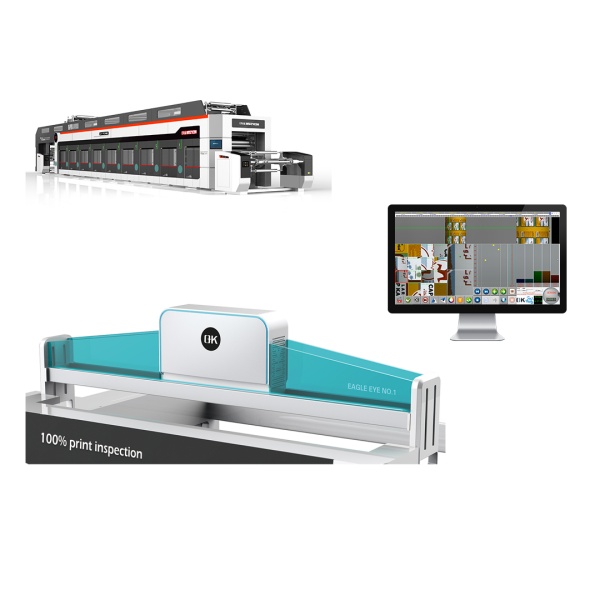
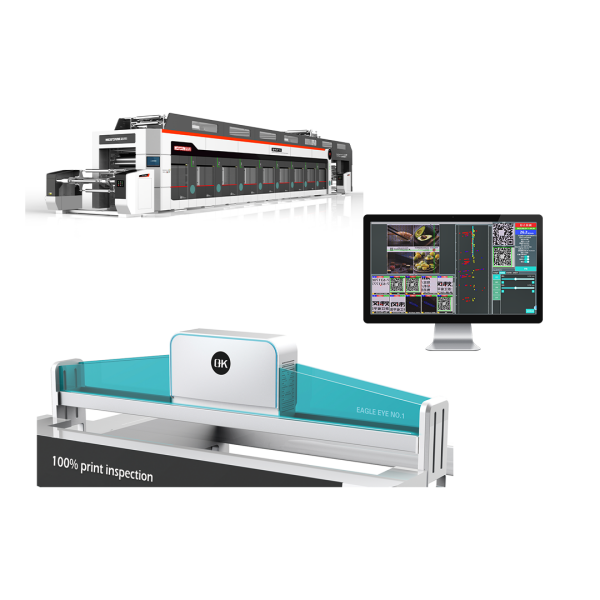
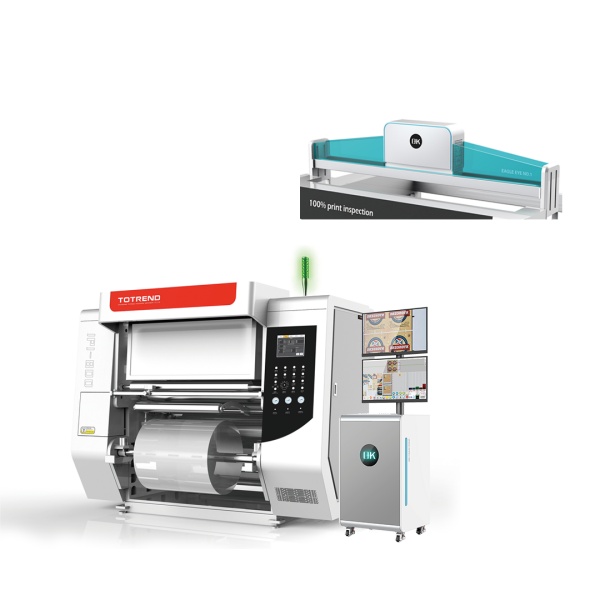
For instance, in 100% printing inspection systems, traditional machine vision can check registration errors and confirm label sizes. Then AI can flag ink smears, surface damage, and other tough defect patterns.
When done well, the combined approach can support fast operation and strong measurements. It can also keep flexibility during day-to-day use. Still, integration should be planned around who owns each inspection step. Decision logic should be coordinated. Validation should run end to end.
Final Thoughts
AI-powered vision and traditional machine vision inspection systems differ in their inspection logic, defect recognition strength, adaptability, data requirements and implementation complexity.
If you are a manufacturer and you want something that works, start by looking at what must be checked. Don’t lead with the technology name.
First, select standard machine vision when clear rules can handle the task.
Next, choose AI when the images change in ways that typical methods struggle to cover.
Finally, go with a hybrid system when you need both accurate measurements and intelligent defect recognition.