ARISE CTS 3.0 Coating Quality Tracking System: Microwave Radar + Machine Vision Dual Inspection Synergy Breaks Coating’s Single-Detection Barrier
Core Value Summary: The CTS 3.0 is the world’s first coating quality tracking system to deeply integrate online non-contact microwave radar measurement with machine vision full-area surface inspection. It simultaneously addresses two major industry pain points—internal coating fluctuations (e.g., weight deviation) and external surface defects (e.g., adhesive skip, streaks, buildup)—upgrading quality control from single-dimensional sampling to multi-dimensional, full-coverage inspection. The system is pre-adapted for dry laminators, solventless laminators, and flexographic laminators.
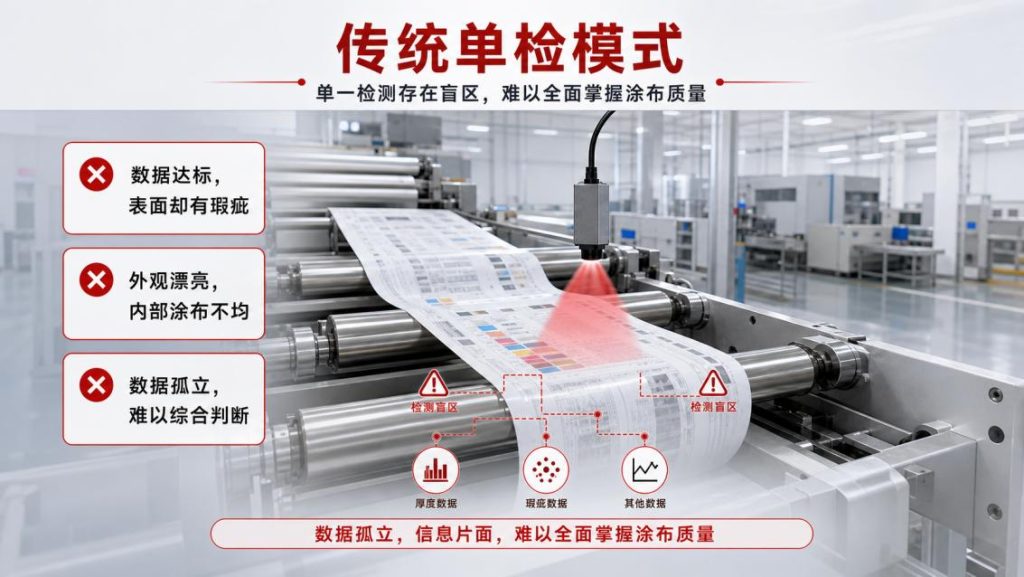
Industry Background: Three Critical Blind Spots of Traditional Single-Mode Inspection
In flexible packaging lamination and coating production, traditional inspection equipment suffers from functional singularity, creating obvious quality control blind spots:
Blind Spot 1 – Thickness-only devices (X-ray/NIR) provide coating weight data but miss surface appearance defects. Equipment shows coating weight within spec, yet customers still file complaints and returns due to appearance issues such as thin spots, adhesive lumps, or adhesive breakage.
Blind Spot 2 – Vision-only systems catch surface defects but cannot sense internal coating integrity. Products pass visual inspection with zero anomalies but ultimately fail in performance tests (e.g., insufficient peel strength), leading to end-use failures.
Blind Spot 3 – Single data source cannot support closed-loop traceability. When abnormalities occur, it is nearly impossible to pinpoint whether the root cause lies in coating head process variation, batch-to-batch material differences, or equipment drift.
These challenges have become core pain points constraining quality stability and brand reputation for coating manufacturers.
Solution Architecture: ARISE CTS·3.0 Coating Quality Tracking System Dual-Inspection Synergy
The CTS 3.0 Coating Quality Tracking System is not a simple superimposition of two technologies. Rather, it reconstructs coating quality control logic through deep coordination between the Radar Layer and the Vision Layer, delivering 1+1 > 2 inspection performance.
| Inspection Layer | Core Technology | Target Parameter | Key Capability | Immunity |
| Radar Layer | Microwave Radar (Online Non-Contact) | Internal coating thickness, areal density, coating weight | Precision down to 0.01 g/m²; penetrates PET substrates and ink layers | Unaffected by surface color, printed patterns, or ambient light |
| Vision Layer | High-Resolution Line-Scan Camera + High-Speed Imaging | Surface appearance (thin coating, adhesive lumps, uneven coating, adhesive backing, missing adhesive) | Full-width, full-area real-time coverage | — |

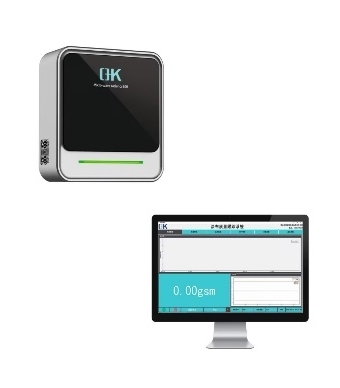
1. Radar Layer: Penetrating the Surface to Reveal the True Coating Status
The microwave radar employs online non-contact measurement technology, effectively penetrating surface materials such as PET substrates and ink layers to directly acquire core parameters of the adhesive layer—thickness, areal density, and coating weight. Unlike conventional optical devices, the radar is immune to product surface color or printed graphics, delivering stable, valid data and capturing subtle fluctuations as fine as 0.1 g/m², dramatically reducing internal quality blind spots.
2. Vision Layer: Synchronized Full-Area Scanning for Efficient Surface Defect Screening
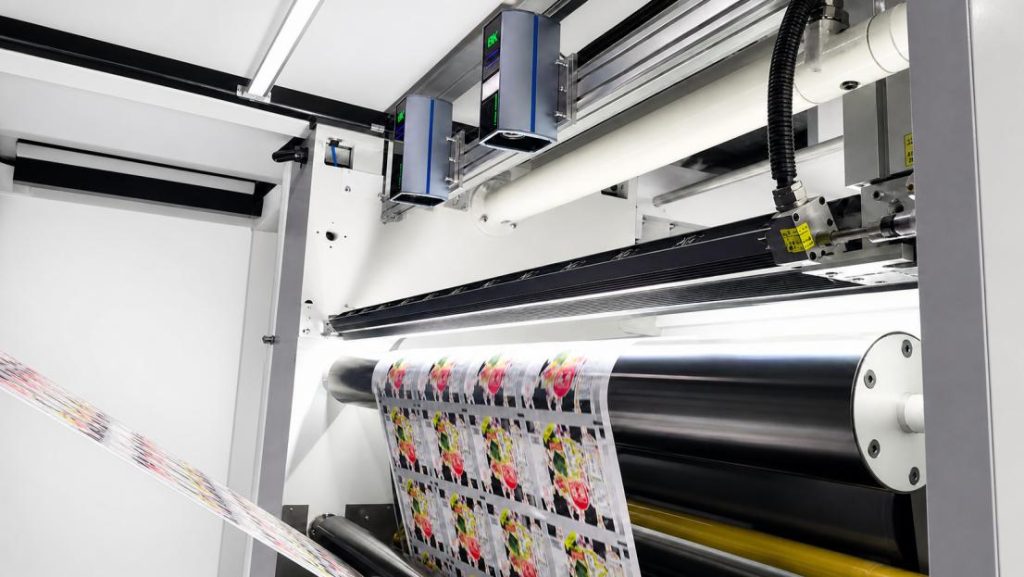
The machine vision module operates in perfect synchronization with the radar. Using high-speed line-scan cameras, it accurately identifies common surface defects, including thin coating, adhesive lumps, uneven coating, adhesive breakage, and missing adhesive. Its full-width coverage ensures that every segment of the production line undergoes visual inspection, effectively compensating for the inability of traditional thickness gauges to detect surface appearance anomalies.
Three Core Synergistic Mechanisms (1+1 > 2)
The radar and vision systems do not work in isolation; they achieve data fusion and cross-validation through the following mechanisms:
Radar Triggers, Vision Verifies: When the radar detects abnormal coating weight fluctuation, the system synchronously invokes the vision module to check whether corresponding surface defects (e.g., lumps or breakage) exist at that location.
Vision Detects, Radar Traces Back: When the vision system identifies an appearance anomaly, it reversely retrieves radar historical data from the same location to analyze whether the issue was caused by sudden coating weight changes, precisely locating the root cause.
Bidirectional Cross-Corroboration, Full Traceability: Real-time correlation of both data streams forms a complete closed loop—”detect → locate → attribute → optimize”—ensuring that quality data for every batch is fully traceable and reproducible.
Multi-Scenario Adaptation and Industry Expansion
The CTS·3.0 Coating Quality Tracking System has been maturely adapted to major production equipment and can be integrated into complete quality control lines:
- Dry Laminators
- Solventless Laminators
- Flexographic Laminators
Covered Industries: Film, tape, printing & packaging.
Future Roadmap: Dedicated adaptation solutions for the lithium battery industry (electrode coating) are currently under systematic R&D iteration and will be optimized based on cell production characteristics.
Compliance & Safety Advantages:
- The equipment features a zero-radiation inspection design, fully compliant with food packaging workshop safety standards.
- A complete data traceability system helps enterprises efficiently pass authoritative certification audits, including BRC Global Standard and ISO 22000.
Quality Control Model Innovation: From “Reactive Remediation” to “Proactive Prevention”
The CTS·3.0 Coating Quality Tracking System drives a fundamental paradigm shift in coating industry quality control:
| Traditional Model | CTS-3.0 Model |
| Relies on operator experience and low-frequency sampling | Full-width, real-time online 100% inspection |
| Batch defects already generated by the time issues are detected | Instant anomaly alerts minimize scrap rate to the greatest extent |
| Dispersed data makes root cause analysis nearly impossible | End-to-end process data retention supports reverse engineering optimization |
| Inspection and production decoupled | Inspection data is directly fed back to the coating head control for closed-loop adjustment |
For manufacturing enterprises focused on cost reduction, efficiency improvement, and quality upgrading, the CTS3.0 Coating Quality Tracking System is not merely an iterative inspection tool upgrade, but a comprehensive enhancement of the enterprise’s overall quality management system.
Core Value Proposition
The ARISE CTS 3.0 Coating Quality Tracking System, through the technological innovation of microwave radar + machine vision dual-inspection synergy, delivers a full-dimension, full-process, fully traceable quality control solution for the coating industry. It enables enterprises to:
- Eliminate both internal and external quality blind spots
- Transition from sampling to full inspection, from passive to active quality management
Meet international certification requirements and enhance global brand competitiveness