Technical Analysis of Dual-Inspection for Soft-Pack Coating: Core Technology Breakdown of ARISE CTS 3.0 Coating Quality Tracking System
[Technical Positioning: Self-Developed Integrated Inspection Solution, Building a Differentiated Quality Control Technology System]
In the soft-packaging online inspection sector, most equipment is equipped with only a single inspection module. In contrast, ARISE has independently developed the CTS 3.0 microwave-radar + vision fusion dual-inspection complete technology system, enabling synchronous collaborative operation of the two inspection types. This solution is not a simple superposition of two sensors, but rather a complete hardware-software integrated technology solution formed through years of R&D accumulation.
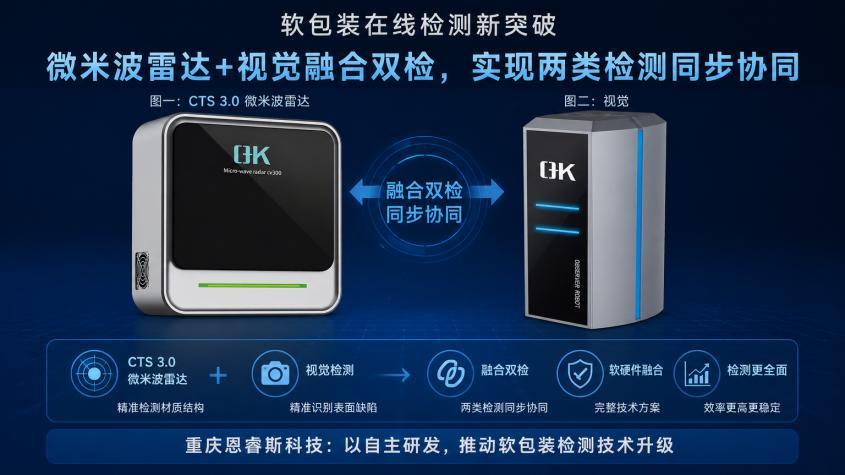
Table of Contents
Three-layer integrated technical architecture, fully realizing full-dimensional quality control for coating
Layer 1: Collaborative acquisition by multiple heterogeneous sensors at the perception layer
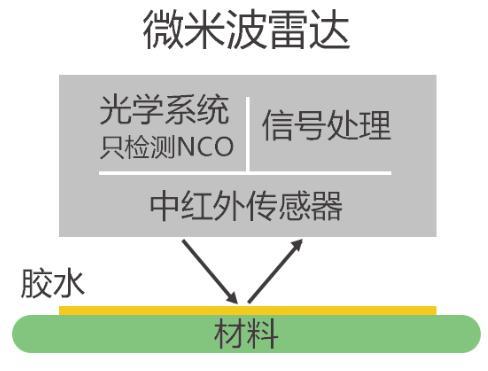
Microwave radar module
It employs customized exclusive-band microwave equipment that can penetrate materials such as PET substrates, printing inks, carbon black, ceramic coatings, etc. By relying on electromagnetic waves to penetrate the coating layer and substrate interface, phase differences are generated, enabling precise calculation of coating areal density. It is immune to interference from film surface colors, printed patterns, or surface conditions, and stably outputs true coating basis weight data.
Machine Vision Module
It is equipped with a high-resolution industrial camera, paired with multi-angle annular LED lighting to minimize reflective interference. It comes with a self-developed deep learning defect recognition algorithm, capable of identifying over twenty common coating appearance defects such as thin coating, adhesive buildup, scratches, bubbles, and more.
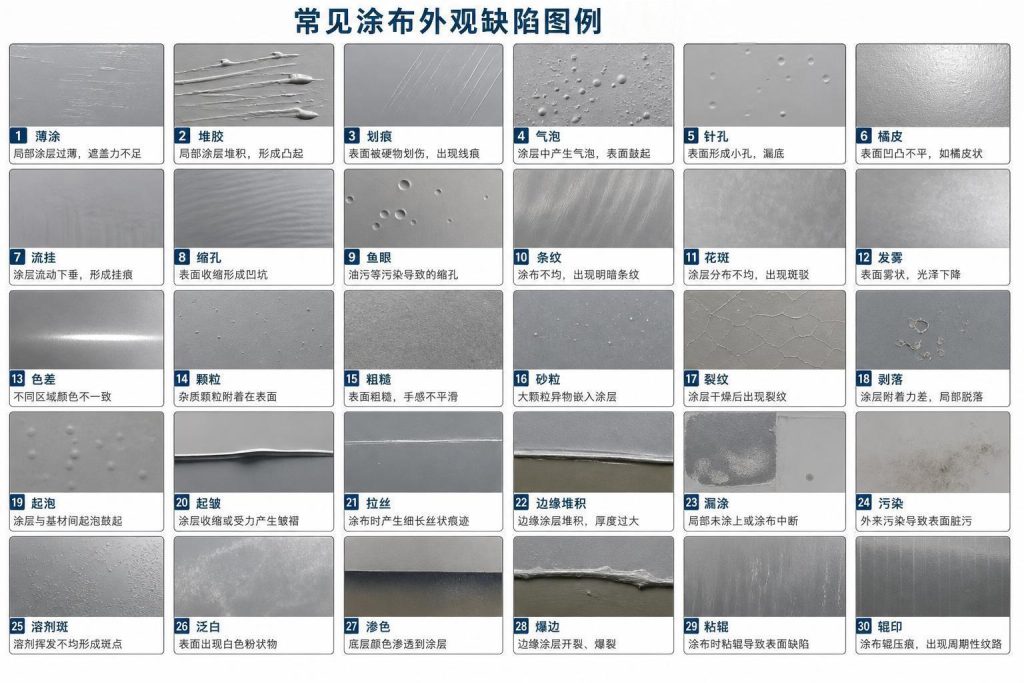
Auxiliary Inspection Supporting Modules
- Soft X-ray auxiliary inspection unit: The device’s radiation dose complies with domestic safety control standards and can be used for auxiliary verification of coating basis weight.
- Laser spot measurement unit: Performs fixed-point high-precision data acquisition for calibration of radar measurement values.
- O+K visual recognition unit: Performs refined classification and judgment for various types of defects.
Layer 2: Fusion Layer – Multi-source Data Collaborative Verification (Core Self-Developed Technology)
There is an inherent difference in sampling frequencies between the radar and vision devices, and the two sets of data coordinate systems cannot be naturally aligned, which is a common technical challenge in the industry.
ARISE’s Targeted Self-Developed Supporting Solutions:
- Time synchronization self-developed solution: A self-developed hardware synchronous trigger component is used to achieve millisecond/microsecond-level sampling alignment between radar and vision, ensuring that the two sets of data correspond to the same location and same time period on the web.
- Spatial precise registration solution: A self-developed feature-point automatic calibration algorithm matches the radar areal density distribution map with the vision image coordinate system, with registration error controlled within 0.1 mm.
- Dual-data fusion judgment model: It incorporates a joint probability algorithm based on Bayesian inference, which comprehensively analyzes radar-based weight data and visual appearance images to determine the root cause of defects.
For example, when the radar detects high coating basis weight while the visual image shows a smooth film surface without defects, the system can help distinguish whether the issue is due to adhesive viscosity fluctuation or metering roll gap deviation, providing a clear reference for the production line.
Layer 3: Application Layer – Intelligent Graded Warning and Process Optimization
Multi-level Joint Warning Mechanism
- Anomaly detected by a single device: Yellow alert, requiring operator review as needed;
- Anomaly detected simultaneously by both radar and vision: Red alert, recommending production stop for troubleshooting;
- Deviation between the two sets of data results: Orange alert, requiring manual review and confirmation.
AI-Assisted Process Optimization Function
The system accumulates long-term production inspection data, analyzes coating fluctuation patterns through algorithms, and automatically outputs recommended operating parameter references adapted to the production line, including production speed, oven temperature, adhesive viscosity, roll gap, etc. With long-term use, it continuously improves judgment accuracy.
Differentiated Technology Accumulation of the Solution, Creating Multiple Barriers to Entry
- RF Hardware R&D Accumulation: The frequency band selection, antenna structure, and signal processing circuitry for the microwave radar require long-term R&D accumulation in the RF domain. The entire hardware suite has been independently developed and customized by the enterprise.
- Interdisciplinary Fusion Algorithm Reserve: The dual-inspection fusion algorithm integrates multiple disciplines including signal processing, machine vision, and mathematical statistics. The complete R&D cycle is relatively long and requires continuous iterative optimization.
- Massive Production Line Real-Measured Data Accumulation: Relying on years of on-site installation projects across various industries nationwide, massive volumes of real web production samples have been accumulated for continuous training of the defect judgment model.
- Real-Time Computing Engineering Capability for High-Speed Production Lines: Deep software and hardware optimization has been performed for high-speed coating production lines up to 300 m/min, meeting the real-time synchronous computing requirements for massive image and radar data. The entire integrated inspection solution has been built through long-term R&D and project implementation, making it not easily replicable in the short term.
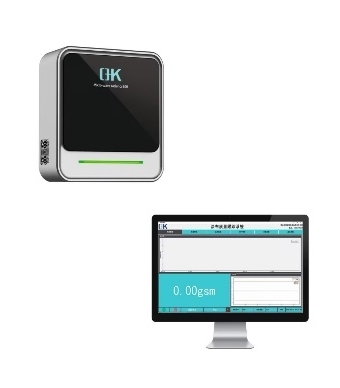
Product Iteration Development Roadmap
- CTS 1.0: Basic coating areal density measurement function implemented
- CTS 2.0: Added production batch data storage and traceability module
- CTS 3.0: Integrated microwave radar + vision synchronous dual-inspection, full-width scanning, MES system interfacing, multi-level anomaly warning, and supporting coordinated control of web guide / tension / color registration.
- CTS 4.0: (R&D planning): AI-driven active process optimization, predictive equipment maintenance, and digital twin visualization platform.
ARISE continuously iterates its integrated inspection technology, providing mature coating quality control solutions for industries including flexible packaging, adhesive tape, film, and lithium battery web materials.
ARISE, continuously innovating web control technologies, offers complete web control solutions.