
How Vision Inspection Systems Enable Zero-defect Printing
In the highly competitive printing industry, even small printing defects, such as color variations, missing text, smudges, incorrect registration, etc can trigger product waste and raise production costs. To deal with these hurdles, a lot of manufacturers are turning to vision inspection systems as some kind of essential quality control solution.
A vision inspection system uses high-resolution cameras, lighting technologies that are more advanced than usual, and intelligent image processing algorithms to watch printed materials in real-time. It helps printing companies achieve zero-defect printing by automatically catching defects during production. That means better efficiency, less waste, and steadier product quality, all without the typical delays.
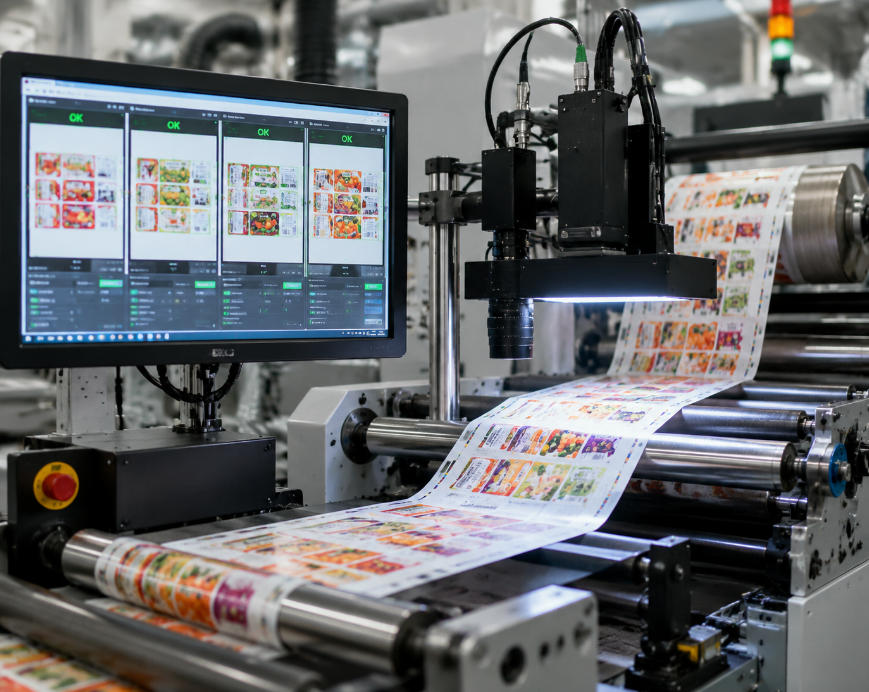
Table of Contents
Understanding Vision Inspection Systems in Printing
A vision inspection system for printing is an automated quality inspection technology designed to identify printing defects while materials are moving through a production line. Unlike the classic manual checks, which often depend on human operators and random sampling, vision inspection systems can continuously examine each printed item at high speed, practically without pause.
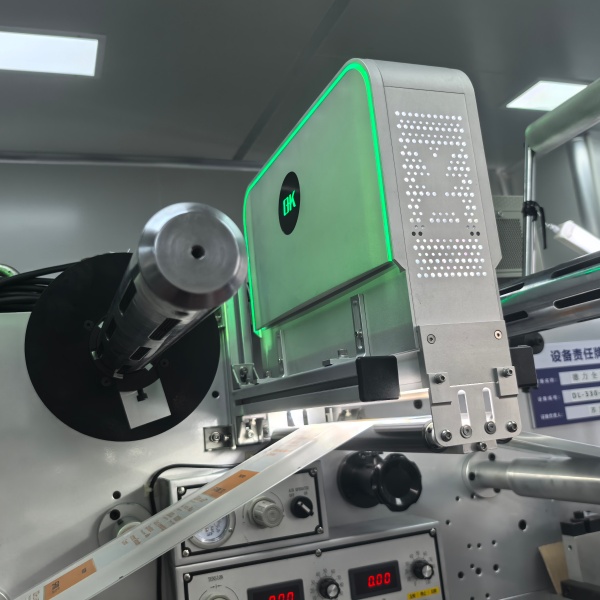
These printing quality inspection systems usually include industrial cameras, specialized lighting units, image processing software, inspection controllers, and data management platforms. The cameras take very detailed images of the printed surface. Then the software compares those captured images with predefined quality standards, or with reference images saved earlier. If there is any deviation, it gets detected and reported immediately.
Printing Applications of Vision Inspection Systems
| Printing Application | Common Products | Functions of Vision Inspection Systems |
| Flexible Packaging Printing | Food packaging, beverage packaging, film packaging, pouches | Detects color differences, printing defects, registration errors, ink smears, and missing graphics |
| Label Printing | Product labels, barcode labels, transparent labels, adhesive labels | Checks print quality, text accuracy, barcode readability, image alignment, and surface defects |
| Pharmaceutical Packaging Printing | Medicine boxes, blister packs, drug labels, instruction sheets | Verifies critical information, detects missing text, checks codes, and ensures compliance with strict quality standards |
| Food and Beverage Packaging Printing | Cartons, wrappers, bottles, cans, packaging films | Inspects logos, expiration dates, product information, colors, and packaging graphics |
| Commercial Printing | Magazines, brochures, catalogs, posters, advertising materials | Identifies image defects, text errors, color inconsistencies, and print alignment problems |
| Security Printing | Banknotes, certificates, identification documents, security labels | Detects fine pattern defects, counterfeit features, microprinting errors, and design inconsistencies |
| Textile Printing | Fabric patterns, clothing graphics, printed textiles | Monitors pattern accuracy, color consistency, image quality, and surface printing defects |
| Electronics Printing | Circuit markings, display components, electronic labels | Inspects fine patterns, alignment accuracy, symbols, and microscopic printing defects |
| Newspaper and Publication Printing | Newspapers, books, journals, magazines | Checks page quality, text clarity, missing content, and printing consistency at high speeds |
| Digital Printing | Customized packaging, personalized products, short-run printing | Ensures variable data accuracy, image quality, color matching, and design correctness |
| Corrugated Box Printing | Shipping cartons, retail packaging, display boxes | Detects logo errors, print position problems, ink defects, and damaged graphics |
| Beverage Can and Bottle Printing | Metal cans, glass bottle labels, promotional packaging | Inspects curved surface printing, color accuracy, text placement, and graphics quality |
Key Advantages of Using Vision Inspection Systems for Zero-defect Printing
1. Real-Time Defect Detection During Printing
One of the biggest advantages of vision inspection systems is their ability to detect defects instantly during production. Instead of finding quality troubles only after a whole batch is done, manufacturers are able to notice and fix those defects immediately, with a quicker feedback loop.
The following chart provides common printing defects detected by vision inspection systems.
| Printing Defect | Description | How Vision Inspection Systems Detect It |
| Color Variation | Differences between the printed color and the required color standard caused by ink problems, material changes, or machine settings | Compares captured images with reference color data to identify color deviations |
| Misregistration | Incorrect alignment between different printing layers, images, or text elements | Analyzes the position of printed patterns and detects alignment errors with high precision |
| Missing Print | Missing letters, graphics, symbols, or incomplete printed areas | Compares real-time images with standard templates to identify missing elements |
| Ink Smears and Smudges | Unwanted ink marks caused by poor drying, mechanical contact, or excessive ink application | Detects irregular surface patterns and abnormal ink areas on printed materials |
| Blurred Printing | Reduced image clarity or unclear text caused by improper printing pressure or machine issues | Evaluates image sharpness and identifies unclear edges or distorted details |
| Ink Spots | Small unwanted ink dots or contamination appearing on printed surfaces | Uses image analysis algorithms to detect abnormal spots and isolated defects |
| Streaks and Lines | Continuous unwanted marks caused by dirty rollers, ink problems, or machine damage | Identifies abnormal lines, stripes, or repeated surface patterns during inspection |
| Text Errors | Incorrect, incomplete, or distorted printed characters | Uses optical character recognition (OCR) technology to verify text accuracy |
| Barcode and QR Code Defects | Damaged, incomplete, or unreadable codes that affect scanning performance | Checks code structure, contrast, and readability against quality standards |
| Surface Scratches and Damage | Physical damage or marks on printed materials during production or handling | Detects unusual surface changes through high-resolution imaging |
| Pattern or Image Defects | Incorrect graphics, missing design elements, or image distortion | Compares printed images with approved reference files to identify differences |
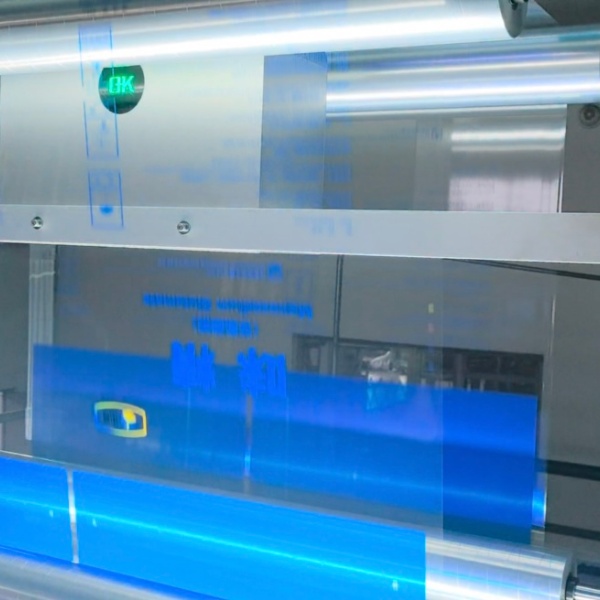
| Transparent Label Defects | Poor cutting, missing elements, or printing issues on transparent materials | Uses specialized contour lighting and camera systems to enhance defect visibility |
| Wrinkles and Material Deformation | Distortion of printed materials caused by tension problems or handling issues | Monitors surface shape changes and detects abnormal material movement |
| Foreign Contamination | Dust, particles, or unwanted materials affecting print quality | Identifies unexpected objects or irregular areas on the printed surface |
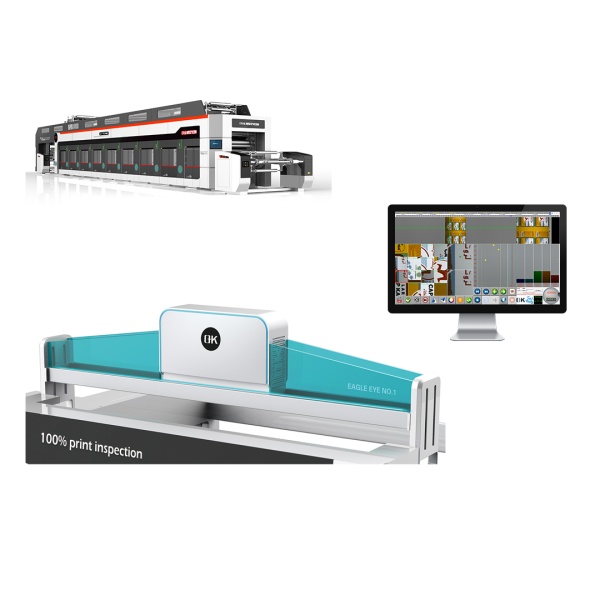
2. High-Resolution Imaging Ensures Accurate Quality Control
In modern printing applications, you often see detailed designs, tiny type, intricate patterns, and very strict visual demands. People doing manual inspection can easily overlook small defects, especially when the production speed runs high. Vision inspection systems fix that issue by using high-resolution cameras that can capture extremely detailed pictures.
With advanced imaging technology, an inspection system can check delicate printing elements, including microtext characters, barcode quality, subtle color differences, and even minor surface blemishes. These strengths matter a lot in sectors where print accuracy is non-negotiable, for example, pharmaceutical packaging, food labels, electronics marking, and security printing.
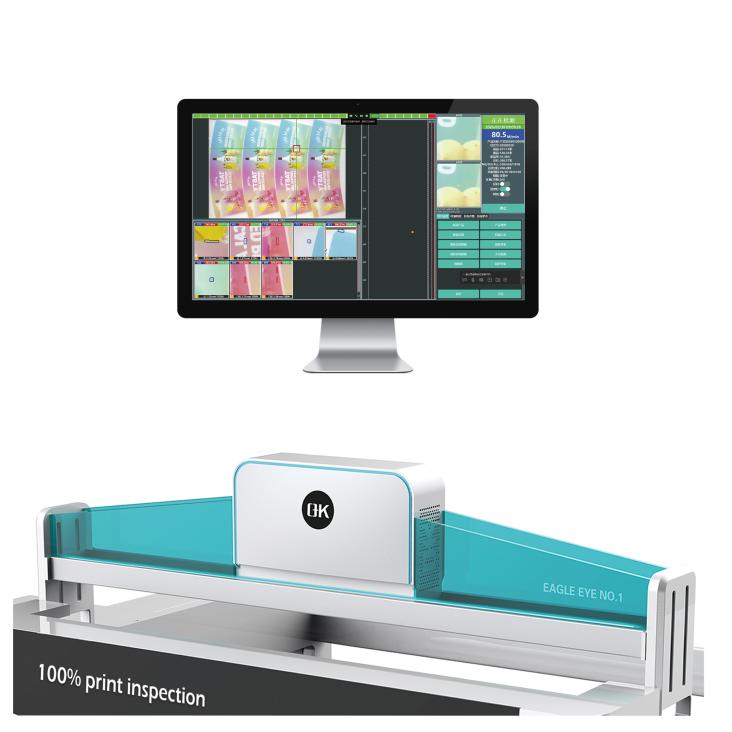
When the 100% inspection system analyzes every printed region with strong precision, manufacturers are better able to keep consistent quality across long production runs.
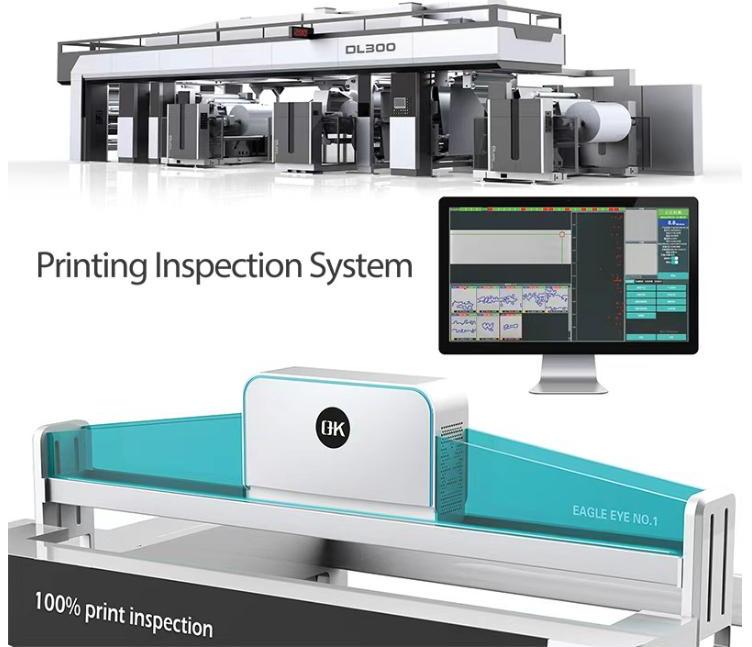
3. Intelligent Lighting Improves Defect Recognition
The performance of a vision inspection system depends not only on camera tech but also on illumination quality. Different printing materials, different surfaces, and various ink types end up needing different lighting setups, so that defects can show up clearly in the image.
In more modern approaches, systems rely on specialized lighting solutions, mainly to boost image contrast and make certain defects easier to spot. For instance, contour lighting can help with transparent label inspection, while surface lighting is useful when you need to catch ink irregularities or printing imperfections.
When the lighting conditions are tuned well, vision inspection systems can recognize defects accurately, even when those problems are tricky to notice through traditional inspection methods. The combination of advanced cameras with intelligent illumination increases inspection reliability for a wide range of printing uses.
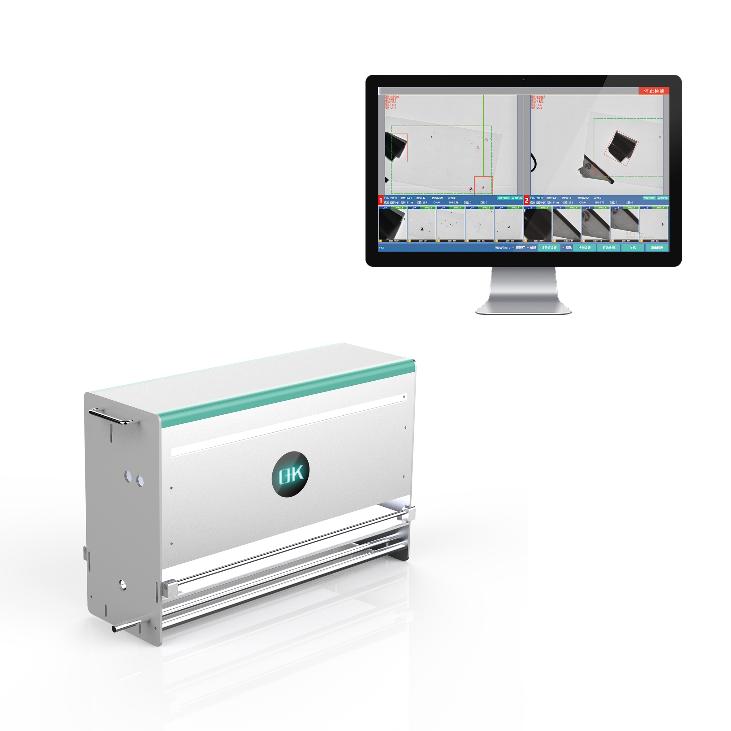
4. Artificial Intelligence Enhances Printing Inspection Accuracy
Artificial intelligence, and deep learning technologies, are shifting the ability of vision inspection systems. Usual inspection systems often lean on fixed rules, which can have trouble when the design gets complicated, or when the production environment keeps changing. With AI-powered systems, there is the ability to learn from big pools of image data, and then capture subtle patterns more effectively.
Using deep learning algorithms, modern 100% printing inspection systems can separate ordinary, acceptable variation from real defects. That helps lower false alarms and raises inspection accuracy, particularly with intricate graphics, tailored or customized layouts, and changing printing conditions.
AI technology further enables inspection systems to keep improving their performance over time, by learning from earlier inspection results. So manufacturers can reach steadier quality control with less manual tuning, and fewer repeated interventions.
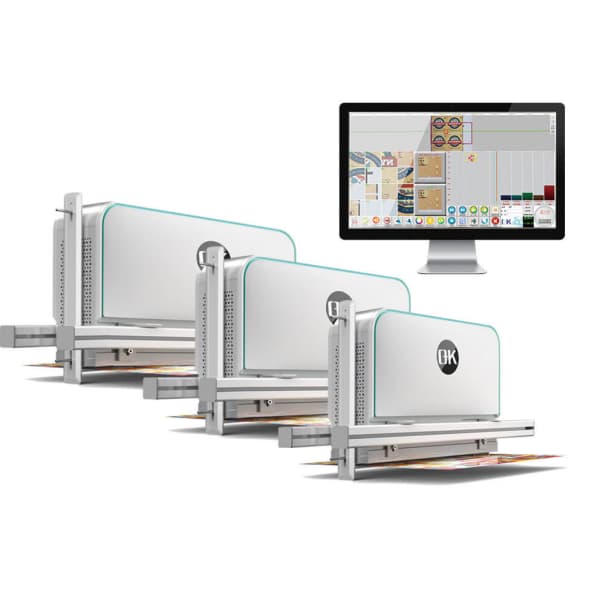
5. Reducing Waste and Improving Production Efficiency
Defective printing products can create major financial losses, because materials get thrown away, extra labor is required, and deliveries end up delayed. Vision inspection systems help reduce these losses by detecting issues as early as possible, before they spiral.
When a defect is noticed in time, manufacturers can stop printing faulty materials, then implement quick adjustments. That lowers the scrap ratio, and also supports better use of the costly printing supplies.
Beyond reducing waste, these 100% defect detection systems raise production efficiency by cutting down the need for manual inspections. Operators can then spend attention on process refinement instead of doing the same repetitive quality checks. The outcome is a faster, more stable, and generally more cost-aware printing operation.
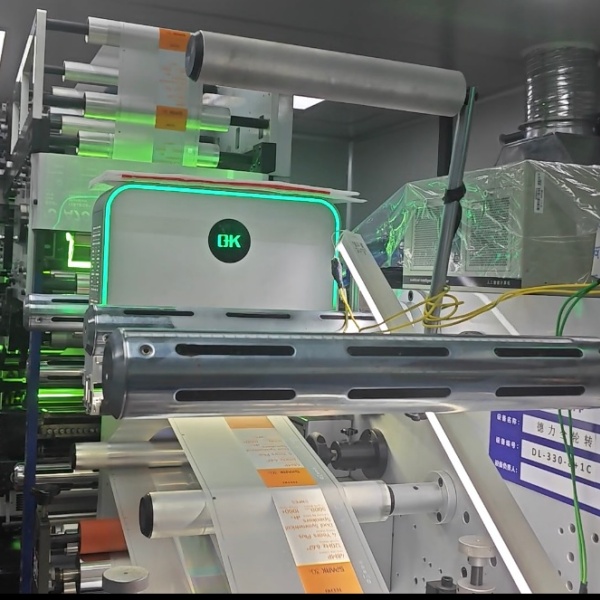
6. Supporting Smart Manufacturing and Industry 4.0
Vision inspection systems are an important part of smart printing factories, meaning they are really central. As manufacturers keep adopting Industry 4.0 technologies inspection systems get more and more connected with production management platforms, automation equipment and data analysis systems, not just sitting alone.
With these linkages, manufacturers can gather useful quality data during the whole production cycle. The inspection information is then looked at to find the same recurring issues, tune machine settings in a better way, and adjust production strategies for stronger output. Sometimes even small refinements matter.
Thanks to remote monitoring and digital quality management, companies gain better command over their printing operations. Then they can make data-based decisions. Because of that vision inspection technology plays an important role in creating more intelligent and more efficient manufacturing environments.
7. Maintaining Consistent Quality in High-Speed Printing
High-speed printing lines need dependable quality inspection, because even small shifts in the process can turn into major issues pretty fast when there are huge quantities of products. Changes in ink viscosity, material tension, printer alignment, or even the room conditions can bring out defects during production.
Vision quality inspection systems for printing process give steady monitoring so printed output stays inside the required quality boundaries from the start through the finishing steps. They support consistent outcomes in color matching, registration accuracy, image crispness and the overall visual impression
For makers who produce large volumes of packaging, labels, or other printed materials, this steadiness matters a lot. The label vision inspection systems protect brand reputation and helps meet what customers expect.
Future Development of Vision Inspection Technology for Printing Industry
The future of printing inspection keeps moving toward more intelligence, higher speed, and higher automation. Over time, new tools like enhanced AI models, cloud-based quality control, and better sensors will keep bumping up inspection results, yes, in a more dependable way.
Future vision inspection systems are expected to provide:
- Quicker processing for ultra high speed printing
- More precise defect classification
- Automated process optimization
- Predictive quality management
- Deeper integration with smart factories
As printing needs become more demanding, vision inspection systems will stay a major technology for manufacturers aiming for efficient output, reliable operations, and zero-defect production.
Final Words
Vision inspection systems changed printing quality control, basically by swapping manual checks for automated, intelligent, real-time monitoring. With high-resolution imaging, better lighting setups, AI-driven analysis, and smooth integration into the production line, these systems let manufacturers catch defects early, cut down waste, and keep quality stable all the way through.
For today’s printing companies, bringing in vision inspection technology is an effective step toward zero-defect printing, improving process efficiency, and responding to the increasing expectations from customers and global markets.