Defect Detected, Label Applied? How Machine Vision Enables Automatic Alarming and Rejection on Label Inspection Machines
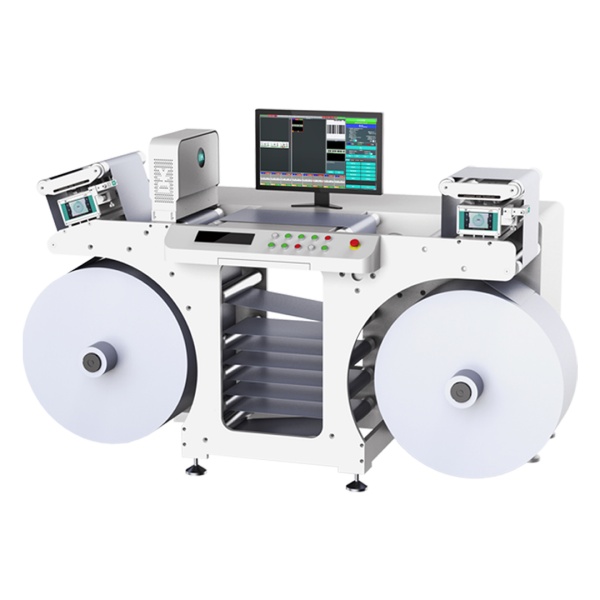
What is OK-4000?
The OK-4000 is an online machine vision inspection system designed for label printing, die-cutting, and rewinding production lines. It integrates transparent label inspection, defect recognition, automatic positioning and labeling, stoppage alarming, and inspection data traceability, enabling 100% online quality inspection (100% Inspection) of label products. It helps enterprises reduce miss rate, improve production efficiency, and enhance product consistency.
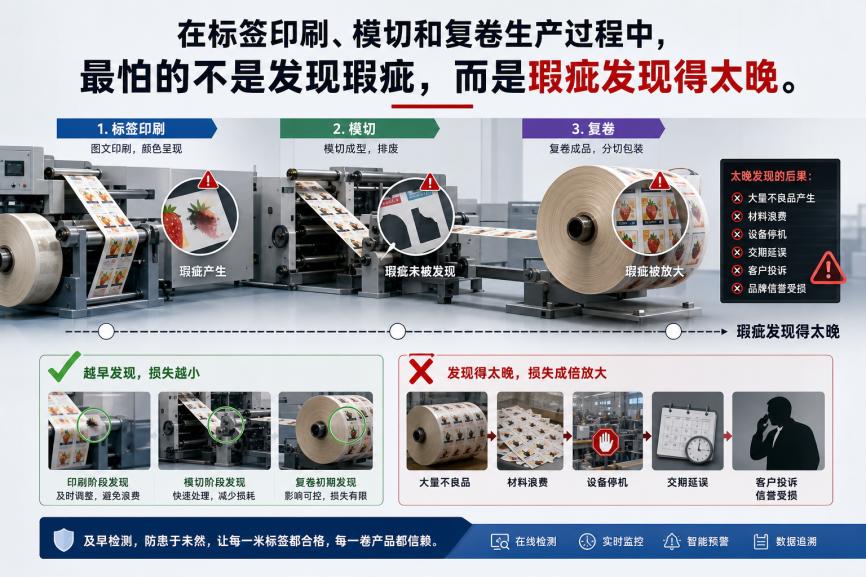
In label printing, die-cutting, and rewinding processes, the biggest concern is not discovering defects, but discovering them too late.
When a roll of labels has already been produced and then you find issues like blurred printing, knife lines, missing labels, or waste discharge abnormalities, not only may the entire roll be scrapped, but a significant amount of time must also be spent re-inspecting and reworking.
This problem becomes even more pronounced with transparent labels. The backing paper is transparent, and the label is transparent as well. Under high-speed operation, the naked eye simply cannot see clearly. The defects are hidden inside, and by the time you find them, you’re already left with a pile of defective products.
The OK-4000 label inspection machine vision inspection + positioning and labeling integrated system is specifically designed to solve this problem.
Why Are Transparent Labels Difficult to Inspect?
Under ordinary lighting, transparent labels and transparent backing paper almost “merge” together. With insufficient contrast, defects are hidden and cannot be seen. When changing to different backing papers—transparent, white, or opaque—the inspection difficulty varies accordingly. Manual visual inspection can barely cope at low speeds, but once the speed picks up, there is simply no time to see clearly.
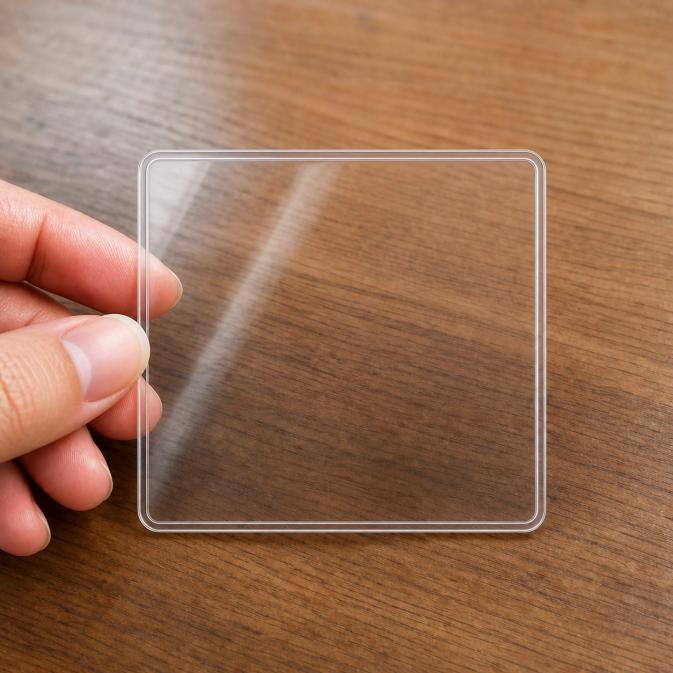
Missed detections and false detections become a common occurrence.pection can barely cope at low speeds, but once the speed picks up, there is simply no time to see clearly.
The OK-4000 adopts a Machine Vision + Contour Lighting solution. By enhancing the imaging contrast between transparent labels and their backing paper, it enables online vision inspection (Vision Inspection) and improves defect recognition capabilities on transparent materials.
Whether the backing paper is transparent, white, or opaque, it can see clearly.
The system supports free switching between standard lighting and contour lighting, allowing different lighting for different inspection scenarios. The integrated light source design makes installation simple.
Change the light, and transparent labels are no longer a challenge.
How Accurate Is the OK-4000?
Seeing clearly is only the first step—what matters more is: how fine can it see, and how fast can it go?
The core inspection capabilities of the OK-4000 are as follows:
| Inspection Parameter | Specification |
| Nominal Lateral Resolution | 0.15mm |
| Nominal Vertical Resolution | 0.15mm |
| Designed Detection Width | 10mm–600mm |
| Designed Maximum Speed | 450m/min |
| Dot Defect Detection Accuracy | Defect Area > 0.2mm² |
| Knife Line Detection Accuracy | Defect Area > 0.1mm×5mm |
| Registration Detection Accuracy | Lateral > 0.15mm, Longitudinal > 0.15mm |
A resolution of 0.15mm means even hair-thin knife lines can be detected. At speeds of up to 450m/min, real-time inspection is still maintained on high-speed production lines.
- What Label Defects Can the OK-4000 Detect?
- Knife lines, stains, and color block defects
- Die-cutting misregistration and size deviation
- Missing labels and poor waste discharge
- Scratches, indentations, bumps, and damage
- Variable barcode and QR code reading/decoding
- Registration deviation (misregistration)
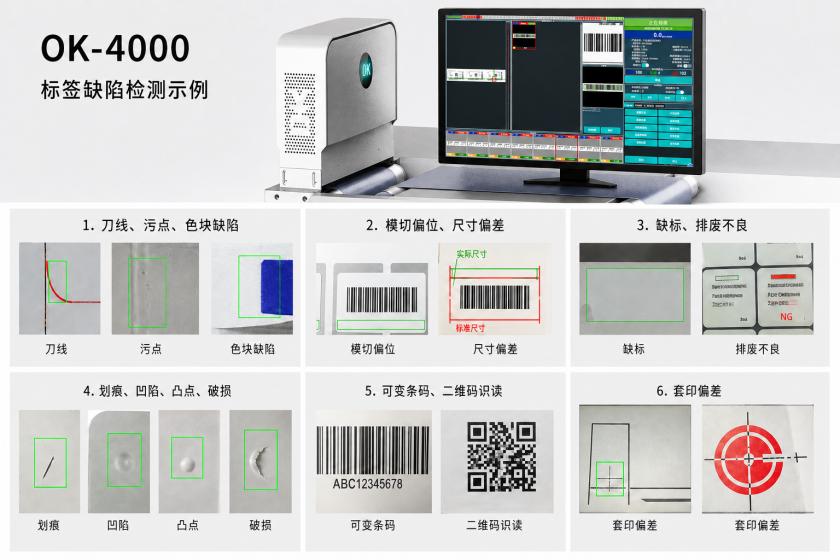
From full-web observation to missing label detection, and from waste discharge inspection to high-precision full-web detection — 100% full surface inspection, achieving high-precision full-web inspection.
After a defect is detected, how does automatic labeling work?
This is the core function of the OK-4000 and the biggest difference between it and traditional label inspection machines.
Traditional inspection machines can only “find problems.” But what happens after a problem is found? Manual labeling — operators manually apply labels to mark defect locations, one by one. Not only is this inefficient, but it also容易 leads to missed labeling and misaligned placement.
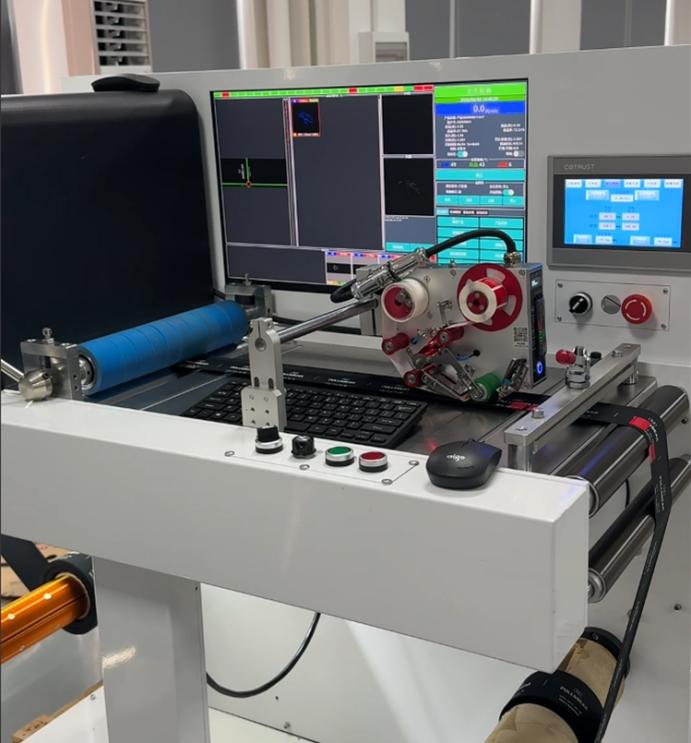
The OK-4000 does it differently: when a defect is detected, a signal is sent directly to the labeling machine, and the labeling machine automatically applies a mark label at the defect position.
The entire automatic positioning and labeling process is as follows:
From image acquisition and defect recognition to coordinate calculation and labeling execution, no manual intervention is required throughout the entire process. No one needs to monitor, no manual labeling, and no missed or misaligned labeling.
Image Acquisition → Algorithm Detection → Signal Output → Labeling Machine Execution
After Labeling Is Complete, How Is Stoppage, Alarming, and Rejection Achieved?
The system not only performs automatic labeling but also supports automatic stoppage with an alarm based on the rewinding distance. This enables the precise location of defects, allowing operators to quickly review and reject defective products.
After labeling is complete, the system automatically stops and triggers an alarm before rewinding. The operator comes over, sees the position of the mark label, and directly reviews and rejects the defect. No need to search through the entire roll of material — the mark label clearly shows you where the defect is: right here.
Moreover, the labeling distance can be adjusted, and the stoppage position can also be adjusted. Different products and different defect types have different requirements for marking positions and stoppage timing. The system supports customizable settings to suit different production scenarios.
Automatic positioning for stoppage, precisely intercepting defective products.
- What Industries Is the OK-4000 Suitable For?
- Label printing companies
- Die-cutting processing companies
- Blank label manufacturers
- RFID label manufacturers
- Pharmaceutical labels
- Food labels
- Daily chemical labels
- Logistics labels
- New energy labels
- Variable QR code labels
Frequently Asked Questions (FAQ)
1. Q: What is the smallest defect size the OK-4000 can detect?
A: The system has a nominal resolution of 0.15mm, dot defect detection accuracy of >0.2mm², knife line detection accuracy of >0.1mm×5mm, and registration detection accuracy of >0.15mm in both lateral and longitudinal directions. Specific accuracy can be further calculated based on actual material width and speed.
2. Q: Is the labeling machine included with the system or does it need to be purchased separately?
A: The system outputs a standard 24V signal and can be integrated with mainstream labeling machines. Custom configuration is available based on the customer’s existing equipment.
3. Q: Can transparent labels really be inspected?
A: Yes. The OK-4000 employs contour lighting specifically designed to address the contrast challenges of transparent labels, ensuring stable inspection on transparent, white, and opaque backing papers.
4. Q: Can the labeling position and stoppage position be adjusted?
A: Yes. The system supports customizable settings for labeling distance and stoppage alarm distance, flexibly adapting to different product requirements.
5. Q: What is the maximum inspection speed of the OK-4000?
A: The system is designed with a maximum speed of 450m/min. The actual speed depends on the material width and inspection accuracy requirements.
6. Q: What types of backing paper does the OK-4000 support?
A: It supports a variety of materials, including transparent backing paper, white backing paper, and opaque backing paper.
7. Q: Can inspection data be saved?
A: Yes. The system supports recording of inspection results, saving defect images, and data export, facilitating quality traceability and statistical analysis.
8. Q: Besides transparent labels, what other products can be inspected?
A: The labeling inspection system is suitable for a variety of applications, including printed labels, blank labels, RFID labels, QR code labels, and die-cut products.
Conclusion
The OK-4000 integrates machine vision inspection, transparent label inspection, automatic positioning and labeling, stoppage alarming, and defect traceability into a single system, delivering fully automated quality control from “defect detection” to “precise marking” and then to “rapid rejection.” For label printing, die-cutting, and rewinding companies, it not only solves the challenges of transparent label inspection, low efficiency of manual labeling, and difficulty in locating defective products, but also helps enterprises improve inspection accuracy, reduce labor costs, enhance production efficiency, and achieve high-standard online full inspection.
For more information about the OK-4000’s technical specifications or customization options, please feel free to contact us.