
Does an Automatic Print Inspection System Slow Down Your Production Press?
In modern printing, speed is a crucial factor. Whether it’s an intaglio printing machine, a flexographic printing machine, or a label printing production line, every minute of production time is important. Therefore, many manufacturers have concerns when introducing automatic printing inspection systems, fearing that cameras, software, and image processing will affect the production speed.
In fact, a well-designed automatic printing inspection system will not reduce the speed of the printing machine. It can continuously inspect the printed products while the printing machine is running. The key is not whether the inspection affects the speed, but whether the system is compatible with the printing machine, production speed, and quality requirements.
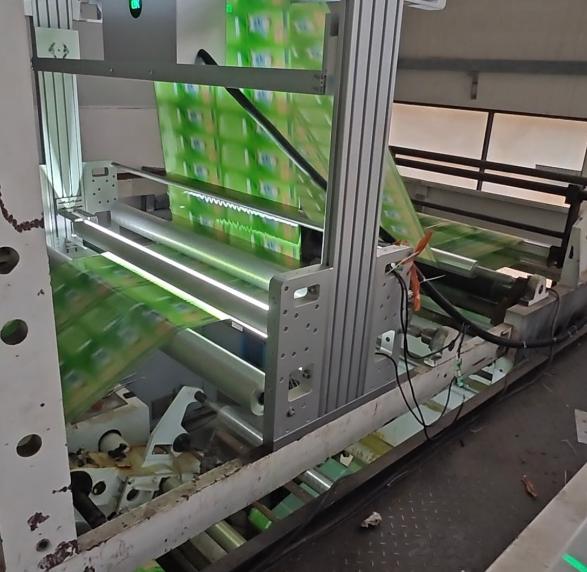
Table of Contents
Can an Automatic Print Inspection System Keep Up With Your Press?
In short, the answer is yes – provided that the system is designed for high-speed production. Modern online inspection systems, combining high-speed cameras, real-time image processing and intelligent software, can continuously monitor printing quality without interrupting the production process.
Inline inspection happens while the press is running
Unlike manual inspection that relies on periodic sampling, online inspection continuously monitors the printing rolls throughout the production process. Without the need to stop the machine for inspection, the system can automatically capture images and conduct analysis as the material passes through the production line.
The typical process is as follows:
Printing → Image acquisition → Real-time analysis → Defect detection → Operator alert
Because the inspection is carried out throughout the production process, operators can detect problems earlier. Compared to manual sampling, this helps to reduce defective materials before adjustments are made.
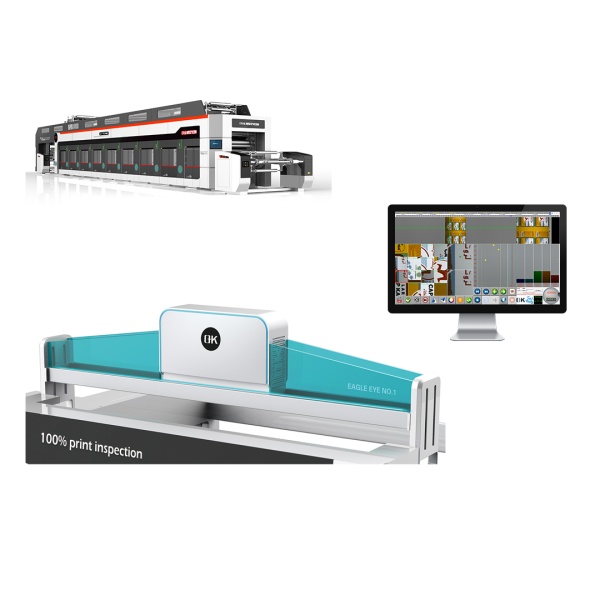
High-speed cameras + real-time image processing
A common misconception is that the inspection cameras will “slow down” the printing process. In fact, the cameras can continuously capture images at the production speed and the industrial processor can analyze the data in real time.
Modern roll-fed paper inspection systems use line-scanning cameras, which can continuously capture images of materials running at high speed. Combined with dedicated image processing hardware, the system can identify the following defects:
- Omission of printing Color difference
- Registration error
- Stains and stripes
- Surface contamination
For instance, Arise’s C8000 roll paper monitoring system is specifically designed for high-speed roll paper processing. With the appropriate configuration, it can support a machine speed of up to 1200 meters per minute.
Speed is not determined by the camera alone
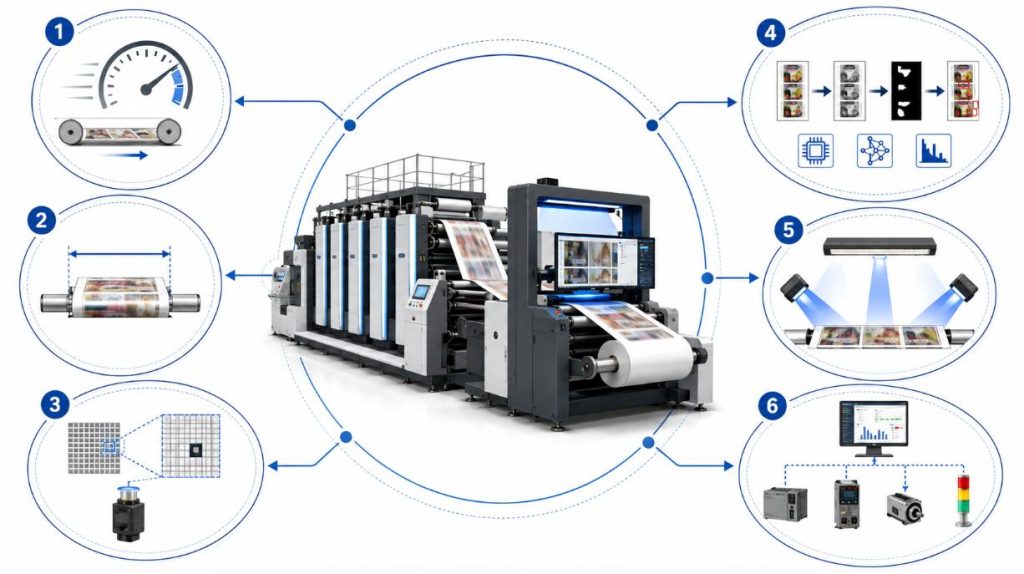
The performance of the high-speed detection system is not only determined by the camera specifications, but also by the coordinated operation of multiple components, including:
- Printing speed Width
- Detection resolution
- Defect size requirements
- Processing hardware
- Lighting and optical configuration
A reasonable system design needs to balance these factors to ensure that the detection speed is synchronized with the production speed, avoiding becoming a production bottleneck.
What Can Actually Cause Inspection to Slow Down Production?
The automatic printing inspection system usually does not cause the printing machine to slow down. Production disruptions are more often caused by improper system configuration, insufficient processing capacity, or an unreasonable integration with the production line.
- Processing capacity
High-speed cameras can quickly capture images, but the system also needs to process a large amount of data in real time. If the processing capacity of industrial computers, image acquisition hardware or software is insufficient, it may not be able to keep up with the speed of the printing machine.
- Resolution and production speed
Higher resolution helps detect smaller defects, but it also increases the amount of data and processing burden. If the resolution is too high but does not bring actual detection value, it will reduce the system efficiency. Therefore, it is necessary to select an appropriate detection resolution based on the defect size and printing speed.
- Lighting and optical configuration
Stable lighting is also important. Insufficient or unstable light may misjudge normal variations as defects, generating a large number of false alarms, causing operators to make unnecessary adjustments or even stop the machine, affecting production efficiency.
- System integration
The detection system also needs to maintain effective communication with the printing machine and related equipment. Signals such as roll paper speed, encoder position, alarms and defect marking all need to work in coordination. Even if the detection hardware can match the production speed, improper integration may still cause unnecessary downtime.
Therefore, the focus is not on choosing the fastest detection equipment, but on selecting and configuring the appropriate system based on the printing machine, materials, detection requirements and production environment.
Can Automatic Inspection Actually Improve Production Efficiency?
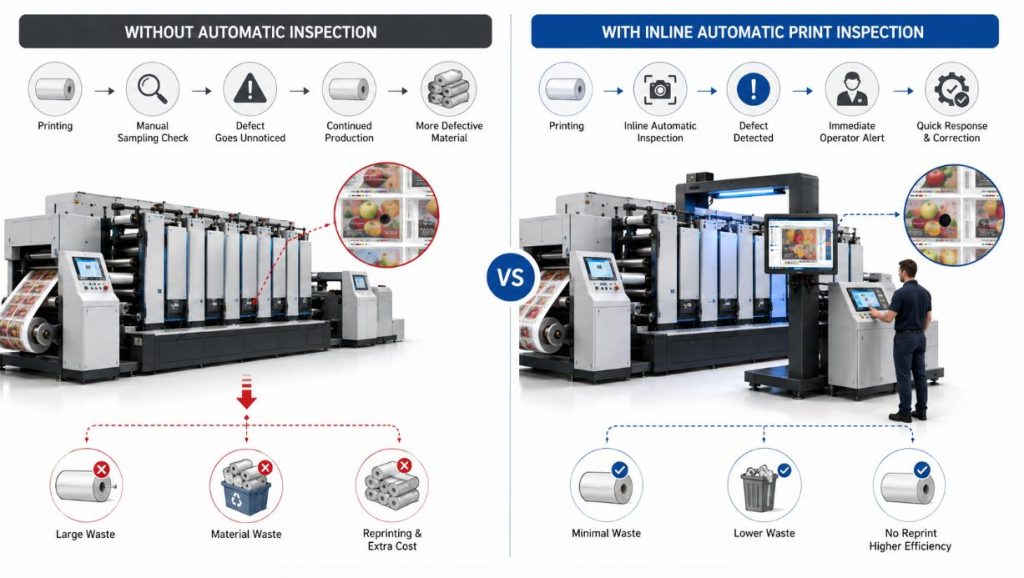
Automatic inspection not only does not reduce production efficiency, but also helps manufacturers detect and address problems promptly before they cause high costs, thereby improving overall production efficiency.
Without continuous inspection, defects may not be discovered until hundreds or even thousands of meters of material have been printed, resulting in a significant waste of materials.
Automatic inspection can detect defects earlier, allowing operators to take measures promptly before a large accumulation of defective materials occurs.
Its advantages are not limited to quality control:
- Earlier detection of defects, reducing material waste and scrap rolls.
- Reducing rework, avoiding additional manpower, equipment time and reprint costs.
- Reducing manual inspection, allowing operators to focus on production.
- 100% inspection of printed rolls is easier to maintain stable quality than random sampling.
- The long-term accumulation of inspection data can help manufacturers identify recurring problems, optimize process stability and reduce downtime.
In many production environments, efficiency improvement is not just about increasing printing speed; it is more important to promptly detect quality issues while maintaining high-speed production, avoiding their impact on subsequent processes.
How to Choose an Inspection System Without Sacrificing Production Speed
If you are evaluating an automatic printing inspection system, do not focus solely on a single speed parameter. Instead, pay more attention to whether the system meets the actual production requirements.
Before making a decision, you can ask yourself the following five questions:
1. What is the maximum speed of the printing machine?
Choose a system that can match the highest production speed, rather than just meeting the average operating speed.
2. What is the required width for inspection?
The wider the width, the more image data, and the higher the system configuration requirements.
3. What is the minimum defect size that needs to be detected?
The defect size directly affects the camera resolution, optical configuration, and processing capabilities.
4. Can the system process images in real time?
Don’t just look at camera parameters. The image acquisition, processing, and analysis system all need to keep up with the production speed.
5. How well is the system integrated with the printing machine?
An ideal inspection system should be integrated into the production line and effectively connected with the operation control, defect marking, and production monitoring systems.
When these factors are reasonably matched, the inspection system can help maintain the production speed instead of becoming a production bottleneck.
Conclude
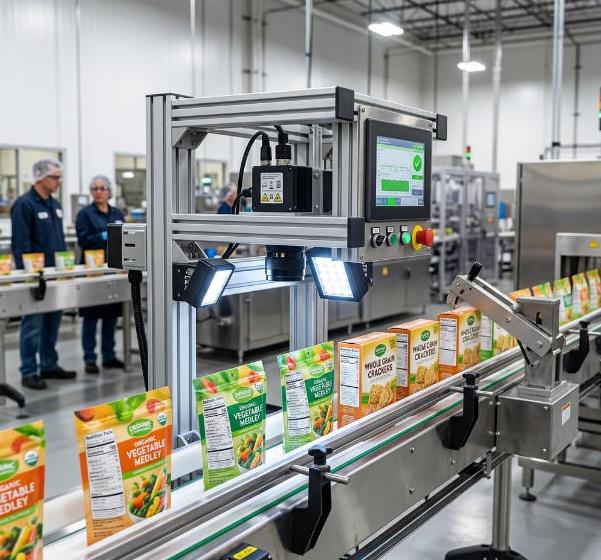
A properly configured automatic printing inspection system should not slow down the printing machine. Through high-speed cameras, real-time image processing, stable lighting and system integration, online inspection can be synchronized with high-speed printing.
More importantly, early detection of defects can reduce material waste, reprints, and downtime caused by quality issues.
The key is to select a system that matches the printing speed, width, inspection resolution and production requirements. A suitable inspection system does not limit production speed but helps you maintain high-speed production.