
How Vision Inspection Systems Improve Gravure Printing Quality
Gravure printing finds its niche in areas that require high-quality, high-consistency image reproduction. Its main strength is the ability to produce fine details and rich, vibrant colors and do so consistently even in the longest printing jobs, which makes gravure printing become an important process in modern printing industries.
However, maintaining consistent gravure printing quality can be challenging, especially when production runs at high speeds. Problems such as color variation, missing print, ink smearing, scratches, registration errors, and cylinder defects can affect the final product. Even minor defects may lead to significant material waste and customer complaints if they are not detected in time.
Vision inspection systems use high-quality industrial cameras with intelligent detection algorithms to identify defects in real time and control print quality, in order to lower material waste and maintain high product quality.
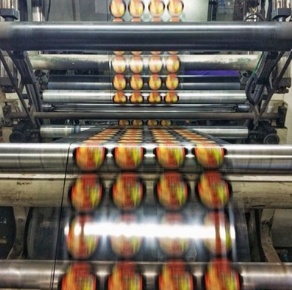
Table of Contents
An Overview of Vision Inspection Systems in Gravure Printing
The gravure printing industry relies on quality control technology like vision inspection systems. Cameras capture the moving web after the printing stage to ensure print quality and compare it against reference images and standards.
The gravure printing quality inspection system continuously monitors the printed surface while the material moves through the printing machine. When it detects differences between the actual print and the expected image, it can identify and classify potential defects.
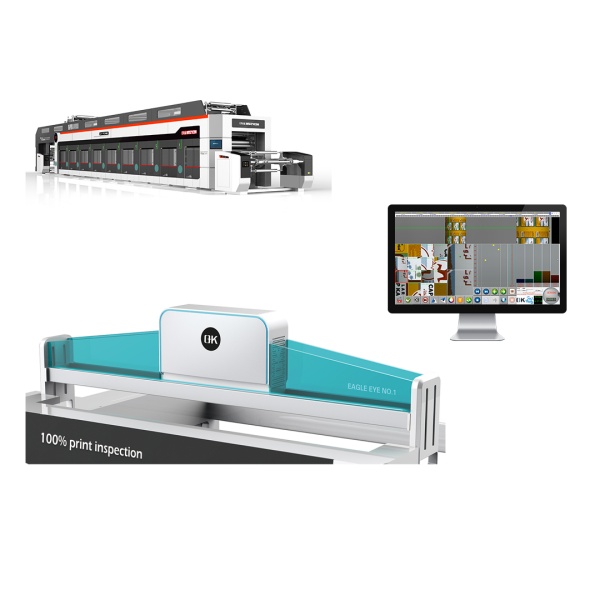
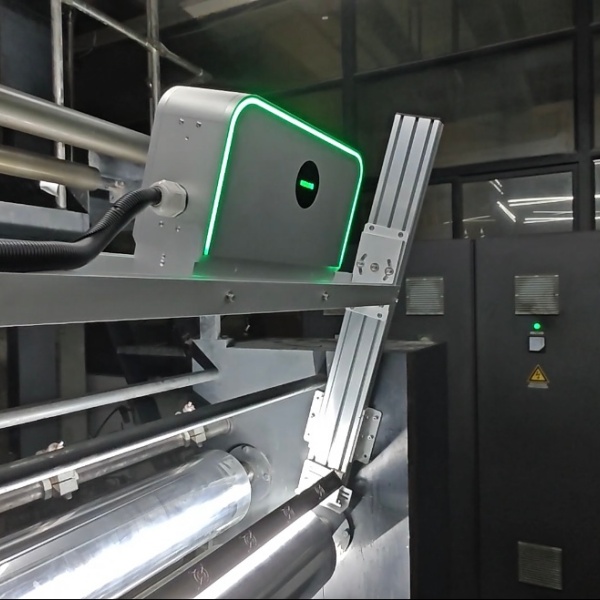
Vision inspection systems incorporate industrial-grade cameras and related equipment. Processing software and an interface are also included. Other devices such as marking or rejection systems may also be used in conjunction with a vision inspection system.
Key Advantages of Using Vision Inspection Systems for Improving Gravure Printing Quality
1. Early Detection of Printing Defects
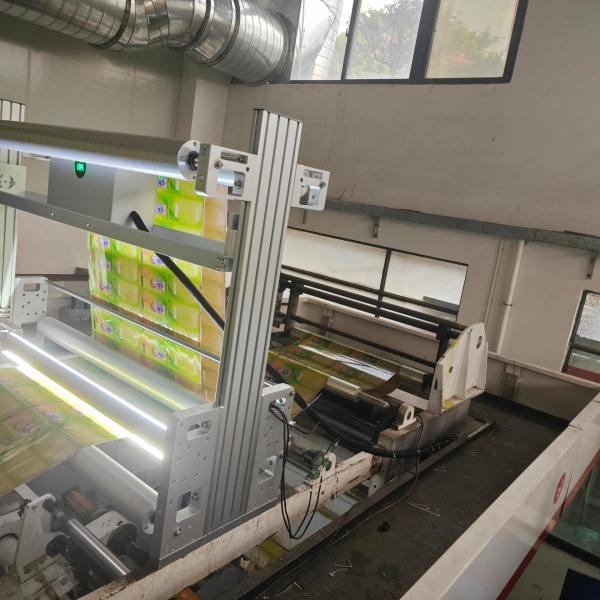
One of the most important advantages of vision inspection systems is their ability to detect printing defects during production rather than after the entire batch has been completed.
The causes of printing defects during gravure printing are numerous. Some common causes are the use of damaged printing cylinders and contaminated ink. Improper ink transfer can also cause defects, as well as problems with the printing substrate and instabilities in machine operations. Most of the time, the effects of these defects go unnoticed for quite a long time and result in large volumes of waste.
The 100% defect inspection system analyze print quality and look for defects in real-time, catching defects such as ink spots, pinholes, incomplete printing, missing dots, scratches and streaks.
Operators are able to detect issues early on and address them, preventing defects from spreading across the entire volume of production. This decreases the amount of wasted material and increases production efficiency.
2. Maintaining Consistent Color Quality
Color consistency is extremely important in gravure printing, especially for packaging, which relies heavily on branding.
Inconsistent colors are often the result of changes in ink, the drying process, or even printing pressure and the environment.
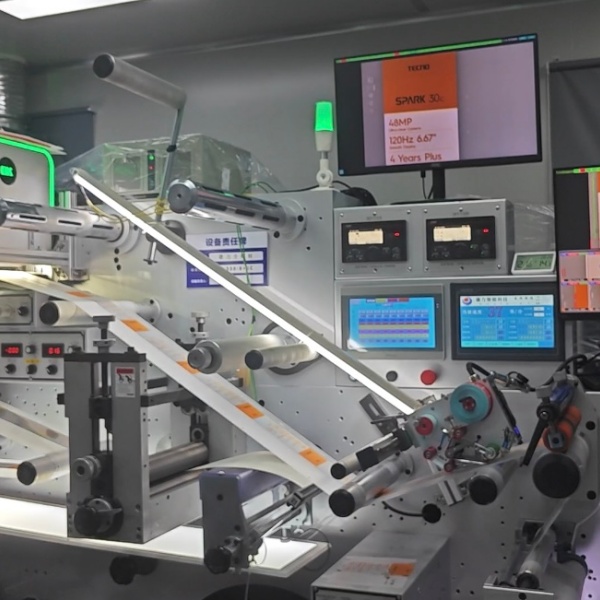
With advanced 100% inspection systems, operators are able to analyze color through digital images and compare these with set values. Color variation can be captured in varying degrees depending on the inspection systems’ capabilities, along with variations in ink distribution.
Once anomalies are detected, ink and/or process issues are often the culprit and are usually easy for an operator to identify.
This helps manufacturers consistently reproduce colors and subsequently reduce waste and the number of products that fail customer requirements.
3. Improving Printing Registration Accuracy
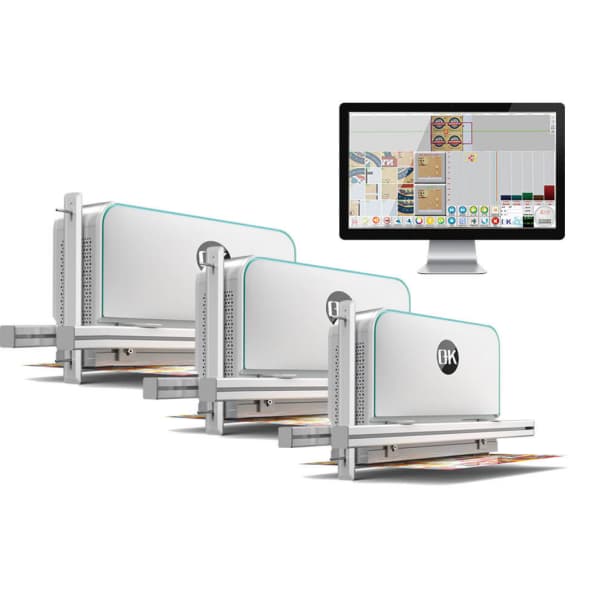
Registration accuracy is another area of gravure printing quality control. For example, if colors are not properly registered during printing, the colors can bleed into each other, and result in blurry images and ill-placed patterns.
Registration issues often occur due to improper tension, cylinder position issues, mechanical vibrations, or a change in substrate.
In the case of registration issues, inspection systems are able to monitor the patterns and detect issues with the placement of colors, or the patterns themselves. These systems allow operators to address the registration issues before a large number of products is spoiled.
Registration systems can even work in tandem with automatic register control systems to support real-time automatic adjustments.
These systems increase the clarity and registration of multiple colored prints.
4. Reducing Human Inspection Errors
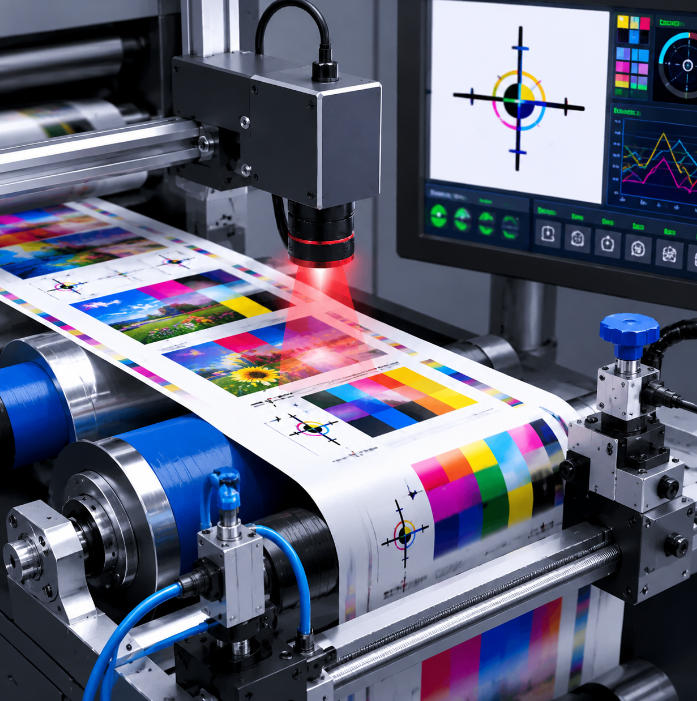
Traditionally, the printing inspection process for gravure printing involves visual checks. While the printing inspection process can be done quickly and easily, most of these visual checks will only result in some of the common printing defects being identified.
High-speed production, long working hours, repetitive tasks, and small defect sizes can make it difficult to maintain consistent inspection accuracy.
Vision inspection systems perform continuous monitoring using predefined inspection criteria. They can inspect printed materials at production speeds without becoming tired or losing concentration.
More importantly, automated inspection provides more consistent detection results and reduces the possibility of defects passing through the quality control process.
Operators can focus on monitoring production conditions, analyzing inspection reports, and solving process problems rather than performing repetitive visual checks.
5. Detecting Small and Repetitive Defects
Defects in gravure printing are often difficult to detect. This is even more the case when they are tiny, very fine, or recurring.
An example is a scratch on the printing cylinder that produces a recurring line defect across multiple prints. Likewise, contaminants on a printing cylinder or the substrate produce recurring spots on the prints.
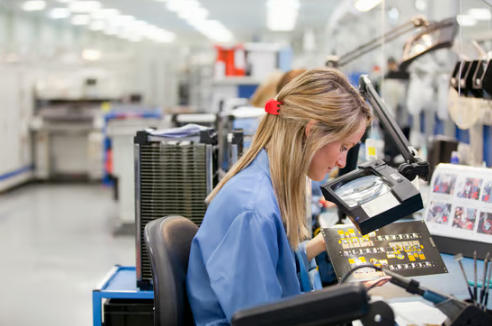
High resolution industrial cameras allow the system to examine prints in great detail and allow the system to compare the print with a reference or a target to identify anomalies.
Small defects and recurring defects are easily detected and attributed to equipment or process faults.
Vision inspection systems lead to more accurate detection and help run better preventive maintenance.
6. Improving Production Efficiency and Reducing Material Waste
Poor quality materials increase costs because materials must be thrown away and printing time must be used again.
Printing faults are only noticed if the material is examined during the production process or a customer complains about the product quality.
A vision inspection system addresses this issue because faults are identified instantly and production operators are given a chance to fix printing conditions.
Some advanced systems also provide defect location information, automatic marking, and production data records. These functions make it easier to separate defective materials from acceptable products.
By reducing unnecessary waste and minimizing production interruptions, vision inspection technology contributes to higher manufacturing efficiency.
Common Gravure Printing Defects Detected by Vision Inspection Systems
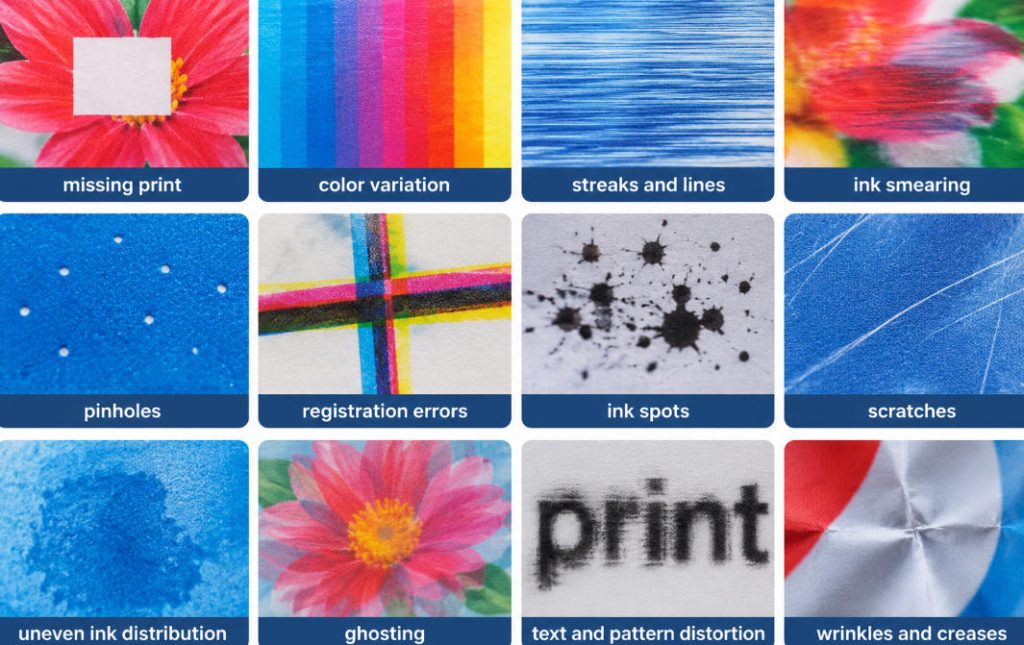
Different types of defects can occur during gravure printing. Vision inspection systems help identify these problems by analyzing the appearance and consistency of printed materials.
| Defect Type | Common Causes | Impact on Printing Quality | Detection by Vision Inspection Systems |
| Missing Print | Blocked cylinder cells, poor ink transfer, or damaged printing cylinders | Creates incomplete images, missing text, or blank areas | Identifies missing image details and incomplete printed areas |
| Color Variation | Changes in ink viscosity, ink concentration, or drying conditions | Causes inconsistent colors and affects brand color accuracy | Compares printed colors with reference values to detect color differences |
| Streaks and Lines | Cylinder scratches, doctor blade damage, or ink contamination | Produces unwanted lines across printed materials | Detects continuous lines and abnormal patterns on the printed surface |
| Ink Smearing | Excessive ink, insufficient drying, or material contact | Makes images and text appear blurred or unclear | Identifies blurred regions and irregular ink distribution |
| Pinholes | Poor ink transfer, substrate defects, or air bubbles | Creates tiny unprinted spots in solid-color areas | Detects small gaps and missing ink spots |
| Registration Errors | Incorrect cylinder alignment, web tension fluctuations, or mechanical vibration | Causes color misalignment and blurred images | Monitors the relative positions of different colors and printed patterns |
| Ink Spots | Ink contamination, foreign particles, or dirty printing components | Creates unwanted marks and reduces visual appearance | Identifies irregular spots and unexpected color areas |
| Scratches | Mechanical friction, damaged rollers, or surface contact | Produces visible lines and damages printed graphics | Detects abnormal surface marks and linear defects |
| Uneven Ink Distribution | Improper ink viscosity, unstable ink supply, or printing pressure variations | Causes inconsistent density and uneven color coverage | Analyzes image density and identifies irregular ink coverage |
| Ghosting | Improper ink transfer, cylinder issues, or unstable printing conditions | Creates unwanted duplicate or shadow-like images | Identifies unexpected repeated patterns and image inconsistencies |
| Text and Pattern Distortion | Cylinder damage, substrate deformation, or unstable web tension | Reduces text readability and image accuracy | Compares printed text and patterns with standard reference images |
| Wrinkles and Creases | Improper web tension, misaligned rollers, or substrate handling problems | Distorts printed images and affects material appearance | Detects abnormal lines, folds, and deformation patterns |
Key Technologies Used in Gravure Printing Vision Inspection Systems
The inspection performance of a vision inspection system depends on several technologies working together. Different components contribute to image acquisition, defect recognition, and production monitoring.
1. Industrial Camera Technology
For industrial cameras, a print is captured while it is moving across the inspection station. Fine patterns and small defects are best identified by high-resolution cameras.
Line-scan and area-scan cameras have different applications. The majority of continuous web inspection systems utilize line-scan cameras because the cameras scan a single line at a time while the material is in motion.
2. Lighting and Image Acquisition
Uniform lighting is key to a consistent capture of the material being inspected. Using a particular lighting setup highlights some characteristics of a print, like scratch detection, color and ink distribution issues, etc.
Proper image acquisition helps minimize the effects of reflections, material movement, and changes in ambient lighting.
3. Image Processing Algorithms
Software using image processing algorithms is designed to compare actual results of printing with reference standards.
Defect classification algorithms typically use one or more of the following techniques: image comparison, color analysis, edge detection, pattern recognition, and defect segmentation.
4. Artificial Intelligence and Deep Learning
Some advanced printing quality inspection systems use artificial intelligence and deep learning algorithms to recognize complex defect patterns.
It is particularly useful for classification of defects that occur in printing on complex materials which may contain complicated graphics or textures. The accuracy and performance of this technology is highly dependent on the quality of training data as well as system configuration.
5. Real-Time Monitoring and Data Analysis
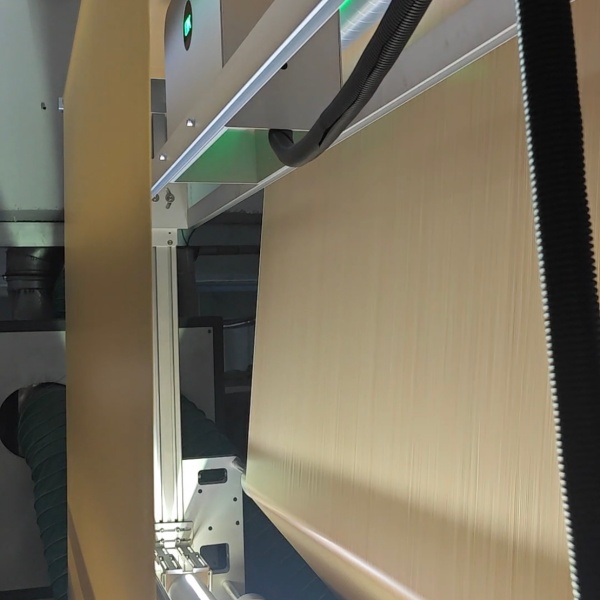
The vision inspection system allows operators to monitor production and inspection in real time. This information is also available in the system along with images of defects and their locations, defect classification, and other inspection statistics.
This system gives manufacturers the data to understand the root causes of their quality problems and improve production management.
Applications of Vision Inspection Systems in Gravure Printing
Vision inspection technology is suitable for various gravure printing applications where consistent image quality and reliable defect detection are important.
| Application Industry | Common Gravure-Printed Products | Common Quality Issues | Inspection Focus |
| Flexible Packaging | Plastic films, food packaging bags, laminated films, and pouches | Color variation, missing print, ink smearing, and registration errors | Ensuring consistent colors, clear images, and accurate printing patterns |
| Food Packaging | Snack bags, beverage packaging, frozen food packaging, and wrappers | Ink spots, scratches, pinholes, and incomplete printing | Maintaining print clarity, image consistency, and packaging appearance |
| Pharmaceutical Packaging | Medicine packaging films, blister packaging materials, and pharmaceutical labels | Text defects, missing information, color variation, and printing misalignment | Checking text clarity, printing completeness, and accurate registration |
| Tobacco Packaging | Cigarette packaging films, decorative papers, and tobacco pouches | Fine pattern defects, color differences, and scratches | Inspecting detailed graphics, color consistency, and pattern accuracy |
| Decorative Printing | Furniture films, decorative papers, flooring materials, and wall coverings | Pattern distortion, streaks, uneven ink distribution, and scratches | Maintaining decorative pattern consistency and surface appearance |
| Label Printing | Product labels, industrial labels, and adhesive label materials | Missing text, ink smearing, registration errors, and color defects | Ensuring accurate text, clear graphics, and consistent printing quality |
| Paper Printing | Gift wrapping paper, specialty paper, and printed paper rolls | Ink spots, streaks, color variation, and incomplete printing | Monitoring ink coverage, image clarity, and printing uniformity |
| Consumer Goods Packaging | Personal care packaging, household product packaging, and cosmetic packaging | Scratches, color inconsistencies, missing print, and image distortion | Maintaining attractive packaging designs and consistent brand presentation |
| Industrial Printing | Industrial films, technical decorative materials, and specialty printed substrates | Surface defects, pattern deviations, and uneven ink coverage | Detecting printing abnormalities and ensuring product specifications |
How to Choose the Right Vision Inspection System for Gravure Printing
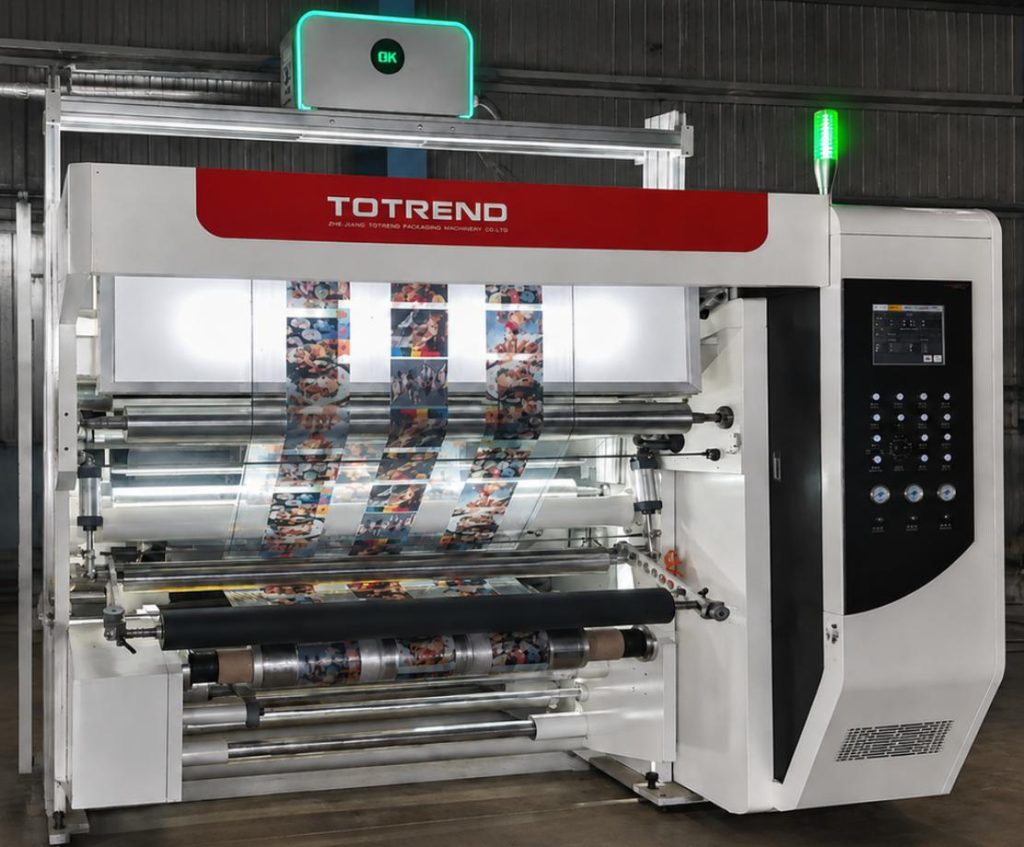
The correct selection of a vision inspection system for gravure printing improves the reliability of quality control. The production environment, type of printing, and the type of materials will require different types of inspection systems.
As a first step, the speed of the gravure printing machine should be considered. An effective inspection system should be able to scan and inspect the web at a sufficient rate, without missing any defects.
The second factor is the camera resolution. In applications that require the detection of very small defects, fine text, or complex patterns, the resolution should be high.
The third factor is the defect detection system, which must be adequate. Manufacturers should check if it can detect variations in color, missing print, scratches, streaks, and other types of misprint.
The materials also require specific lighting and image processing methods, particularly if they are transparent or if the substrate is reflective or has a textured surface.
Finally, integration and usability are important. A suitable system should work effectively with existing gravure printing equipment and provide an intuitive interface for operators to review inspection results and respond to alarms.
Challenges in Implementing Vision Inspection Systems in Gravure Printing
Successful implementation of vision inspection systems in gravure printing requires careful consideration of production speed, image quality, defect detection accuracy, material characteristics, and equipment compatibility.
| Implementation Challenges | Common Causes | Impact on Inspection Performance | Potential Solutions |
| High-Speed Printing | Gravure printing machines operate at high production speeds | Images may be missed or defects may not be detected in time | Use high-speed industrial cameras and powerful image processing hardware |
| Complex Printing Patterns | Multi-color designs, fine graphics, detailed images, and repeating patterns | Makes it difficult to distinguish actual defects from normal pattern variations | Apply advanced image comparison and pattern recognition algorithms |
| Color Variation | Changes in ink viscosity, ink concentration, lighting, and drying conditions | May cause false alarms or inaccurate color inspection results | Use stable lighting and calibrated color inspection technology |
| Inconsistent Lighting | Reflections, shadows, and changing environmental light conditions | Reduces image clarity and affects defect detection accuracy | Install controlled lighting systems and optimize camera positioning |
| Transparent and Reflective Materials | Plastic films, metallic substrates, and glossy laminated materials | Glare and reflections can hide small printing defects | Select suitable lighting angles, optical filters, and camera configurations |
| Small Defect Detection | Tiny pinholes, fine scratches, and minor printing imperfections | Small defects may be overlooked by the inspection system | Use high-resolution cameras and optimized image processing algorithms |
| False Defect Detection | Excessive sensitivity or normal variations in printed materials | Increases unnecessary alarms and operator workload | Optimize inspection thresholds and establish appropriate defect standards |
| System Integration | Compatibility issues with existing printing machines and control systems | Complicates installation and real-time production monitoring | Select compatible inspection equipment and plan integration carefully |
| Complex Inspection Settings | Different substrates, printing designs, and customer quality requirements | Makes inspection configuration and adjustment more difficult | Create product-specific inspection recipes and standardized inspection parameters |
| High Initial Investment | Costs of cameras, lighting, software, hardware, and installation | Increases the initial cost of production upgrades | Evaluate long-term savings from reduced waste and improved quality control |
| Operator Training | Limited experience with automated inspection technology | May result in incorrect settings or delayed responses to alarms | Provide technical training and establish clear operating procedures |
| Maintenance Requirements | Camera contamination, lighting degradation, and equipment aging | Can reduce inspection stability and reliability over time | Perform regular cleaning, calibration, and preventive maintenance |
By selecting appropriate inspection technologies and optimizing system configurations, manufacturers can overcome these challenges and achieve more reliable automated quality control.
Final Words
Vision inspection systems is critical in improving gravure printing quality by providing continuous, automated, and accurate monitoring of printed materials. They can help manufacturers detect printing defects, maintain color consistency, improve registration accuracy, reduce manual inspection errors, and minimize material waste.
Using a combination of modern industrial cameras, advanced lighting, image processing algorithms and intelligent defect recognition, vision inspection systems deliver reliable quality control throughout the gravure printing process.
As gravure printing continues to move toward higher production efficiency and stricter quality requirements, adopting advanced vision inspection technology can help manufacturers strengthen their competitiveness in the printing industry.