
The Hidden Killer in Web-fed Production: Why Does Your Material Keep Wandering Off-Track?
Anyone working in printing, packaging, film and lithium-ion battery industries knows this: no matter how fast your production line runs, everything falls apart without stable tension.
Material breakage, web wandering, wrinkling, mis registration, uneven rewinding… These issues may seem to stem from different causes, but in most cases, they boil down to tension control.
Many factories invest heavily in high speed machinery, yet fail to boost output while scrap rates remain stubbornly high. More often than not, the problem lies not in the machines themselves, but in the overlooked unsung hero—the tension controller. In this article, we skip vague theoretical jargon and focus on three practical points: what tension control actually is, why it dictates your product quality, and what to look for when selecting a tension controller.
Table of Contents
Don’t Underestimate Tension: It Defines the Ceiling of Web Processing
Here’s a question: What do you believe is the most influential factor for product quality on a web production line? Is it the printing press precision? Raw material quality? Or operator proficiency?
All of these count, yet one element is consistently underrated — tension stability.
Just imagine: multi-ton rolls of paper or film travel from unwinding to rewinding, passing through more than a dozen, even dozens of guide rollers. Too much tension in any section will stretch, deform or rupture the web. Too little tension causes slack and web wandering, mis registration in color printing, and air bubbles during lamination.
What makes matters worse is the propagating nature of tension disturbances. Minor fluctuations at the unwinding side get amplified across successive rollers, and can escalate into critical quality defects by the rewinding station.
Hence the well-known industry saying: 90% of web processing quality hinges on tension control. Yet at the heart of tension control lies the unassuming tension controller.
What Exactly Does a Tension Controller Do?
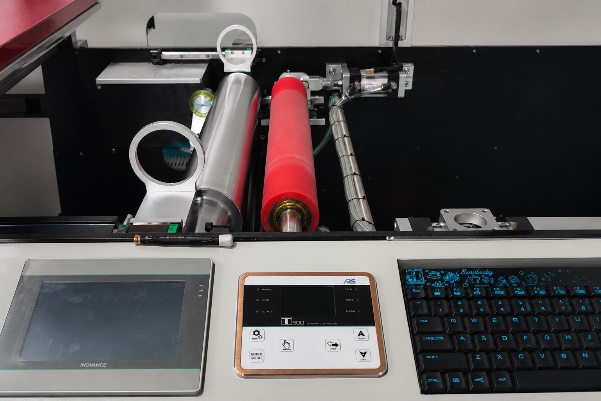
Simply put, a tension controller acts as an automatic regulator on the web processing line. It uses sensors to monitor real time tension variations of the material, and automatically adjusts the speed and torque of unwinding or rewinding to keep tension consistently within the set range.
Yet it is far more than “a simple switch for tension adjustment”. A high performance tension controller must solve three core challenges.
First, fast response. The faster the web runs, the more rapidly tension fluctuates. The latency from sensor detection to controller output must be kept at the millisecond level. Even a slight delay can generate several meters of scrap material.
Second, high precision. “Close enough” is not acceptable. Accuracy needs to reach the level of tenths of a Newton. Especially for thin materials such as film and lithium ion electrode sheets, even minor tension deviations can lead to drastically different outcomes.
Third, strong adaptability. When switching materials, dimensions or line speeds, it should not require lengthy manual re tuning every time. A quality tension controller can automatically adapt to diverse working conditions.
This explains the wide price gap among tension controllers on the market, ranging from thousands to tens of thousands. The difference lies not in whether it can function, but in how stable, accurate and responsive it is.
What Makes a Great Tension Controller?
Many buyers select a tension controller merely based on price and basic functionality. Yet after putting them into production, they find that low cost units save on procurement expenses, but end up costing far more during operation.
Here are the key criteria to evaluate whether a tension controller delivers solid performance:
1. AD Sampling Accuracy: 16 bit is the Minimum Threshold
AD sampling is the process of converting analog signals from sensors into digital signals. The higher the bit depth, the finer the sampling and the higher the control accuracy.
Current industry standards range from 12-bit to 16-bit. 12-bit controllers suffer from heavy tension fluctuation and coarse control performance, and are only suitable for low requirement applications. Only 16 bit units can meet high precision production demands.
For instance, ARISE T500 and T1000 series tension controllers adopt 16-bit high-precision AD sampling, which can capture extremely subtle tension variations—the foundation for precise control.
2. Control Algorithm: True Intelligence Means Full Auto Operation
Many tension controllers advertised as “fully automatic” still require extensive manual parameter setup. Parameters must be re tuned whenever materials are changed, which is highly inefficient.
A genuinely intelligent tension controller shall feature auto calculation capability. You only need to set the target tension; it will automatically identify material properties, calculate optimal parameters, and adapt to speed variations.
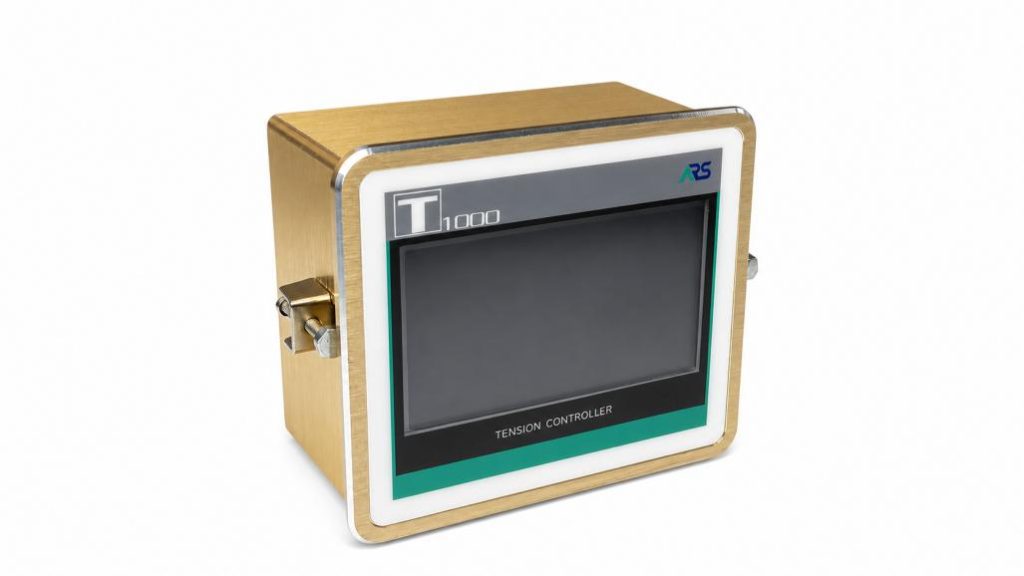
The T1000 delivers exactly this performance. Built in auto calculation and closed loop tension control support compatibility with multiple pressure and tension sensors. It greatly reduces commissioning difficulty and operator dependency.
3. Taper Control: The Key to Rewinding Quality
Anyone working with rewinding knows that as roll diameter increases, the material tends to suffer from rosette core or loose winding defects. This is where taper control comes in: tension decreases gradually as the roll diameter builds up.
Taper control may look simple, yet it is difficult to implement properly. A poorly configured taper curve will cause either tight inner layers with loose outer layers, or loose inner layers with tight outer layers. Both will impair rewinding quality.
A high-quality tension controller shall offer flexible taper settings, and even auto optimize the taper curve for different materials. The T500 series features tension taper control, effectively keeping consistent tightness across inner and outer roll layers.
4. Compatibility & Expandability
Production lines are never static. You may use one type of sensor today and switch to another tomorrow; operating speed can also be increased later.
Low compatibility tension controllers force full equipment replacement for every upgrade or retrofit, which drives up costs significantly.
The TE series tension amplifier excels in this regard. It accepts inputs from multiple tension sensors, and is equipped with RS485, Ethernet and other communication interfaces. It can be easily integrated with PLC and host computer systems to fit varying levels of automation.
Common Misconception: Higher Tension Does Not Equal Better Performance
After years of technical service experience, we have noticed a widespread misconception among many manufacturers: the belief that higher tension delivers greater stability.
This assumption is incorrect.
Excessive tension causes material stretching and deformation, especially for elastic materials such as film and paper. Printed products may look fine right off the line, yet material shrinkage after a few days will lead to dimensional changes.
Worse still, over tension increases equipment load, shortens mechanical service life, and may even create safety hazards.
Does that mean lower tension is always better? Not exactly. Insufficient tension results in material slack and unstable web travel, which also triggers production defects.
Optimal tension control means hitting the sweet spot — neither too high nor too low, and consistently stable. This requires a tension controller with sufficient precision and response speed to keep tension within the optimal range under all working conditions.
How to Tell If It Is Time to Replace Your Tension Controller
Many factories keep running tension controllers for over a decade. It is not that they resist upgrading, but they are unsure whether replacement is necessary. Below are several evaluation criteria. If two or more items apply to your site, an upgrade is worth considering:
- Persistently high scrap rate, and root cause analysis points to unstable tension.
- It takes half a day or longer to complete commissioning when switching materials or product specifications.
- Tension begins to fluctuate once line speed is increased.
- Inconsistent rewinding quality, with uneven results from batch to batch.
- New operators struggle to operate the unit after experienced staff leave.
- Frequent alarm triggered machine stops caused by tension related faults.
If your production line suffers from these symptoms, stop treating only the surface issues. The root cause most likely lies with your tension controller.
Key Points for Selecting a Tension Controller
To conclude, here is a practical framework for tension controller selection:
- Accuracy: Prioritize units with 16 bit AD sampling; avoid 12 bit versions whenever possible.
- Algorithm: Check for full auto tension control and auto calculation functions.
- Functions: Verify availability of taper control, multi sensor compatibility and communication interfaces.
- Brand: Choose well established brands with over ten years of industry experience for proven technology and reliable support.
- Certifications: Confirm CE, EMC and other certifications for guaranteed quality and operational safety.
Enterprises such as ARISE, with 25 year expertise in web control solutions, hold international CE / EMC / ESD certifications. Its service network covers more than 150 countries and regions, with product stability and reliability fully validated by the market.
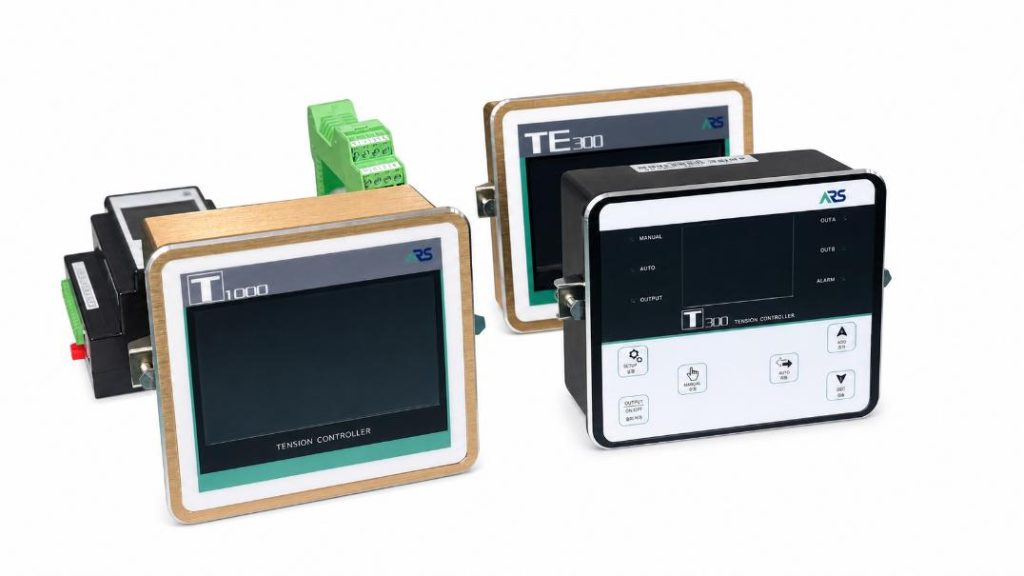
Its comprehensive product portfolio ranges from entry-level T500 to high-end T1000 tension controllers, TE-series amplifiers and LS series sensors, covering diversified level application requirements.
In the web processing industry, competition ultimately comes down to attention to details.
Tension control may seem insignificant, yet it is a critical factor that determines product quality and production efficiency. A high quality tension controller accounts for only a fraction of the total production line cost, yet it can save you substantial losses from scrap waste, commissioning hours and labor expenses.
Do not wait until faults occur to address it, and never prioritize price over performance. After all, chasing minor cost savings often leads to far bigger losses.
If you are troubled by persistent tension related issues, take a closer look at professional tension control solutions. Sometimes, replacing the controller can lift the overall quality of your entire production line.
Why ARISE (Chongqing Enruisi) Is the Long-Term Preferred Supporting Supplier for Equipment Manufacturers
The core strengths demonstrated by Arise in this cooperation case are exactly the key evaluation criteria that Indian label machinery factories and packaging enterprises should prioritize when screening suppliers:
1. Technical Qualifications & Credentials
With 25 years of experience in web control solutions, ARISE’s products are certified with EU CE, EMC Electromagnetic Compatibility and ESD Anti-Static certifications. The company holds a total of 6 invention patents, 11 utility model patents, 26 design patents and 18 software copyrights, and is officially recognized as a national Specialized, Refined, Differential & Innovative “Little Giant” enterprise.
Compliance Credentials & Export Support
Domestic Qualifications
- ISO 9001 Quality Management System Certification
- Integration of Informatization & Industrialization Management System Certification
- National High-Tech Enterprise Accreditation
- Chongqing Municipal SRDI “Little Giant” Enterprise Accreditation
International Certifications
- EU CE Safety Certification
- EMC Electromagnetic Compatibility Certification
- ESD Anti-Static Certification
Official Query Portals for Credentials
- ISO 9001: National Public Service Platform for Certification & Accreditation Information (http://cx.cnca.cn)
- SRDI “Little Giant” Enterprise: MIIT Gradient Cultivation Platform for High-Quality SMEs (https://zjtx.miit.gov.cn/zxqySy/main)
- CE / EMC Certifications: EU NANDO Notified Body Database (https://ec.europa.eu/growth/tools-databases/nando/)
Digital copies of all complete certificates are available free of charge upon request from our sales team.
2. Full-Range Complete Product Line
Our product portfolio covers the entire web control workflow:
- Tension controllers: Cost-effective N series & high-performance servo S series
- Sensors: Ultrasonic, infrared and fiber-optic sensors
- Drives: Stepping & servo drivers
- Web guiding frames
- Auxiliary inspection systems: Visual inspection, width measurement, thickness measurement, static image monitoring and coating defect tracking systems
3. Customization & Stable Mass Delivery
- Customized non-standard solutions supported: inverted installation, screen image flipping, left/right material outlet switching and other personalized modifications
- Consistent product performance and reliable lead time guaranteed for bulk orders
4. Global Service Network
Our service network covers more than 150 countries and regions worldwide. We have an office in Vietnam and a subsidiary in Indonesia, enabling full coverage of the Indian market to deliver timely technical support and spare parts supply. hnical support and spare parts supply.