
How Web Inspection Systems are Used in Roll-to-Roll Printing
Roll-to-roll printing is used a lot in modern manufacturing to make flexible materials like packaging films, labels, textiles, flexible electronics and decorative surfaces. In these high-speed continuous lines, keeping a consistent print output is crucial. Even small imperfections can cause huge amounts of wasted material, so it matters a lot. That is why web inspection systems have become a key piece for quality, efficiency and overall process steadiness in roll-to-roll printing.
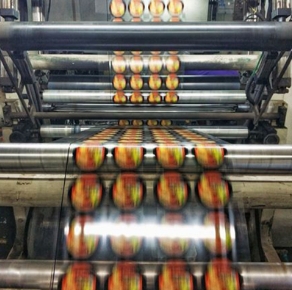
Table of Contents
The Role of Web Inspection in Continuous Printing
In roll-to-roll printing, the “web” is the continuous substrate that runs through printing, coating, or finishing tools. Unlike sheet-fed approaches, the material is always moving, so manual checking is impractical, and also unreliable.
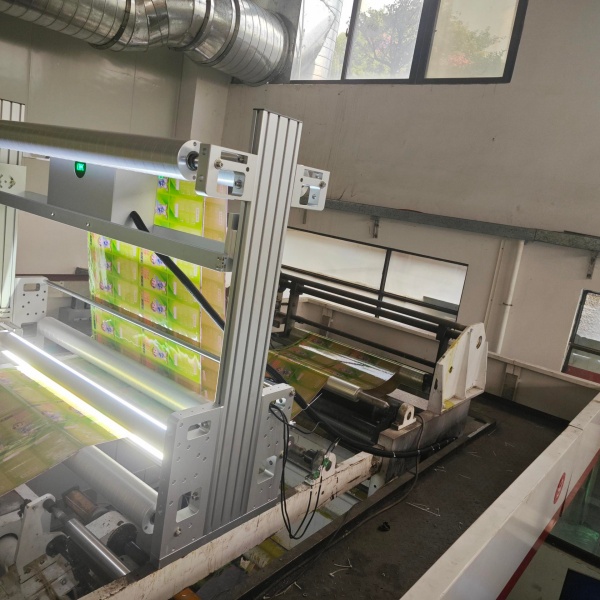
Web inspection systems for are designed to watch the whole surface of the moving web, live and in real time. They detect defects like color swings, misregistration, streaking, pinholes, voids, foreign material, scratches, and weird coating unevenness. Because they keep scanning the substrate without pause, these systems flag problems right away, not after the production run is over.
This immediate visibility is especially important in flexible electronics and premium packaging, where even tiny defects can limit performance or spoil brand perception.
The Work Process of Web Inspection Systems for Roll-to-Roll Printing
The work process behind web inspection systems is a coordinated sequence of mechanical stabilization, optical detection, digital analysis and automated feedback control.
1. Web Stabilization and Preparation
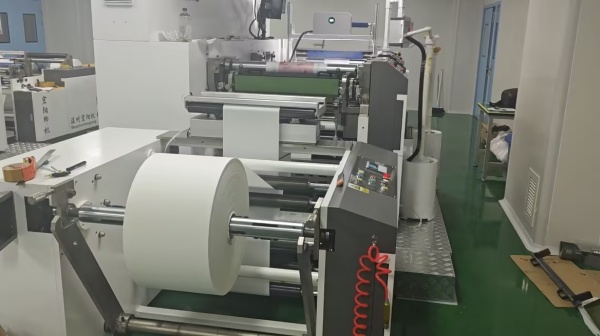
Before inspection can begin, the moving substrate needs to be brought into a steadier, controlled state. The web is unwound from a roll and guided through tension-control rollers that keep a consistent force across the material. This steadiness matters because even small changes in tension, alignment, or velocity can warp imaging outcomes and, yeah, they can reduce inspection accuracy. After the web is mechanically stabilized it goes into the inspection zone, where optical systems are set up to watch the surface continuously.
2. Optical Environment and Illumination Control
At the core of the inspection process is carefully engineered lighting. The surface of the web is illuminated so it makes subtle differences in texture, color, and surface integrity easier to notice. Depending on the material and the kind of defects that are expected, different illumination angles and intensities get used, so the defects show up more clearly.
By regulating reflection and contrast, the system makes it so even the tiniest irregularities can be told apart from the regular background surface. Otherwise, if that managed optical setting is missing, precise defect identification would really not work.
3. Continuous Image Capture During Motion
As the web slides through the inspection zone, high-speed cameras continuously acquire images of its surface. These imaging units are timed with the material’s movement, meaning no segment is skipped during travel.
Rather than collecting one still picture, the system creates an unbroken visual trace of the full web. This lets the inspection run without forcing a pause in production, even when the line is operating at very high speed.
4. Digital Analysis and Defect Recognition
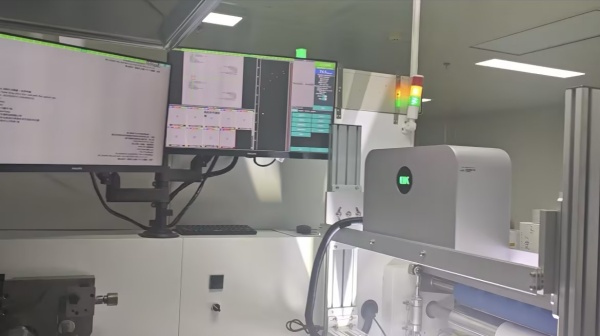
After the frames are taken, they are instantly relayed to processing units where digital analysis starts. At this point, the raw image information becomes quality evidence that can be interpreted.
Advanced algorithms scan surface texture variations, assess color steadiness, and check structural continuity. If there is any mismatch from the expected patterns, it gets marked as a likely defect. Current print inspection systems often add artificial intelligence, so they can sharpen detection precision by absorbing previous production data, while also dialing down false alarms as time passes.
5. Classification and Severity Assessment
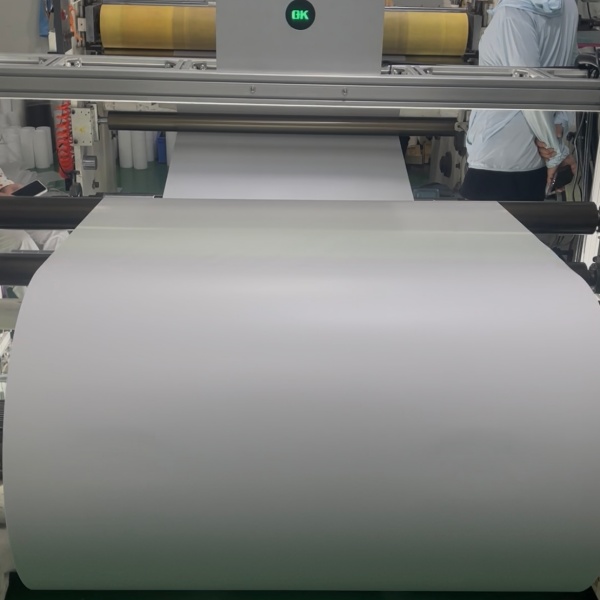
After a defect is detected, it is not simply recorded but carefully analyzed and categorized. The system evaluates the type of defect, its size, and its severity in relation to predefined quality standards.
This defect classification process helps distinguish between minor imperfections that may be acceptable and critical defects that require immediate intervention.
| Classification Dimension | Description | Role in Web Inspection Systems | Typical Examples |
| Surface Defects | Identifies irregularities occurring on the surface layer of the printed or coated web | Ensures visual and tactile quality by detecting visible imperfections early in the process | Scratches, smudges, streaks, surface contamination |
| Print Quality Defects | Focuses on errors related to ink deposition, color accuracy, and image reproduction | Maintains branding consistency and readability of printed content | Misregistration, color deviation, blurred text, missing dots |
| Structural Defects | Detects physical disruptions in the substrate or coating layers | Ensures material integrity and functional performance in downstream applications | Pinholes, tears, cracks, delamination |
| Pattern Defects | Identifies inconsistencies in repeated or designed patterns across the web | Maintains uniformity in decorative, packaging, or textile printing | Pattern misalignment, distortion, spacing errors |
| Coating Defects | Evaluates uniformity and continuity of applied coatings or functional layers | Ensures performance in barrier films, protective layers, and functional coatings | Uneven coating, bubbles, thickness variation, voids |
| Registration Defects | Measures alignment accuracy between multiple printed layers or colors | Critical for multi-layer printing processes and high-precision graphics | Layer offset, color misalignment, overlap errors |
| Contamination Defects | Detects foreign particles or unwanted materials on the web surface | Prevents quality degradation and potential product failure | Dust particles, oil spots, fibers, debris |
| Edge Defects | Focuses on irregularities along the edges of the web material | Ensures proper cutting, handling, and downstream processing stability | Edge waviness, fraying, edge cracks, trimming errors |
| Optical Defects | Identifies variations in light reflection, transparency, or optical appearance | Important for high-clarity films, optical layers, and display materials | Haze, glare inconsistency, transparency variation |
| Functional Defects | Detects issues affecting the performance of functional printed elements | Ensures reliability in advanced applications like electronics or sensors | Open circuits, short circuits, conductivity breaks |
6. Real-Time Communication with Operators
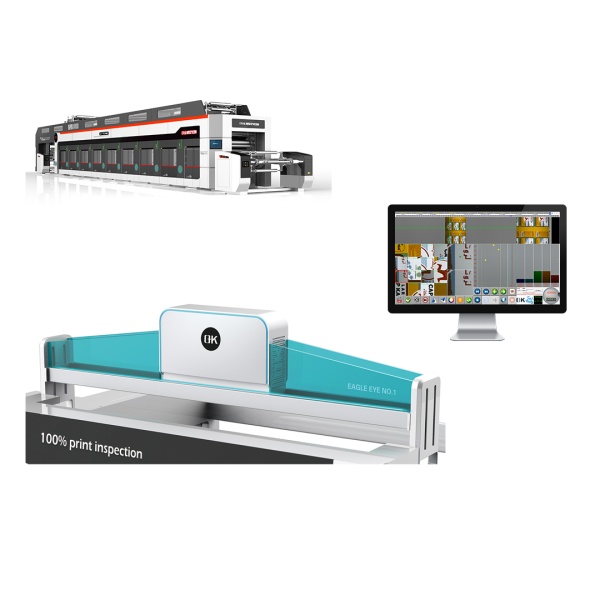
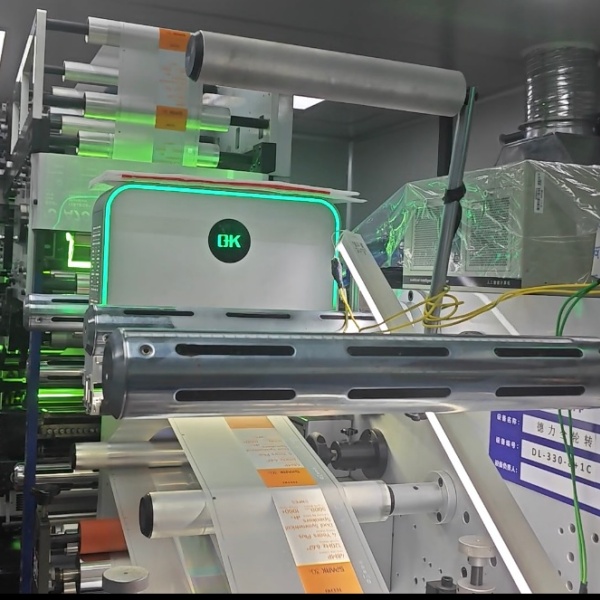
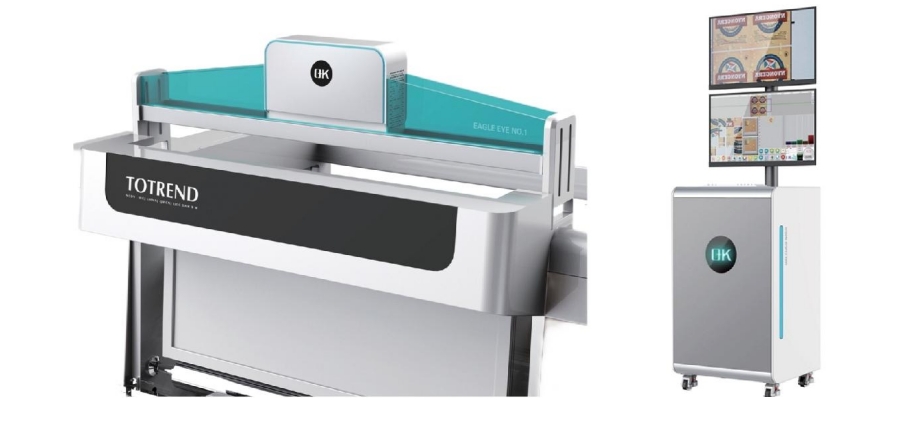
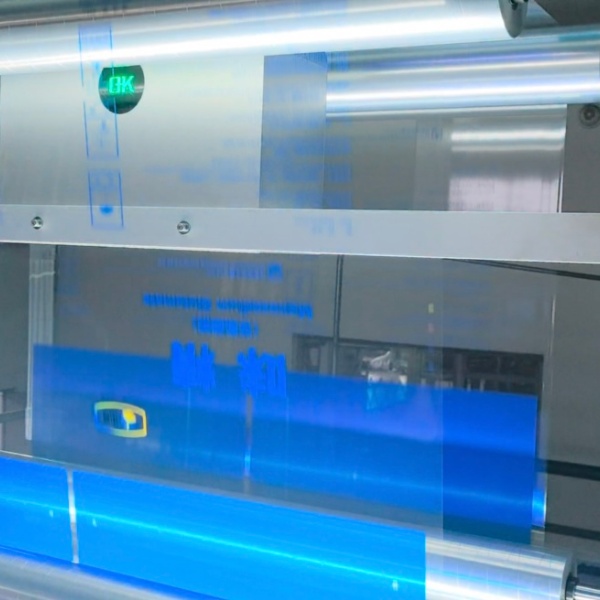
When noteworthy defects are discovered, the 100% printing inspection system immediately notifies the production operators. Alerts appear on monitoring interfaces, which lets operators grasp the character and exact location of the issue right away, with no waiting.
In more capable configurations the inspection system can also engage directly with the printing equipment, causing automatic reactions such as adjusting speed or pausing the line temporarily. This fast feedback circuit prevents faulty output from continuing, even for short intervals.
7. Process Optimization and Feedback Control
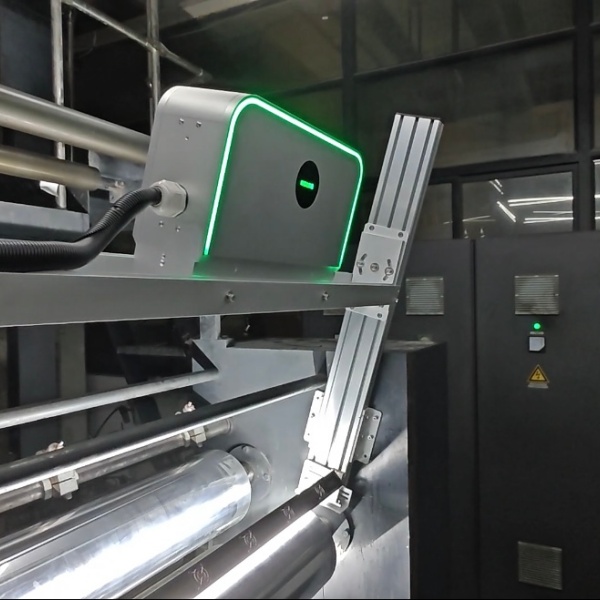
Beyond straightforward detection, web inspection systems also matter for process optimization. When the system sifts through repeated defect patterns it can, in practice, reveal the real reasons, for example uneven ink distribution, tension that does not hold steady, or printing heads that are not properly aligned.
With this kind of insight, operators can tweak machine parameters in real time, improving the general production steadiness. Over time , this feedback-driven loop brings defect rates down and makes manufacturing more efficient.
8. Data Storage and Quality Traceability
Each inspection event gets logged and kept for later review. That means the defect type, the location along the roll, and the production conditions at the moment it happened. Because of these detailed notes, the system builds a full quality timeline for every batch.
This level of traceability is especially critical in fields that demand strict quality rules, since it lets manufacturers pinpoint and remove the flawed sections without throwing away entire rolls.
9. Final Output and Quality Assurance
After passing through the printing quality inspection system, the material is rewound into finished rolls. These rolls are, in a sense, a checked product, meaning it has been under continuous monitoring during production.
In many cases, extra quality checks or marking approaches are added to show where a defect is, so that later steps can process the material properly. This last stage wraps up the closed-loop inspection workflow.
Roll-to-Roll Printing Applications of Web Inspection Systems
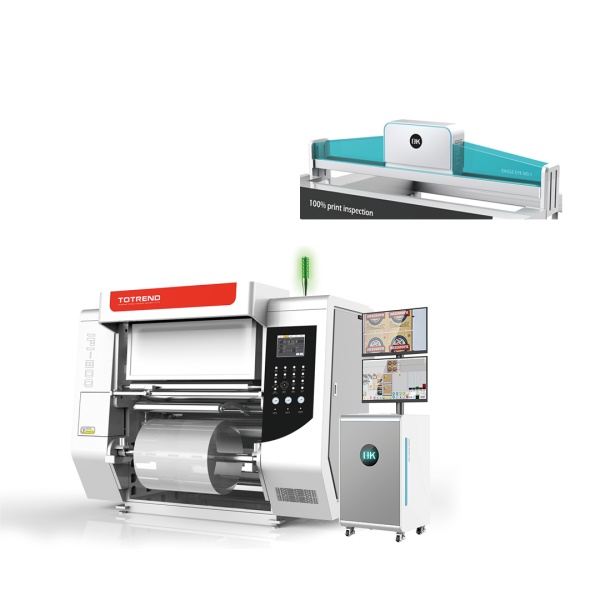
The value of web inspection systems for printing quality for becomes especially important in high-volume production environments.
| Application Area | Role of Web Inspection Systems | Typical Defects Detected | Benefits |
| Flexible Packaging Printing | Ensures consistent branding, color accuracy, and surface quality across long film rolls | Color variation, misregistration, streaks, ink smudges, contamination | Reduces waste, improves brand consistency, supports high-speed production |
| Label and Sticker Production | Monitors fine graphics and text quality on high-resolution printed labels | Print blur, missing dots, barcode errors, alignment issues | Guarantees readability and scan accuracy, reduces rework |
| Flexible Electronics Manufacturing | Inspects conductive patterns and circuit integrity on printed electronics substrates | Open circuits, short circuits, line breaks, pattern deformation | Improves device reliability, ensures functional performance |
| Textile and Fabric Printing | Maintains visual consistency in decorative and functional textile coatings | Pattern distortion, dye inconsistency, streaks, coating unevenness | Enhances aesthetic quality, reduces rejected fabric rolls |
| Solar Film and Energy Materials | Ensures uniform coating and layer structure for energy conversion efficiency | Coating defects, pinholes, thickness variation, contamination | Improves energy efficiency, increases product lifespan |
| Decorative Films and Surfaces | Monitors visual appearance for automotive, furniture, and architectural films | Scratches, bubbles, color mismatch, surface particles | Enhances surface aesthetics and premium product quality |
| Medical and Diagnostic Films | Ensures precision printing for medical labels and diagnostic strips | Ink deviation, micro-defects, alignment errors, contamination | Supports regulatory compliance and product safety |
| Security Printing (Banknotes, Certificates) | Detects ultra-fine pattern inconsistencies and security feature defects | Micro-print errors, hologram misalignment, hidden pattern defects | Strengthens anti-counterfeiting measures, ensures authenticity |
| Paper and Carton Printing | Maintains consistency in high-volume paper-based packaging production | Ink spread, registration errors, fiber contamination, streaks | Reduces material waste, ensures mass production stability |
| Coating and Laminating Processes | Monitors uniformity of applied coatings and laminated layers | Uneven coating, bubbles, delamination, thickness variation | Improves structural integrity, enhances product durability |
Challenges and Potential Solutions in Implementing Web Inspection Systems
| Challenge Area | Description of Challenge | Potential Solution |
| High-Speed Processing Requirements | Roll-to-roll lines operate at very high speeds, making it difficult for inspection systems to capture and process images without delay or data loss | Use high-speed line-scan cameras, edge computing, and parallel image processing architectures to ensure real-time performance |
| Lighting Sensitivity and Variability | Different substrates and inks reflect light differently, which can reduce defect visibility and cause inconsistent detection results | Implement adaptive LED lighting systems with adjustable angles and intensities, and calibrate lighting profiles for each material type |
| False Defect Detection (Noise Issues) | Systems may misinterpret harmless variations as defects, leading to unnecessary alarms and production interruptions | Apply AI-based filtering, machine learning classification models, and threshold optimization to distinguish true defects from acceptable variations |
| Integration with Existing Production Lines | Difficulties arise when connecting inspection systems with older printing machines or heterogeneous control systems | Use standardized communication protocols (such as OPC UA or Ethernet/IP) and modular system architectures for easier integration |
| Data Overload and Storage Limitations | Continuous high-resolution inspection generates large volumes of data that can overwhelm storage and processing systems | Employ data compression techniques, selective defect recording, and cloud-based or hybrid data storage solutions |
| Web Stability Issues (Tension and Alignment) | Fluctuations in web tension or misalignment can distort imaging and reduce detection accuracy | Integrate tension control systems, guiding rollers, and real-time feedback loops to stabilize web movement |
| Defect Classification Complexity | Some defects are visually similar, making it difficult for systems to accurately categorize them | Train deep learning models using large labeled datasets and continuously update classification algorithms |
| Environmental Interference | Dust, vibration, and temperature variations can affect camera accuracy and system stability | Install protective enclosures, vibration damping systems, and environmental control units in inspection zones |
| Calibration and Setup Time | Frequent changes in materials require recalibration of cameras, lighting, and detection thresholds | Develop automated calibration routines and recipe-based settings for quick changeovers |
| Cost of Implementation | High initial investment for advanced cameras, lighting systems, and AI software can be a barrier for adoption | Adopt scalable modular systems and phased implementation strategies to distribute costs over time |
Summary
Web inspection systems have become a necessary component in modern roll-to-roll printing. They allow continuous, real-time quality observation, and as a result, manufacturers lower waste, push efficiency higher, and keep high product standards.